


A price tag is a tiny story about human behavior
In IB Business Management, you are constantly asked to explain why customers react the way they do. And few reactions are more predictable than what happens when a price changes: suddenly the same product feels tempting, or ridiculous, or “not worth it anymore.” That shift is quantity demanded changing in real time.
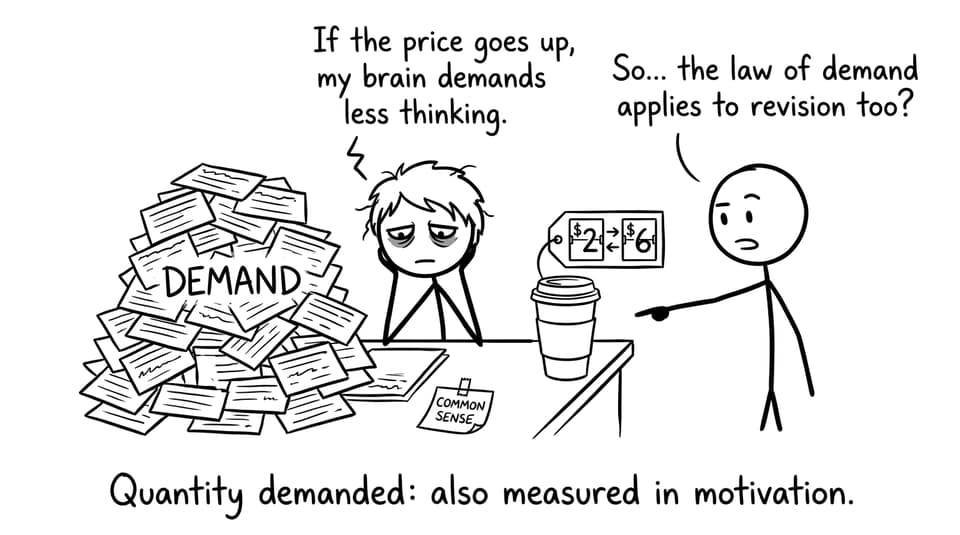
The core idea is simple: price is an incentive. When price falls, people usually buy more; when price rises, they buy less. Economists call this the law of demand. But for exam marks (and for pricing decisions in real firms), you want the reasons that sit underneath it.
Quick exam checklist (what to mention fast)
For IB Business Management explanations, hit these points in a clean chain:
-
State the law of demand (inverse relationship between price and quantity demanded, ceteris paribus)
-
Explain substitution effect (switching to cheaper alternatives)
-
Explain income effect (purchasing power changes)
-
Add a human layer (preferences, “bargain” psychology)
-
Link to business decisions (pricing strategy, revenue, elasticity)
If you want the Business-focused pricing angle, revise IB Business Management 4.5.3 Price.
The law of demand (and why it matters in IB Business Management)
The law of demand says that when price increases, quantity demanded decreases, and when price decreases, quantity demanded increases (assuming other factors stay the same). In IB Business Management, this becomes a practical question: “If we change price, what happens to sales volume?”
To strengthen this, connect it to tools you use across the syllabus: revenue, market share aims, and the trade-off between contribution per unit and volume. A great companion topic is break-even: see effects of changes in price on break-even.
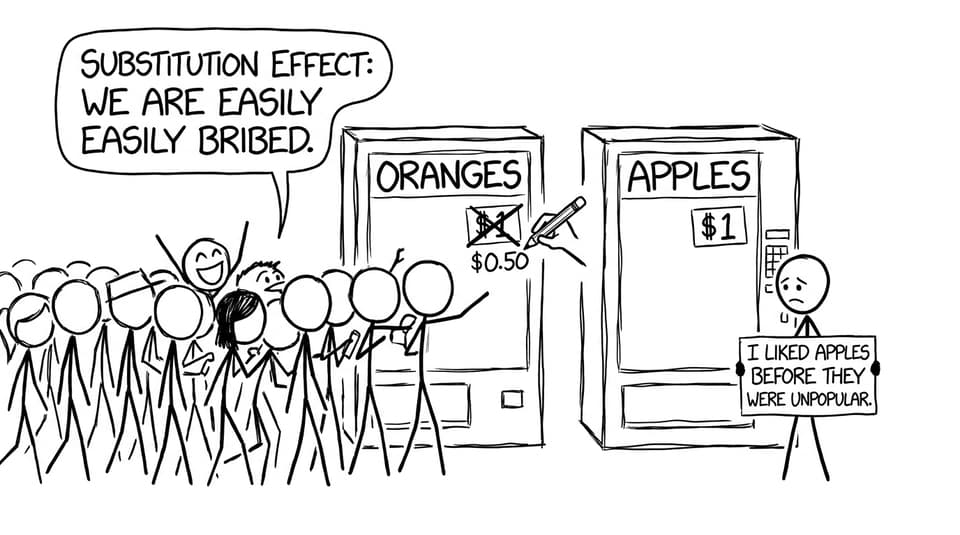
Substitution effect: customers compare (even when they pretend not to)
When a product becomes cheaper relative to alternatives, consumers substitute toward it. Think of two brands with similar benefits: if one drops price, it suddenly looks like “better value,” so quantity demanded rises.
This is why competitors matter so much in IB Business Management pricing answers: your price is rarely judged in isolation. If you need a quick theory refresher on demand language, define supply and demand is a clean reference.
Income effect: the “I can afford more now” feeling
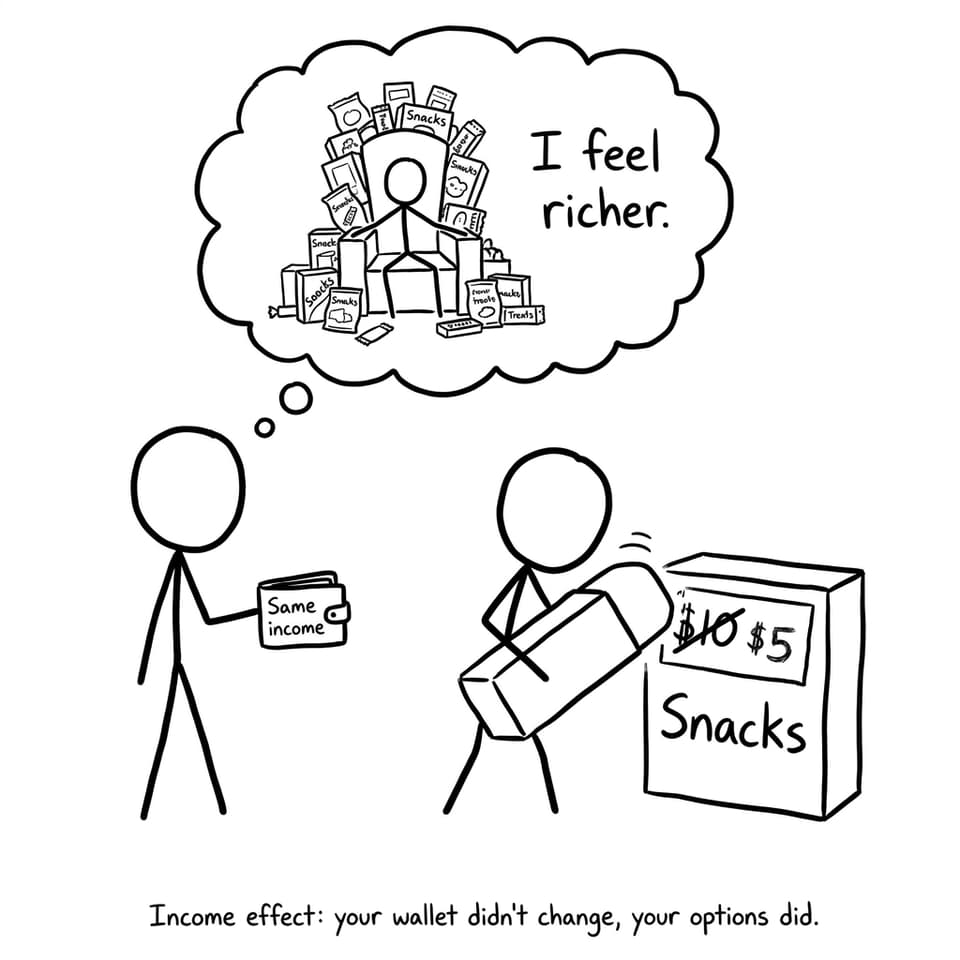
A lower price effectively increases real purchasing power. Your income did not rise, but with the same budget you can buy more units. That’s the income effect, and it pushes quantity demanded up when prices fall.
For pricing questions, this is especially useful when you’re talking about student markets, subscriptions, bundles, or any context where budgets are tight. If you want the wider demand framework (including what causes shifts vs movements), pair this with non-price determinants that shift demand.
Psychology and diminishing marginal utility (why the curve slopes down)
Even disciplined consumers respond to labels like “discount,” “limited-time,” or “2 for 1.” Lower prices can reduce the mental friction of buying, while higher prices increase hesitation and search for alternatives.
Then there’s diminishing marginal utility: the first unit is often the most satisfying, and each extra unit adds less benefit. So consumers typically need a lower price to justify buying more units. That logic supports the downward-sloping demand curve you’ll see in microeconomics notes like Demand curve (2.1.2).
How to turn this into top marks
In IB Business Management, examiners reward clear chains of reasoning. A strong 4-6 sentence paragraph might go: price falls; product becomes relatively cheaper (substitution effect) and purchasing power rises (income effect); more consumers enter the market and existing consumers buy more; quantity demanded increases; firm’s revenue impact depends on elasticity.
To practice writing that quickly under time pressure, use the IB Business Management Questionbank, then tighten definitions using the IB Business Management glossary.
Final thought: price changes don’t change people: they reveal them
When price changes, quantity demanded changes because incentives shift, comparisons sharpen, and budgets suddenly feel tighter or looser. That’s the story you’re telling in IB Business Management: not just “sales go up or down,” but why customers respond.
If you want to turn this into exam-ready answers, RevisionDojo helps you drill it from multiple angles: Study Notes for clarity, Flashcards for recall, AI Chat for quick explanation checks, and the Questionbank for timed practice. Add Predicted Papers, Mock Exams, and Grading tools when you’re ready to simulate the real thing, and use Tutors if you want targeted feedback before exams.


