


Business location sounds like a boring pin on a map until you picture the moment it goes wrong.
A café opens on a street with cheap rent, plenty of space, and beautiful windows. But the street is quiet. The foot traffic is somewhere else. Within months, the café is fighting an invisible problem: not the product, not the brand, but the place.
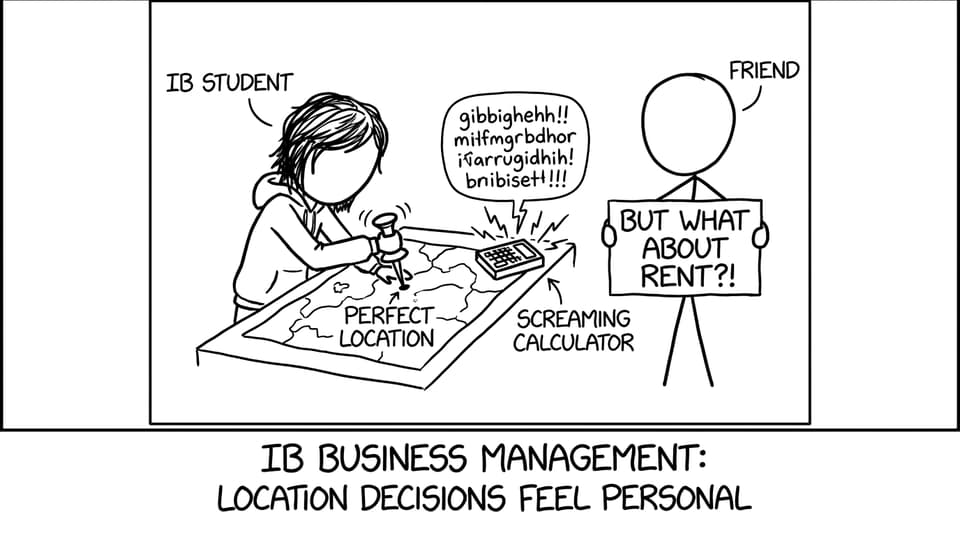
In IB Business Management, location is one of those topics that feels simple, until you realize it quietly controls costs, demand, operations, staffing, and even brand image. That is why exam questions love it.
IB Business Management quick checklist for location decisions
Use this as a fast plan for any IB Business Management response on location:
-
Customers: will the target market actually reach you?
-
Costs: rent, taxes, utilities, wages, distribution
-
Operations/logistics: suppliers, transport links, lead times
-
Labour: skills availability, wage expectations, union strength
-
Competition: clustering benefits vs oversaturation
-
Legal/environmental: zoning, regulation, sustainability constraints
-
Future growth: room to expand, infrastructure development
For syllabus-aligned support, the 5.4 Location notes are a clean anchor.
Customer access: location is a marketing decision in disguise
Most students write “be close to customers” and move on. In IB Business Management, you get more marks when you explain the mechanism.
If customers can reach you easily, you gain:
-
higher sales volume (more visits, fewer drop-offs)
-
stronger brand awareness (visibility acts like free promotion)
-
better customer experience (convenience becomes part of the product)
Retailers often pay premium rent for this reason. Service firms do it too, just differently: a tutoring center near schools, a gym near residential areas, or a repair shop near commuter routes.
To practice applying location factors to unfamiliar cases, use the 5.4 Location Questionbank.
Operations and logistics: where you are changes how you work
Location is not only about demand. It is also about whether the business can run smoothly day after day.
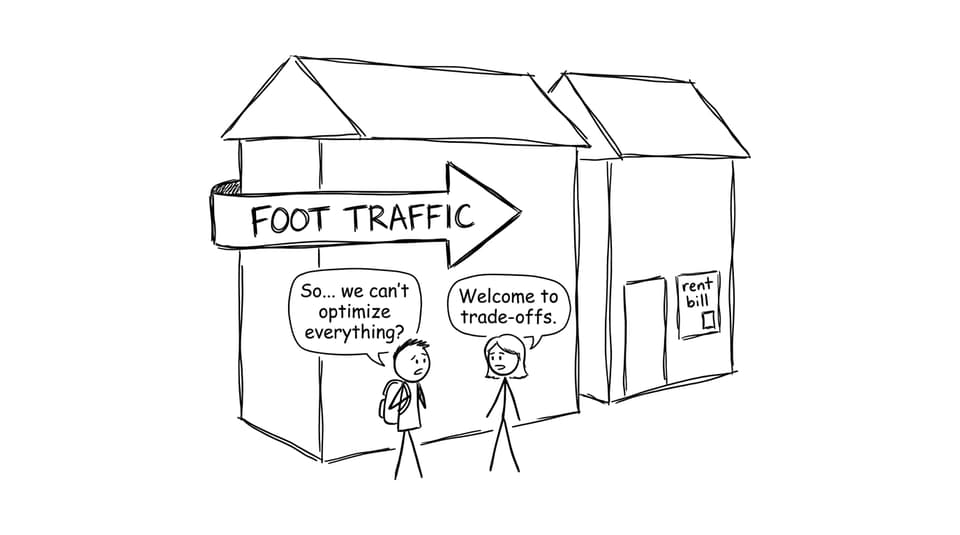
A warehouse near major transport links can reduce lead times and distribution costs. A factory near suppliers can lower transport costs and improve reliability. A restaurant near fresh suppliers reduces waste and improves quality consistency.
This is why location sits inside Unit 5 operations. If you want the bigger picture, connect it to Unit 5 Operations Management and to how operations supports the rest of the firm in this operations support guide.
Costs and labour: the trade-off students forget to evaluate
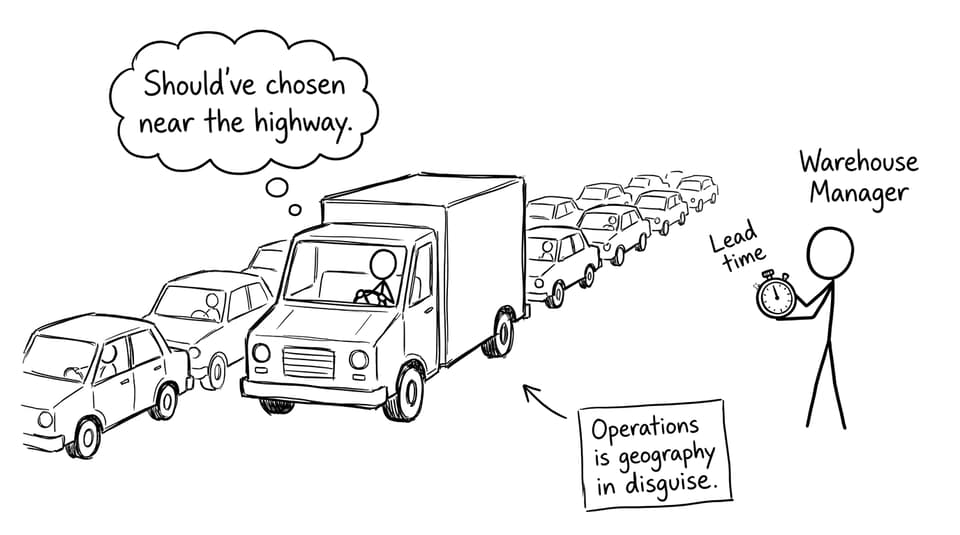
In IB Business Management, the strongest analysis often sounds like: “yes, but at what cost?”
A city-center location may improve sales, but it can raise fixed costs (rent, business rates, higher wages). A remote location may cut rent, but increase distribution costs and reduce customer access.
Labour availability works the same way. Businesses often cluster in places with specialized talent, even if costs are higher, because the right workforce increases productivity, quality, and innovation.
A useful revision move is to link location choices to other topics (cost control, profit, and efficiency). For example, pairing location discussions with strategies to improve efficiency ratios can lift evaluation.
Competition and regulation: being next door is not always bad
Competition is not automatically a threat. When similar businesses cluster, customers compare options in one trip (think shopping districts). The benefit is increased total demand in the area. The risk is price pressure and market saturation.
Regulation is also location-specific. Zoning laws, environmental restrictions, and tax rules can shape costs and feasibility. In exam terms: location is partly a risk management decision.
For deeper syllabus alignment, see 5.4.1 Reasons for a Specific Location of Production and the 5.4.1 notes.
Closing: turn location into easy marks
When you revise location, do not memorize a list. Train yourself to see the hidden story: every location is a bundle of trade-offs that shapes customer access, costs, operations, labour, and risk.
To lock this into exam performance, use RevisionDojo as your base camp: drill application with the Questionbank, clarify logic with Study Notes, retain key terms with Flashcards, challenge your thinking with AI Chat, and polish paragraphs with Grading tools. When you want exam realism, use Predicted Papers and Mock Exams, and if you need personalized support, tap the Coursework Library and Tutors. In IB Business Management, location is not a dot on a map; it is strategy you can explain.


