


Why do ionization energies show sudden jumps between energy levels?
You’re revising late, you find a table of successive ionization energies, and everything looks calm until it suddenly spikes like a cliff edge. That moment is exactly what examiners want you to notice. Why do ionization energies show sudden jumps between energy levels? Because at some point you stop removing “outer” electrons and start trying to steal an electron from a deeper, more protected shell. The atom doesn’t negotiate kindly.
Quick exam checklist (what to say in 20 seconds)
When asked Why do ionization energies show sudden jumps between energy levels?, hit this chain:
-
Successive ionization energies increase because the ion becomes more positive.
-
A sudden jump happens when you begin removing an electron from an inner shell (core) instead of the valence shell.
-
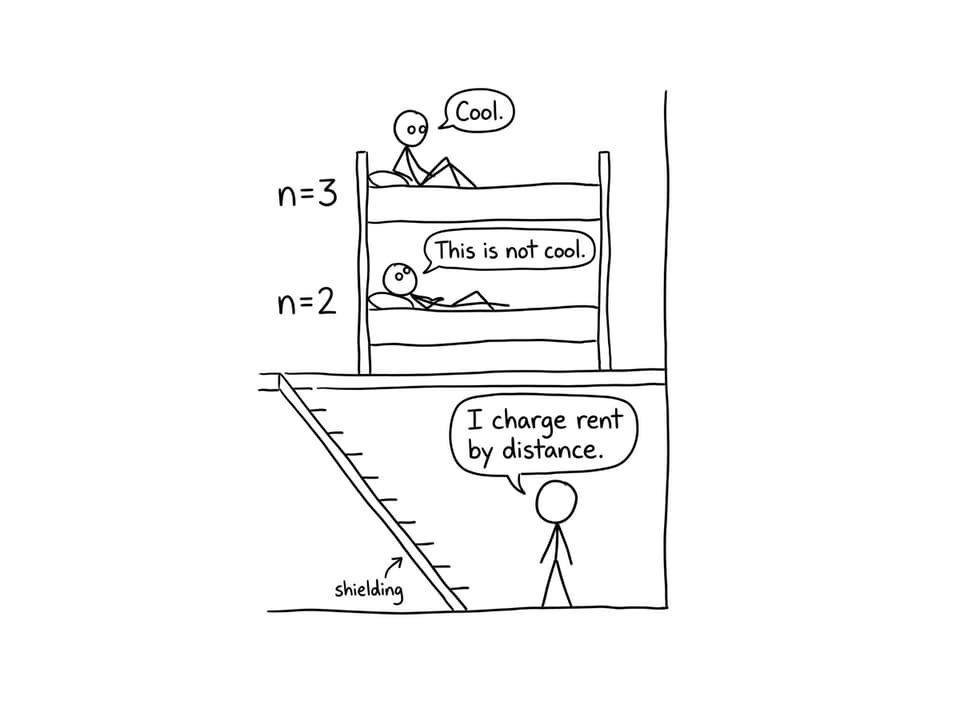
Inner-shell electrons are closer to the nucleus, less shielded, and feel higher effective nuclear charge (Zeff).
-
Therefore, much more energy is needed.
If you need the formal definition first, keep it tight using Ionization Energy Explained Simply.
The real reason: shells change the “difficulty setting”
Within the same outer shell, each electron you remove makes the ion more positive, so the next electron is held more strongly. That’s why ionization energy rises step-by-step.
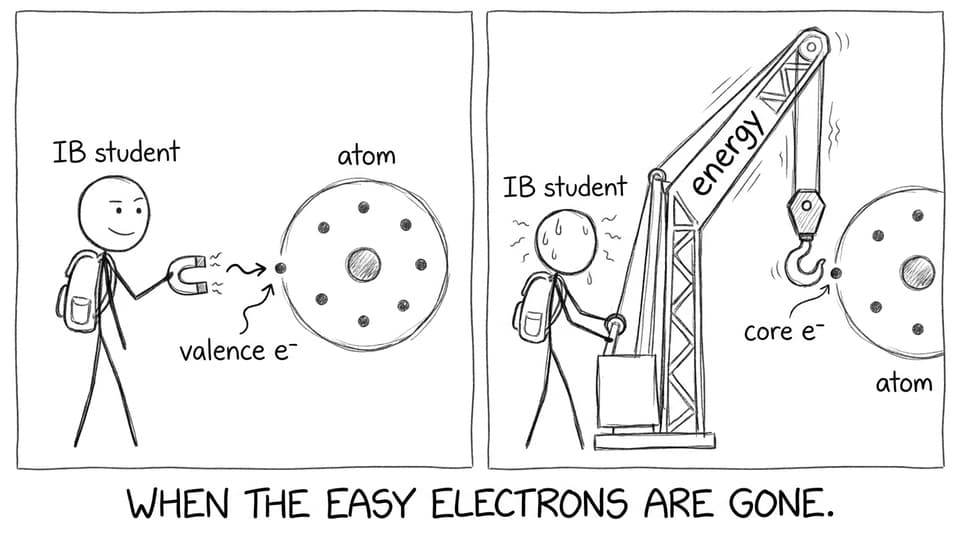
But the massive spike appears when the easy electrons are gone.
Valence electrons sit farther from the nucleus and are shielded by inner electrons. Once you remove all valence electrons, the next electron belongs to a lower principal energy level (closer in). It experiences:
-
Less shielding (inner electrons don’t block the nuclear pull as much)
-
Much stronger attraction to the nucleus
-
Smaller distance from the nucleus
That combination creates the “jump.” For a deeper refresher on shielding language, use What Is the Shielding Effect? and then link it to Effective Nuclear Charge Explained.
Using the jump to find valence electrons (the IB-friendly trick)
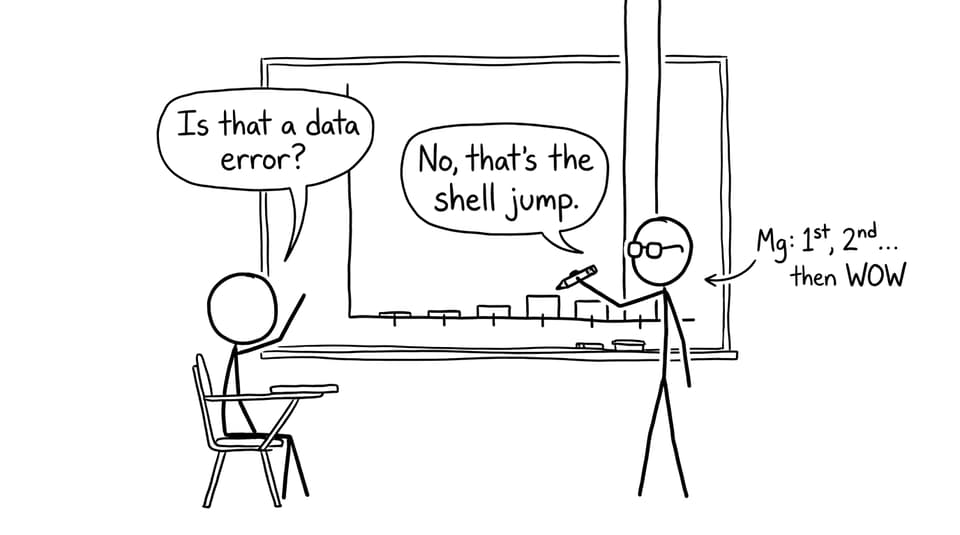
A practical reason IB loves this topic: the position of the jump tells you how many valence electrons the atom had.
Example logic (common in data-based questions):
-
If IE_1 and IE_2 rise modestly, but IE_3 is enormous, the atom likely had 2 valence electrons.
-
That means it behaves like a Group 2 element in main-group chemistry.
This is exactly the skill targeted in Successive Ionization Energies Notes and the matching Ionization Energy Questionbank.
Small “discontinuities” vs the big “shell jump”
IB also tests smaller wobbles across a period (like when a new subshell starts, or when electron pairing introduces extra repulsion). Those are not the huge cliff-like jumps in successive ionization energies.
-
Big jump = switching shells (valence to core).
-
Smaller discontinuities = subshell stability and orbital effects.
If you mix these up, revision gets messy fast, so keep them separated using Discontinuities in Ionization Energy Trends and the broader IB Chemistry 3.2 Periodic Trends.
Bring it home (and make it stick)
So, Why do ionization energies show sudden jumps between energy levels? Because chemistry is quietly consistent: outer electrons come off first, but the moment you reach a lower shell, shielding drops and nuclear attraction surges. The jump is the atom telling you you’ve crossed a boundary.
If you want this to feel effortless in exams, RevisionDojo is built for it: review the concept in Study Notes, drill it in the Questionbank, lock in definitions with Flashcards, ask the AI Chat to mark your explanations, and use Grading tools, Predicted Papers, Mock Exams, and Tutors when you want full exam-condition confidence.
For extra periodicity support, connect this idea to How to Use the IB Periodic Table in Exams and Revision and Trends in Atomic Radius Explained.