


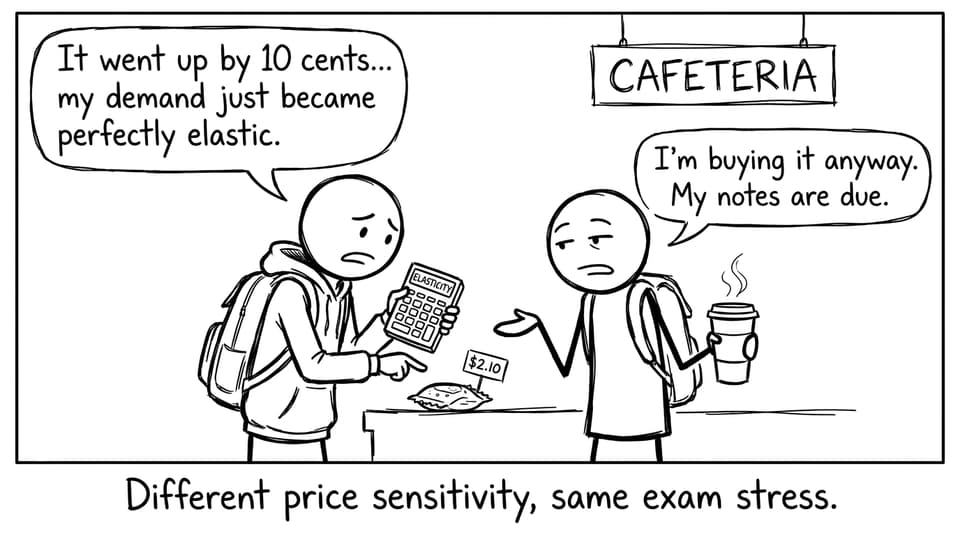
A price changes by 10 cents.
One customer barely notices. Another feels it like a personal insult. If you’ve ever watched your classmates argue over whether a cafeteria snack is “worth it now,” you’ve already met the core idea behind IB Business Management pricing decisions: customers do not react uniformly, and that difference is the whole game.
The quick exam checklist (what to mention fast)
In IB Business Management, when asked why reactions vary, scan for:
-
Income level and budget constraints
-
Availability of substitutes (switching options)
-
Preferences (quality, convenience, ethics, status)
-
Brand loyalty and switching costs
-
Perceived value (what customers think they’re getting)
-
Product type (necessity vs luxury)
-
Psychological and cultural factors
If you want tight definitions for these terms, keep the IB Business Management Key Definitions open while you practise.
Income: the same price rise, two different realities
A price increase is not “small” or “large” by itself. It becomes small or large relative to someone’s disposable income. Students with limited budgets notice tiny changes because the purchase competes with other needs. Higher-income customers often keep buying because the price rise barely changes their opportunity cost.
In IB Business Management, this is a clean route into price elasticity of demand: lower income tends to increase sensitivity, making demand more elastic.
Substitutes: when switching is easy, prices feel risky
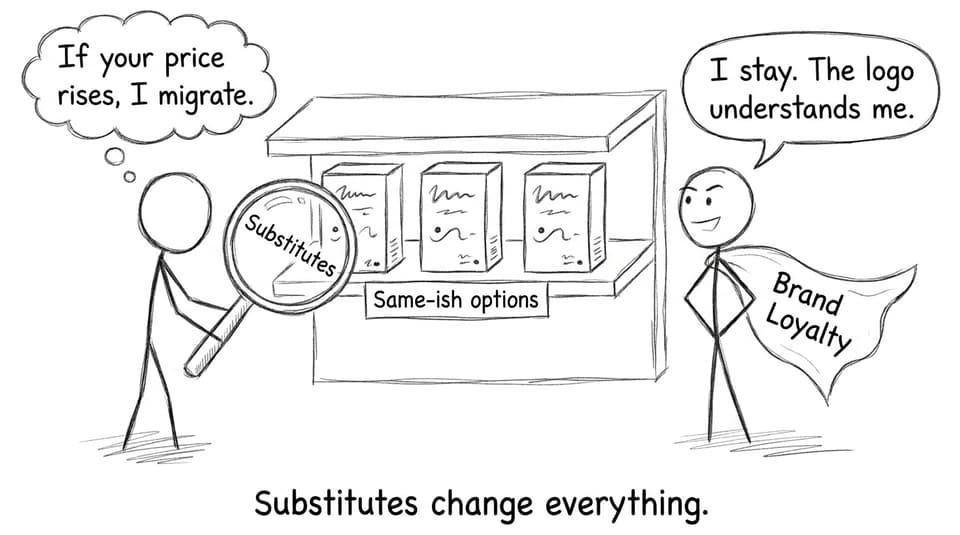
If there are many close substitutes, customers can switch quickly after a price rise. That makes demand more elastic because the customer is not trapped. But when a product is differentiated (unique features, network effects, or strong positioning), customers tolerate price changes because alternatives feel weaker or inconvenient.
To connect this to your evaluation, pair the concept with strategy: a firm can reduce sensitivity by improving differentiation, not just by discounting. For more exam framing, see Why Is Elasticity Important for Setting Prices Effectively?.
Preferences and loyalty: people don’t buy only with spreadsheets
Some customers optimise for low price. Others optimise for quality, convenience, brand reputation, or even identity. That’s why two customers can face the same new price and reach opposite decisions.
Brand loyalty adds another layer. Loyal customers often perceive lower risk, trust the product, and feel a higher “cost” to switching. In IB Business Management, this is excellent evaluation material: loyalty can protect revenue in the short run, but abusing it can damage long-run brand equity.
Perceived value: the story around the price matters
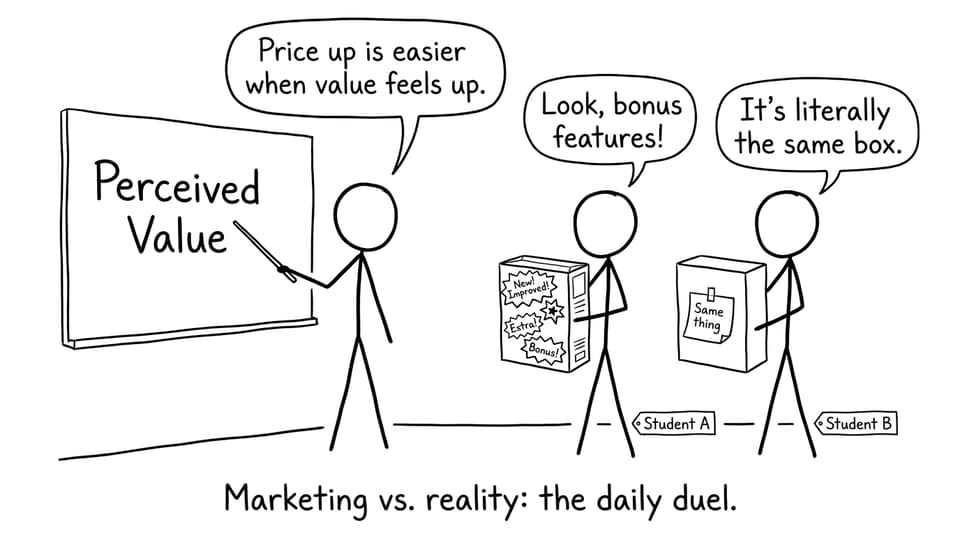
A price rise that comes with visible improvements (features, service, packaging, sustainability claims that feel credible) can be accepted because customers feel value increased too. But a silent price rise on an unchanged product invites resentment.
That’s why marketers spend so much time shaping perceived value. If you want a broader map of how these ideas connect across the course, start from IB Business Management Resources.
Necessities vs luxuries: timing changes everything
Necessities (basic food, medicine, essential transport) are harder to avoid, so demand tends to be more inelastic. Luxuries and non-essential items are easier to delay or replace, so demand tends to be more elastic. In exam responses, you can strengthen analysis by noting time: even necessities can become more elastic in the long run if new substitutes emerge.
Conclusion: turn sensitivity into strategy
Customers respond differently to price changes because their incomes, substitutes, preferences, loyalty, perceived value, and product needs differ. In IB Business Management, your edge is showing how those factors shape elasticity and what a firm should do next.
To practise writing this like an examiner-ready paragraph, use RevisionDojo’s Questionbank for targeted drills, lock in terminology with the Key Definitions, and polish your structure using IB Business Management: Maximize Your Exam Score.


