


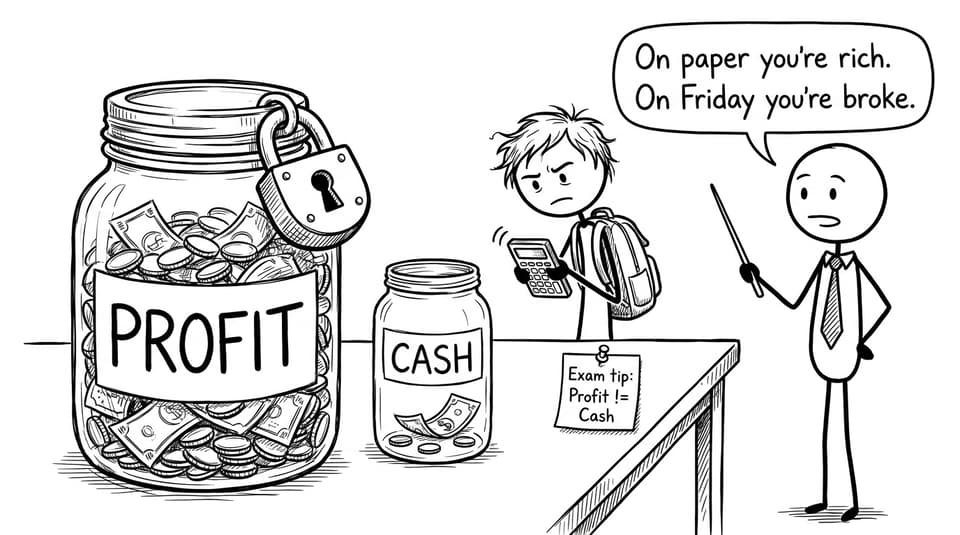
If you have ever looked at a business that seems “successful” and wondered why it still feels stressed, you are already thinking like an IB Business Management student. The secret is that money can be real and still be unreachable. Profit can exist on paper while cash is missing at the exact moment wages, rent, and suppliers need paying.
That tension is why businesses must balance profitability (long-term performance) and liquidity (short-term survival). In IB Business Management, this is not just a definition to memorize. It is a story that shows up in case studies, ratio analysis, and exam evaluation questions.
The quick exam checklist (what examiners want)
Use this mini-checklist when a question asks why businesses need both profitability and liquidity in IB Business Management:
-
Profitability shows whether the firm is creating value and can grow.
-
Liquidity shows whether the firm can pay short-term obligations on time.
-
A profitable firm can still fail if it cannot meet payments (cash timing problem).
-
Too much liquidity can signal idle resources and missed growth opportunities.
-
The “best” balance depends on industry, strategy, and risk tolerance.
For the syllabus home of this idea, anchor your revision in RevisionDojo’s IB Business Management resources hub.
Profitability in IB Business Management: the “worth it” question
Profitability asks: after all costs, is the business actually making enough to justify what it is doing? In IB Business Management, strong profitability is linked to competitiveness, efficiency, and long-term viability. A business that consistently earns profit can reinvest, innovate, expand capacity, and reward stakeholders.
But profitability is also easy to misread because it is measured over an accounting period. A firm can record high profit while cash is “stuck” in inventory or in trade receivables. If you want to sharpen this exam distinction, RevisionDojo’s notes on the difference between profit and cash flow help you phrase it cleanly.
Liquidity in IB Business Management: the “can we make it to Friday?” question
Liquidity is about paying bills now. Wages, supplier invoices, loan interest, and rent do not accept “we are profitable” as a payment method. In IB Business Management, liquidity is often framed through working capital and the risk of insolvency.
That is why ratio analysis matters. If you are revising Topic 3.5, use RevisionDojo’s core page on profitability and liquidity ratio analysis to connect the concept to exam-style interpretation.
How the balance actually breaks (and what to write in evaluation)
In IB Business Management, evaluation marks often come from explaining the trade-offs:
When profitability is chased too hard
A business might:
-
Offer long credit terms to increase sales (profit rises, cash arrives late).
-
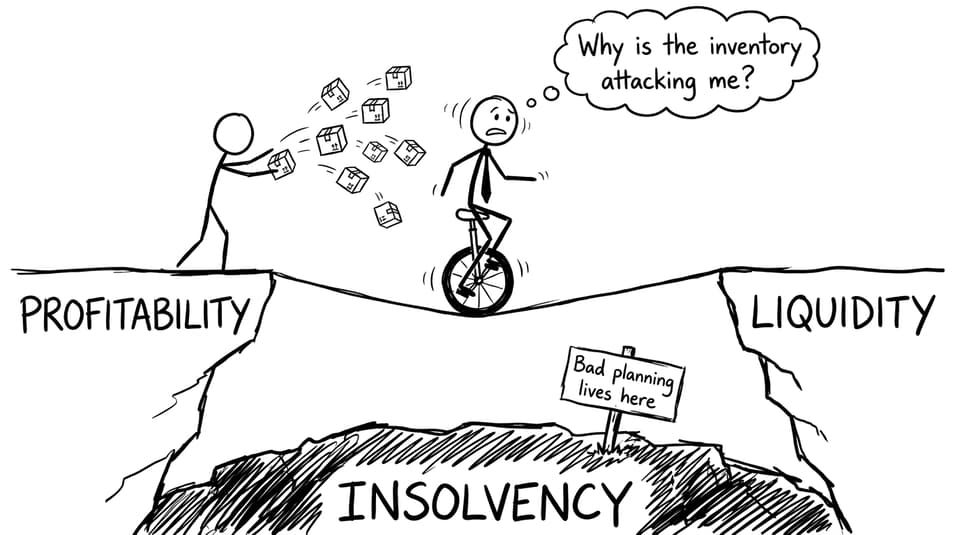
Buy large amounts of inventory to get discounts (cash tied up in stock).
-
Invest aggressively in non-current assets (future growth, weaker short-term liquidity).
The exam-friendly line: “Profit improves performance, but liquidity risk increases if cash is locked in receivables, inventory, or long-term investment.”
When liquidity becomes the only goal
A business might:
-
Hold too much cash “just in case.”
-
Avoid investment, training, or marketing.
-
Miss opportunities because it is overly risk-averse.
The exam-friendly line: “High liquidity can reduce profitability because idle cash has an opportunity cost.”
To deepen this, RevisionDojo’s article on liquidity ratios explained gives strong phrasing you can adapt.
Ratios that connect profitability and liquidity (what to mention)
You do not need to throw formulas everywhere, but in IB Business Management you should name the tools:
-
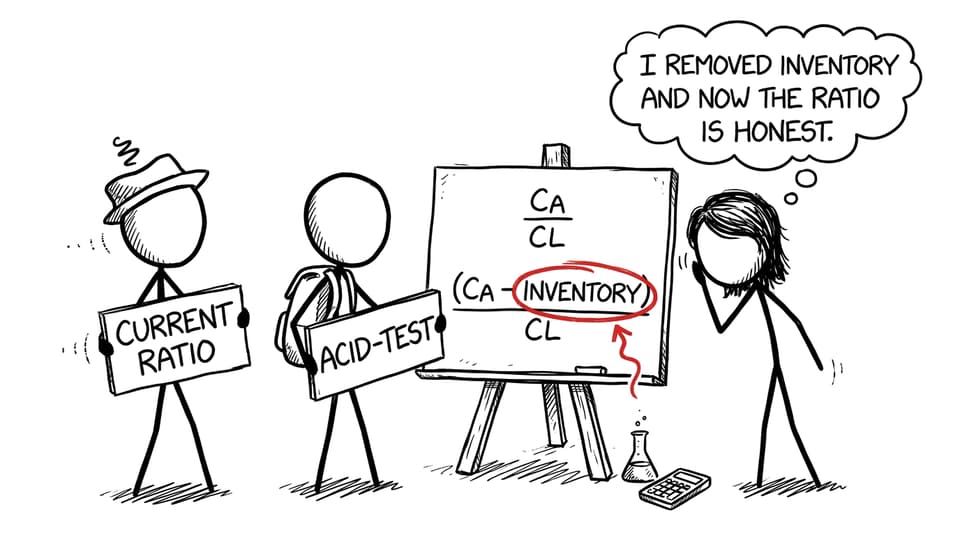
Current ratio and acid-test (quick) ratio for liquidity
-
Profitability ratios such as gross profit margin, profit margin, and ROCE
Keep your formulas accurate by using RevisionDojo’s IB Business Management Data Booklet. And if you want a targeted refresher on improving profits, RevisionDojo’s notes on strategies to improve profitability ratios fit perfectly.
Conclusion: the IB Business Management takeaway
Balancing profitability and liquidity is the difference between “a business that looks good” and “a business that lasts.” In IB Business Management, the strongest exam responses show that profit fuels long-term growth, while liquidity protects short-term continuity. If you can explain the trade-off, use a ratio or two, and link it to decision-making, you are writing at a higher level.
To tighten your revision, use RevisionDojo’s Questionbank for exam-style practice, Study Notes for clean definitions, Flashcards for ratio recall, and AI Chat when a case study feels unclear. Then cement it with Grading tools, Mock Exams, Predicted Papers, and the Tutors option when you want feedback that feels like an examiner’s.


