



Self-study in the IB can feel like trying to assemble a desk with one page of instructions and eight languages of screws. Some students thrive anyway. Not because they are superhuman, but because they pick the right subject to self-study, then build a system that gives them structure, feedback, and momentum.
If you are an IB student preparing for exams and wondering which subjects are most realistic to learn largely on your own, the answer is less about “easy” and more about self-study friendly.

What makes an IB subject self‑study friendly?
A self-study friendly IB subject usually has three traits:
-
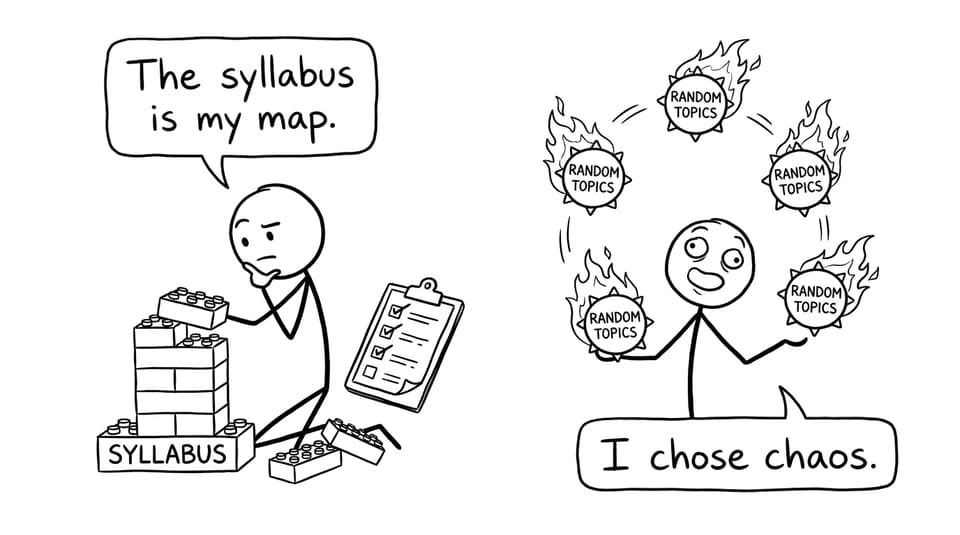
A clear syllabus with predictable topic boundaries.
-
Resources that explain the content cleanly (textbooks, videos, worked examples).
-
Marking that is relatively objective (you can tell what “good” looks like).
A small mindset shift helps too: treat self-study like TOK. You are not just absorbing content; you are testing what you know, noticing your blind spots, and adjusting. If you want a reflection framework that transfers surprisingly well, borrow the habits from How to Reflect on Yourself as a Knower in TOK.
Quick checklist before you commit to self‑studying an IB subject
Before you choose, run this fast check:
-
Can I explain the syllabus topics in my own words?
-
Do I have at least one solid textbook and one alternative explanation source?
-
Can I practice with exam-style questions weekly?
-
Do I have a way to get feedback (markschemes, rubrics, tools, humans)?
-
Am I willing to track mistakes, not just “do more revision”?
If you need a broader reality check, this pairs well with Is It Possible to Self‑Study an IB Subject? and IB Tutoring vs Self‑Study: When You Need Professional Help.
The easiest IB subjects to self‑study (most students)
These options tend to be the most self-study friendly for IB exam prep, especially at SL.
Mathematics: Applications & Interpretations SL
This is often a good self-study pick because progress is visible: you either can do the question or you cannot (yet). The path forward is usually practice, error logs, and repetition.
If your process is messy, tighten it with timed practice cycles and feedback loops from What’s the Best Way to Revise for IB Exams?.
Business Management SL
Business Management rewards clear definitions, structured responses, and pattern recognition across common prompts. That makes it a strong candidate for self-study in the IB, as long as you practice writing answers, not just reading notes.
Environmental Systems & Societies (ESS) SL
ESS can be self-study friendly because the content is accessible and often reinforced through diagrams, real-world examples, and cause-effect reasoning. It still needs exam practice, but the learning curve is gentler than many HL sciences.
Language Acquisition ab initio SL
Ab initio languages are structured and routine-driven. If you can commit to daily input (listening/reading) plus spaced repetition vocab, self-study can work well. The hidden trick is consistency, not intensity.
For a bigger-picture view of self-study in the IB (what works and what breaks), see Can You Self‑Study the IB Diploma Programme?.
How to make self‑study work (without burning out)
Self-studying an IB subject is mostly a feedback problem. You need a loop that tells you what to do next.
A practical routine looks like this:
-
Study Notes to patch confusion quickly.
-
Flashcards for daily recall.
-
Questionbank sessions for exam behavior.
-
AI Chat when you are stuck (then prove it with another question).
-
Grading tools to stop guessing what examiners want.
-
Weekly timed sessions using Mock Exams and Predicted Papers.
RevisionDojo is built around that loop: Questionbank, Study Notes, Flashcards, AI Chat, Grading tools, Predicted Papers, Mock Exams, a Coursework Library, and Tutors. When self-study starts to drift, structure brings it back.

Closing: choose the right IB subject, then build the right system
The “easiest” IB subjects to self-study are the ones with clean syllabuses, accessible resources, and marking you can train for. For many students, that points to Mathematics AI SL, Business Management SL, ESS SL, or an ab initio language.
But the real advantage is not the subject choice alone. It is having a feedback loop that turns effort into results. If you want that loop in one place, RevisionDojo gives you the Questionbank, Study Notes, Flashcards, AI Chat, Grading tools, Predicted Papers, Mock Exams, Coursework Library, and Tutors to self-study your IB subjects with less guesswork and more momentum.