




The first time you try to self-study an IB topic, it feels oddly quiet.
No teacher steering the lesson. No classmates asking the question you were too nervous to say out loud. Just you, a syllabus, and that uncomfortable thought: What if I spend hours studying the wrong thing?
The good news is that some IB subjects are naturally kinder to independent learners. Their content is more structured, the markschemes reward clear patterns, and you can improve fast by looping practice and feedback.
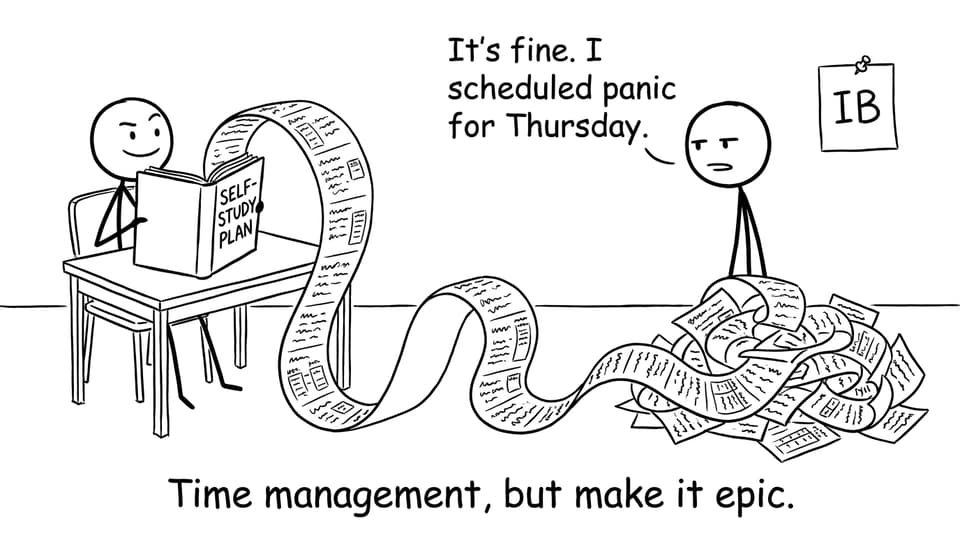
A quick checklist: what makes an IB subject easy to self-study?
Before picking the “easiest” IB subjects, use this quick filter. A self-study-friendly subject usually has:
-
A clear, predictable syllabus (you can tell what’s on the test)
-
Objective marking (or at least repeatable structures)
-
Plenty of practice material and definitions you can drill
-
Skills that improve with repetition (not just teacher feedback)
If you want to build this structure in one place, the RevisionDojo for IB hub helps you connect Study Notes, Flashcards, Questionbank, and AI Chat into one routine.
The easiest IB subjects to self-study (and why)
“Easy” in IB rarely means “no effort.” It usually means the path is clear. These subjects tend to give you that clarity.
Business Management SL
Business Management SL is often one of the most self-studyable IB options because it rewards clean definitions, familiar case logic, and exam routines you can practice.
A practical approach is to learn one unit with Digital IB Study Notes, turn key terms into Flashcards, then drill application questions in a Questionbank loop until the command terms stop surprising you.
Mathematics Applications & Interpretation SL (Math AI SL)
Math AI SL can be self-study friendly because the feedback is immediate: you’re either setting up the method correctly or you aren’t.
That makes it perfect for active practice with the How to Study for IB Exams: Step-by-Step Guide mindset: notes for clarity, then questions for accuracy, then timed work for speed.
Environmental Systems & Societies SL (ESS)
ESS is interdisciplinary, visual, and concept-driven, which can work well for independent learners who like connecting ideas. It’s less about “one perfect method” and more about building a strong web of understanding.
To keep it exam-focused, use concise topic summaries (Study Notes), build Flashcards for key processes and definitions, then practice explaining links between concepts under time pressure.
Language Acquisition ab initio SL
For many IB students, ab initio self-study works because progress is measurable in small daily reps: vocab, grammar patterns, short writing, short listening.
It’s not glamorous, but it’s honest. The compounding effect of 15 minutes every day beats the heroic weekend cram.

How to self-study an IB subject without wasting time
Self-study fails when you confuse effort with evidence. The fix is a tight loop.
Use the “clarify -> test -> fix -> repeat” loop
-
Clarify with Study Notes (fast, syllabus-aligned)
-
Test with the Questionbank (topic-specific)
-
Fix mistakes immediately (write one “error rule”)
-
Repeat within 48 hours
The Custom IB Mock Exams guide explains how to turn weak topics into targeted mini-mocks so your IB prep stays specific.
Add realism: Mock Exams + Predicted Papers
Once you’re not drowning in content gaps, shift toward performance.
Use timed practice to make the IB exam feel familiar, not mythical. RevisionDojo supports this with Mock Exams and IB Predicted Papers so you can train pacing, stamina, and decision-making.
For the right expectations, read IB Predicted vs Specimen Papers: What They Mean.
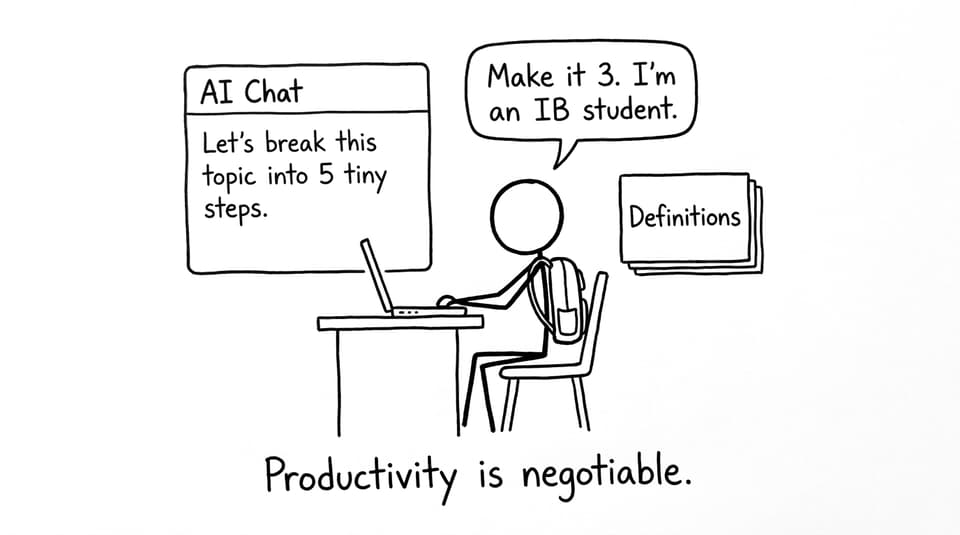
Conclusion: pick the IB subject where the path is clearest
The easiest IB subjects to self-study are the ones where the syllabus is structured, the marking is predictable, and progress shows up quickly when you practice.
Choose the subject where you can run a simple loop: Study Notes for clarity, Flashcards for memory, Questionbank for skill, and timed Mock Exams plus Predicted Papers for realism. If you want one home for that entire system (plus AI Chat, Grading tools, a Coursework Library, and Tutors when you need human feedback), start at RevisionDojo.