
A week before mocks, most students ask the same question in different accents: am I in the right system? If you’re in IB, you feel it when six subjects pile up next to TOK, the EE, and CAS. If you’re comparing IB with A-Levels or AP, you’re really comparing stress shapes: spread-out pressure, concentrated depth, or flexible intensity.
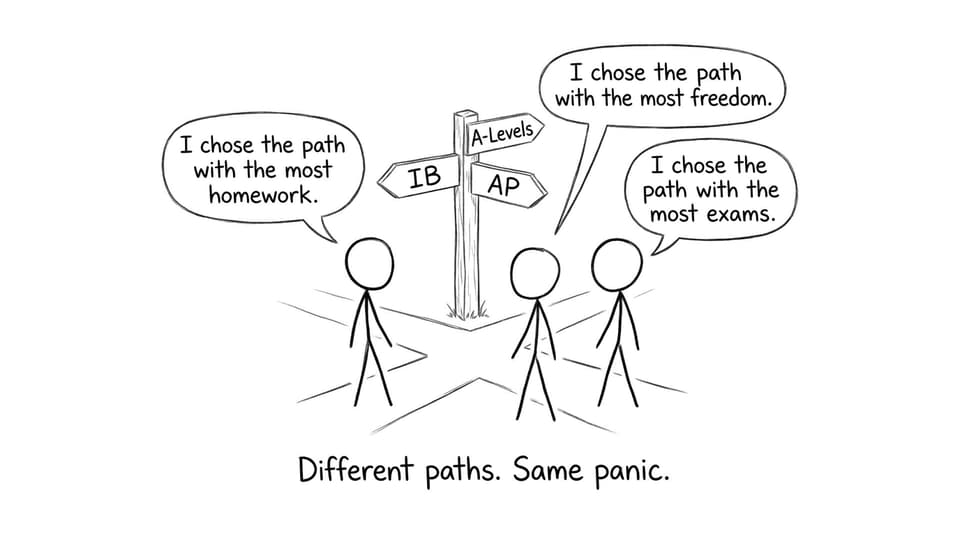
Quick checklist: how to choose between IB, A-Levels, and AP
-
Want breadth across disciplines plus a core (TOK/EE/CAS)? Choose IB.
-
Want depth in 3--4 subjects with heavy final exams? Choose A-Levels.
-
Want flexibility with optional college-level courses? Choose AP within the American curriculum.
-
Need global recognition and a “whole-student” profile? IB tends to travel well.
IB: the “breadth plus core” curriculum
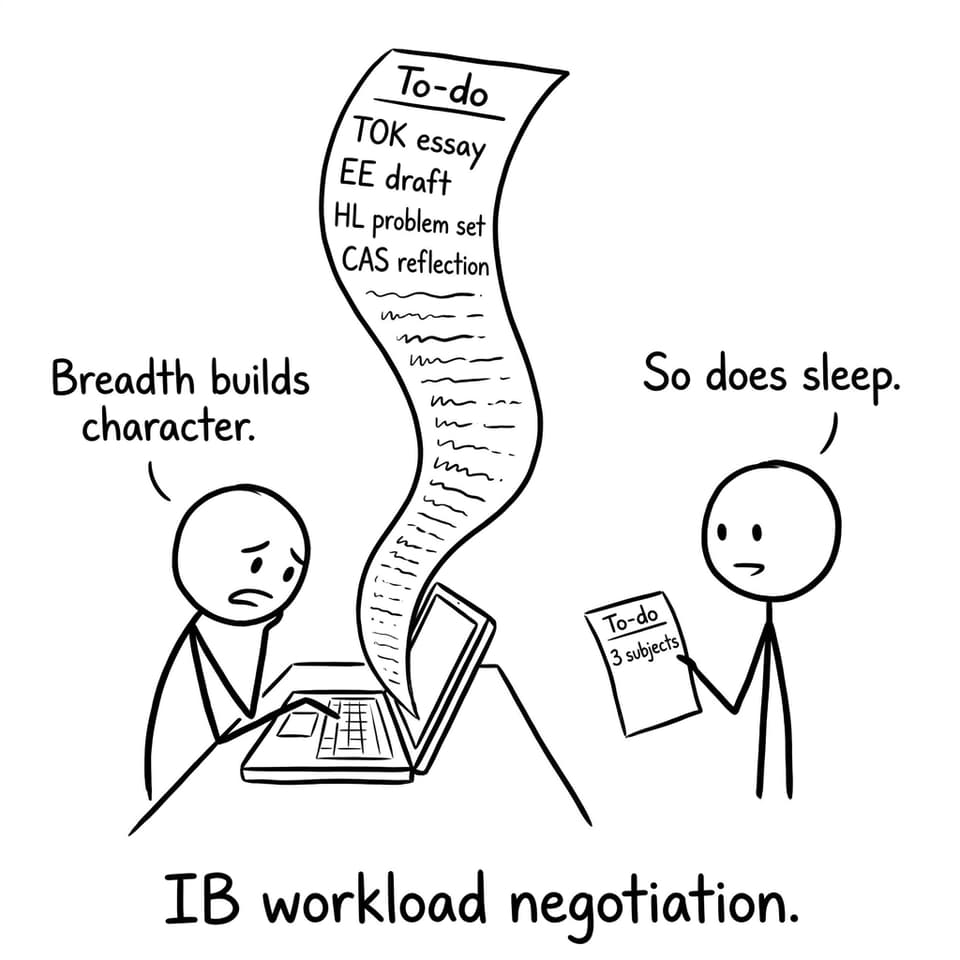
The IB Diploma Programme asks you to hold two truths at once: you must be broad and precise. You take six subjects (usually 3 HL, 3 SL), then add the core requirements (TOK, Extended Essay, CAS). That design is why IB often feels like training for university, not just testing for it.
For exam prep, the hidden advantage of IB is that it rewards systems. When you build a loop of concept review, active recall, and exam-style practice, the workload stops being random. Tools help: RevisionDojo’s RevisionDojo for IB hub connects Study Notes, Flashcards, the Questionbank, and AI Chat so your revision actually compounds.
A-Levels: early specialization, late exam pressure
A-Levels are built for focus. You usually study three (sometimes four) subjects in depth, and assessment is strongly exam-weighted at the end. That’s ideal if you already know your direction (for example, Maths/Physics/Chemistry for engineering) and you prefer fewer moving parts.
From an IB student’s perspective, the key contrast is cognitive switching. In A-Levels, you switch less often, but each subject demands deeper, longer stretches of mastery. The pressure spike near final exams can be intense, because so much rides on a narrow set of papers.
AP (American curriculum): flexible, but you must self-curate rigor
AP courses sit inside a broader American high school program, where GPA, school assessments, and electives matter alongside AP exams (and sometimes SAT/ACT). The upside is choice: you can explore widely, then add AP depth where you want it.
The downside is that rigor varies by school and by how many APs you take. Unlike IB, there’s no built-in core like TOK or the Extended Essay that forces sustained research and reflection. If you thrive on autonomy, AP can be perfect. If you need structure, IB may feel safer.
What matters most for IB students preparing for exams
If you’re already in IB, the “best curriculum” question becomes practical: how do I turn effort into marks? Three moves work across subjects:
Practice like the exam, not like the textbook
Use an exam-aligned system such as the Questionbank to drill weak topics, then get feedback with Grading tools and AI Chat. RevisionDojo’s guide on an IB question bank explains what to look for.
Build memory daily (short sessions beat heroic weekends)
Spaced repetition is the quiet superpower of IB. Use IB Flashcards with Spaced Repetition (SRS) and the Flashcards feature to keep definitions, processes, and case studies alive.
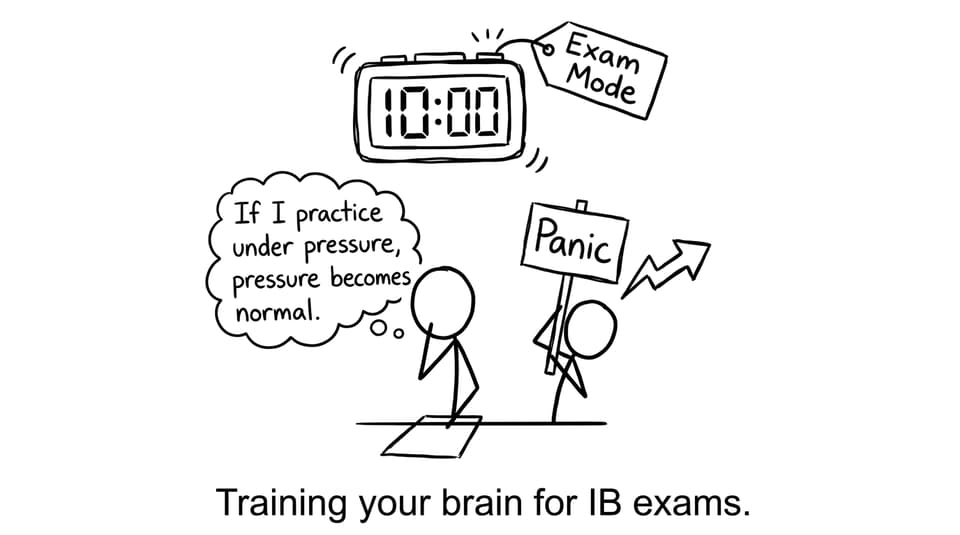
Rehearse pressure with timed papers
Timed practice turns fear into familiarity. Use IB Predicted Papers as weekly rehearsal, then patch gaps with Study Notes. This article on IB predicted vs specimen papers clarifies how to use each without magical thinking.
Conclusion: the “best” curriculum is the one you can execute
There isn’t a universal winner between IB, A-Levels, and AP. There’s only the curriculum that matches your goals and the system you’ll actually follow when motivation dips. If you’re in IB right now, your edge comes from building repeatable habits: learn with notes, lock it in with flashcards, prove it with questions, and rehearse it under timed conditions.
If you want one place to run that whole loop, start with RevisionDojo for IB and build your next week around the Questionbank, Flashcards, AI Chat, Grading tools, Predicted Papers, and Mock Exams. Your future self will feel the difference on exam day.
