



When people talk about IB admissions, they often make it sound like a single door that opens on one magical date.
But if you’ve ever watched a school year fill up in real time: clubs, CAS plans, subject choices, mock exams, deadlines, you know the truth: the IB is built on structure. And structure rewards the student who shows up early.
If you’re an IB student preparing for exams, you might wonder why admissions timelines matter to you. Here’s the quiet reason: admissions dates control when subject choices lock, when support systems begin, and when your academic “runway” starts. In the IB, runway is everything.
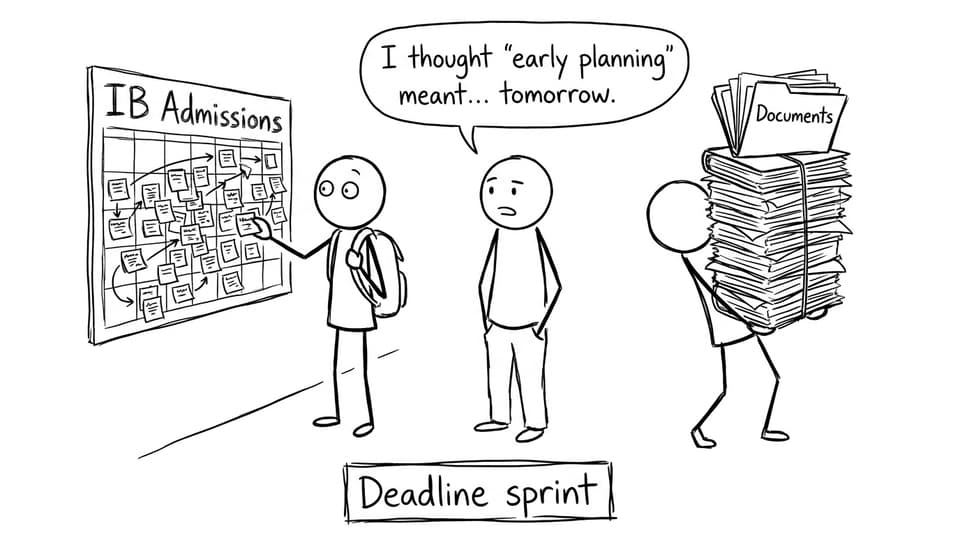
IB admissions start dates (quick global checklist)
Use this as a simple, high-signal map:
-
Most IB schools open applications 9-12 months before the academic year begins.
-
Common cycle: Sep to Nov open, Oct to Jan assessments/interviews, Feb to Mar decisions.
-
PYP is often flexible (sometimes rolling admissions).
-
MYP usually has fixed entry grades (often 6, 7, 9), but varies.
-
DP is the most structured: starts Aug/Sept, and mid-year entry is rare.
While you track dates, keep your studying steady. A calm routine compounds; see How to Study for IB Exams: Step-by-Step Guide.
Understanding IB programme entry points (PYP, MYP, DP)
The IB isn’t one program. It’s a sequence, and each stage has its own admissions rhythm.
Primary Years Programme (PYP): ages 3-12
PYP admissions are often the most forgiving. Many schools accept students year-round if spaces exist, especially in international settings where families relocate mid-year.
Still, don’t assume “rolling” means “relaxed.” Popular schools can fill quickly, and waiting for the last minute is how families end up choosing based on availability, not fit.
Middle Years Programme (MYP): ages 11-16
MYP entry points tend to cluster around transition years. Many IB schools commonly accept new students in:
-
Grade 6
-
Grade 7
-
Grade 9
Admissions may include placement assessments, interviews, and transcript checks. Later entry can happen, but the closer you get to the DP years, the more alignment matters.
Diploma Programme (DP): ages 16-19
This is the admissions “main event.” The IB DP is a two-year track with HL/SL planning, internal deadlines, and a lot of sequencing. That’s why most schools start DP in August or September and rarely accept students mid-year.
If you want context on DP readiness, read What Are the Requirements to Join the IB Program?.
Typical IB admissions timeline (what “early” usually means)
Across many regions and school types, IB admissions commonly follow this pattern:
-
September to November: application window opens
-
October to January: entrance assessments and interviews
-
February to March: decisions released
For DP entry specifically, a good rule is: apply in the autumn of the previous year.
Example: if you start DP in September 2025, you often apply in autumn 2024, then hear back by early 2025.
This matters even if you’re already in an IB school. Subject availability, class sizes, and staffing decisions happen early. The earlier your plan is clear, the less stressful DP1 becomes.
Regional differences in IB admissions (what changes by country)
Admissions timing is global, but not identical.
United States
Public IB programs are often tied to district or magnet systems, with surprisingly early deadlines (sometimes October). The process can be formal and centralized.
United Kingdom and Europe
Many IB schools are private, and the cycle often begins in autumn. Interviews are common, especially for DP.
Asia and international schools
International schools can open applications 12-15 months in advance, especially where visas and relocation are part of the family decision. Some schools are flexible, but competitive campuses fill early.
What the IB admissions process usually includes
Even though each school is different, most IB admissions processes include some mix of:
-
Application form
-
Transcripts and school reports
-
Teacher recommendations
-
Personal statements (more common for DP)
-
Interviews (often for older applicants)
-
Entrance or placement assessments
Here’s the part students miss: the process is often testing your readiness for the IB style of work, not just your grades. Clear communication, self-management, and academic consistency count.
To keep your academics strong while juggling admin tasks, build a repeatable revision loop. RevisionDojo makes that loop practical: use the Questionbank for targeted practice, then reinforce weak spots with RevisionDojo for IB resources.
How an IB student can stay exam-ready during admissions season
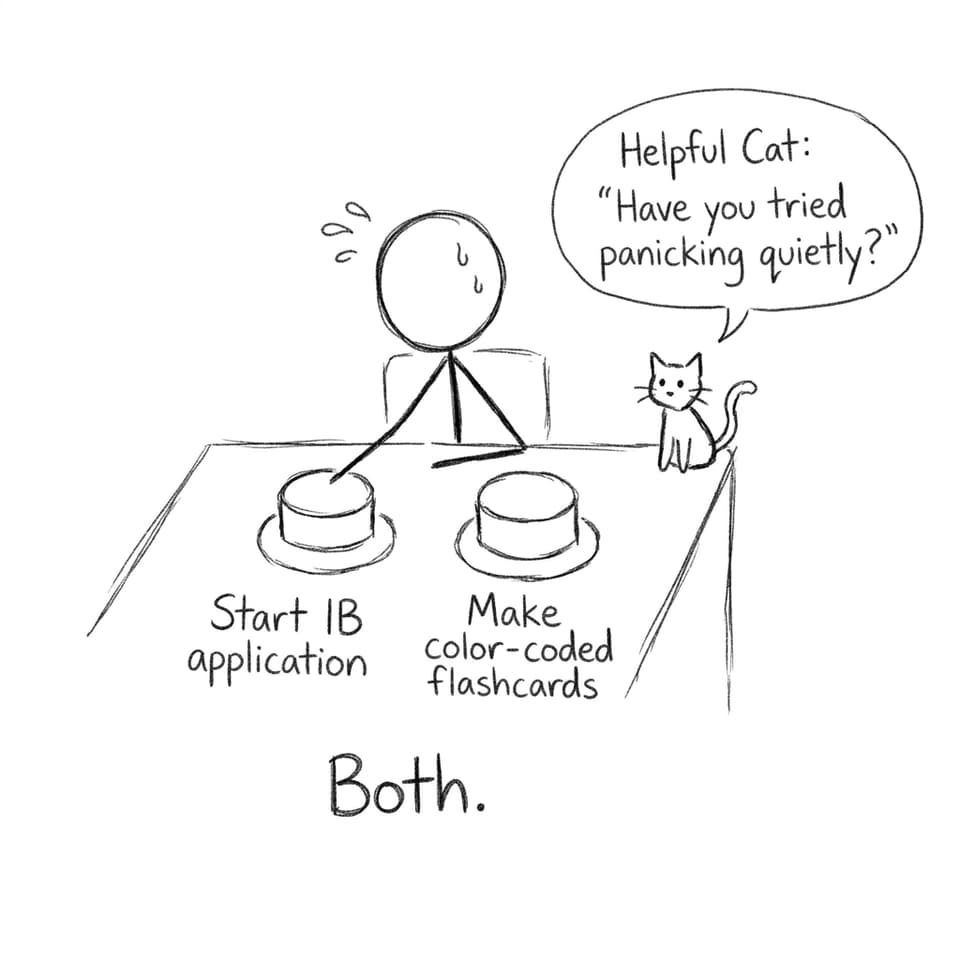
If you’re preparing for exams, admissions tasks can feel like someone added a second syllabus.
A simple approach:
-
Keep daily recall short and non-negotiable (Flashcards work well).
-
Do 3-5 focused practice sets per week (Questionbank style practice).
-
Add timed sessions gradually so exam technique doesn’t become a surprise.
For a calm timeline, see How Long Before the IB Exam Should I Start Preparing for It? and How to Prepare for IB Final Exams Efficiently.
RevisionDojo is especially useful here because you don’t have to stitch tools together: Study Notes, Flashcards, AI Chat, Grading tools, Predicted Papers, Mock Exams, a Coursework Library, and Tutors all sit in one place, so your revision stays stable even when life isn’t.
If you want a single overview hub, International Baccalaureate (IB) is a good starting point.
Closing: treat IB admissions like the first exam
The best way to think about IB admissions start dates is simple: they are the first test of the skill you’ll need all the way to finals: planning before you feel ready.
If you start early, you don’t just submit forms on time. You buy yourself calm. You get better subject choices. You enter the IB with momentum instead of regret.
And when it’s time to turn that momentum into exam results, RevisionDojo is built for the whole journey: Questionbank practice, Study Notes, Flashcards, AI Chat, Grading tools, Predicted Papers, Mock Exams, a Coursework Library, and Tutors, all designed to help IB students prepare with clarity, not chaos.
For more strategy, browse Best Resources for IB Exam Preparation and How 45-Point IB Students Prepare for Exams.