
The first time the IB felt real wasn’t in a classroom.
It was on a random Tuesday night, when I looked up from my laptop and realised I’d spent two hours perfecting a paragraph that would earn, at best, one mark. Not because I was lazy or dramatic. Because the IB has a way of quietly raising the standard of what “good enough” means, then asking you to meet it six times at once.
If you’re an IB student preparing for exams, you don’t need hype. You need a realistic picture of what the IB feels like day-to-day, what actually helps when the workload piles up, and how students survive the final stretch without burning out.
This is that picture.
The IB experience in one sentence (and why it’s complicated)
The IB experience is a two-year course in doing difficult things at the same time: learning content, writing like a mini-academic, managing deadlines, and staying human.
That’s why people describe IB with contradictions. It’s structured but chaotic. It’s global and personal. It’s exhausting, and also weirdly meaningful.
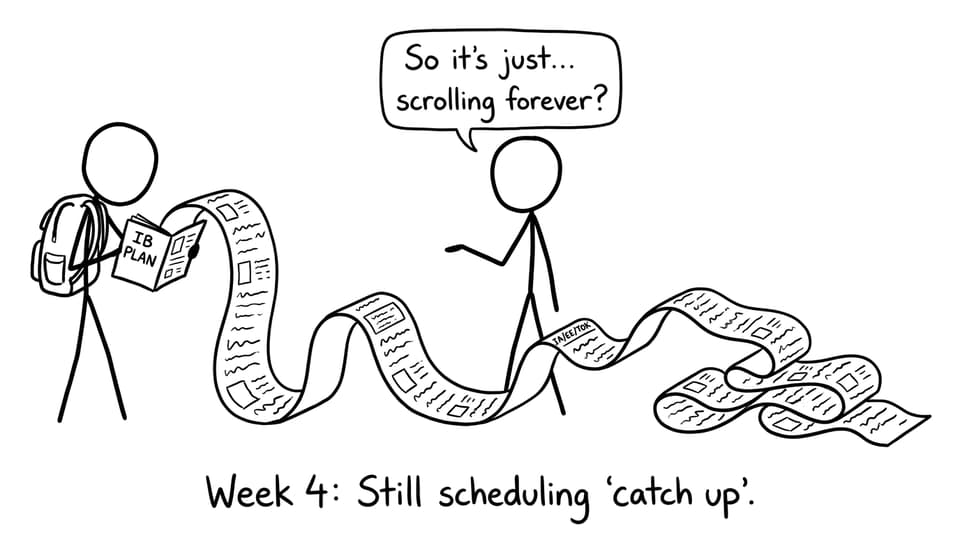
On paper, the IB is “six subjects plus the core.” In reality, it’s the constant switching cost of being many students inside one student: the mathematician in the morning, the historian at lunch, the scientist after school, and the reflective philosopher at 11:47 p.m. writing TOK.
A quick checklist: what makes the IB feel heavy
If you’re trying to name the source of your stress, it usually falls into a few buckets:
-
Six subjects at once (breadth + depth)
-
Internal Assessments (IAs) that take longer than expected
-
Extended Essay (EE) momentum: starting is hard, finishing is harder
-
TOK: thinking deeply on a deadline
-
Two years of content landing on a single exam season
-
Time management that stops being optional
-
Pressure: from grades, from comparisons, from your own expectations
When students say “IB is hard,” they often mean: “IB is crowded.” The difficulty is rarely one topic. It’s the overlap.
What sets the IB apart (from a student’s chair)
Other programmes can be demanding. But the IB is demanding in a particular way: it forces you to hold multiple kinds of thinking.
You don’t just learn Biology. You learn Biology, and how to write an IA that looks like Biology. You don’t just read literature. You learn how to defend an interpretation under timed conditions. You don’t just “know” Economics. You learn the examiner’s language for explaining it.
This is where the IB becomes less about intelligence and more about systems.
Students who thrive usually do three things early:
-
They practice with exam-style questions rather than only re-reading notes.
-
They build a feedback loop, so mistakes turn into patterns they can fix.
-
They protect their attention like it’s a grade.
On RevisionDojo, that “systems” approach is built into the platform: the Questionbank for targeted practice, Study Notes for clarity, and Flashcards for memory that survives exam stress.
A realistic week in the life of an IB student
Most IB weeks don’t feel heroic. They feel like quiet trade-offs.
Monday: you promise you’ll start the IA “properly” this week.
Wednesday: a test appears. Not a surprise test, just a test you forgot was coming.
Friday: someone mentions the EE. Your brain briefly leaves your body.
Weekend: you do a little of everything, and none of it feels finished.
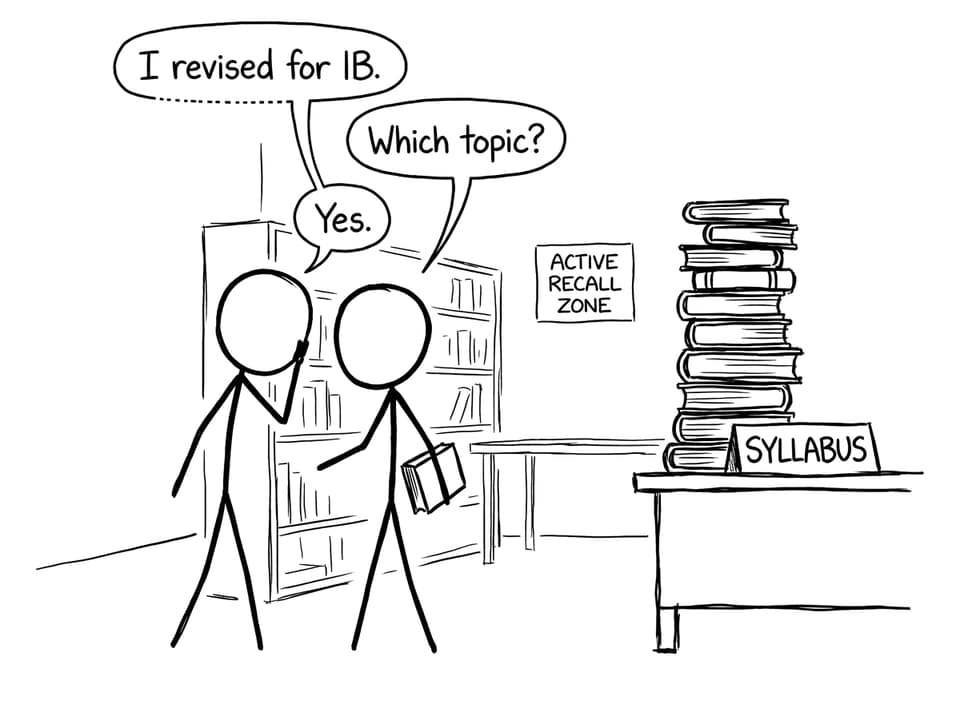
This is why exam preparation in IB often fails when it’s vague. “Revise Chemistry” is not a plan. “Do Topic 4 weak areas, then timed Paper 2 section” is a plan.
If you need a structured way to turn panic into steps, start at RevisionDojo for IB and build a routine around one subject at a time.
The hardest part of IB isn’t content (it’s collision)
The content is learnable. The collision is what hurts.
Collision is when:
-
Your IA draft is due,
-
your teacher announces a mock,
-
TOK wants a polished paragraph,
-
and your brain also wants eight hours of sleep.
In IB2, collision becomes the default setting.
The students who handle it best don’t magically become more motivated. They become more honest about energy. They plan work in smaller blocks. They stop trying to “finish everything” and start trying to move everything forward.
A practical way to do that is a simple three-part daily loop:
-
Understand (10-20 min): use Digital IB Study Notes when you’re stuck.
-
Recall (5-10 min): spaced repetition with IB Flashcards with Spaced Repetition (SRS).
-
Perform (25-45 min): targeted practice in the IB Question Bank: Thousands of Practice Questions.
That loop works because the IB rewards performance under constraints, not effort in theory.
The emotional side of IB (the part nobody grades)
There are emotional highs in the IB: submitting the EE, finishing an IA, finally understanding a topic that used to feel impossible.
But the emotional lows are quieter. They often sound like:
-
“Everyone else is ahead.”
-
“I’m doing a lot, but my grades aren’t moving.”
-
“I can’t tell if this is good.”
This is where support matters.
Sometimes support is a friend who studies with you. Sometimes it’s a teacher. And sometimes it’s having tools that reduce the friction: the kind where you don’t lose an hour searching for “how to structure this answer.”
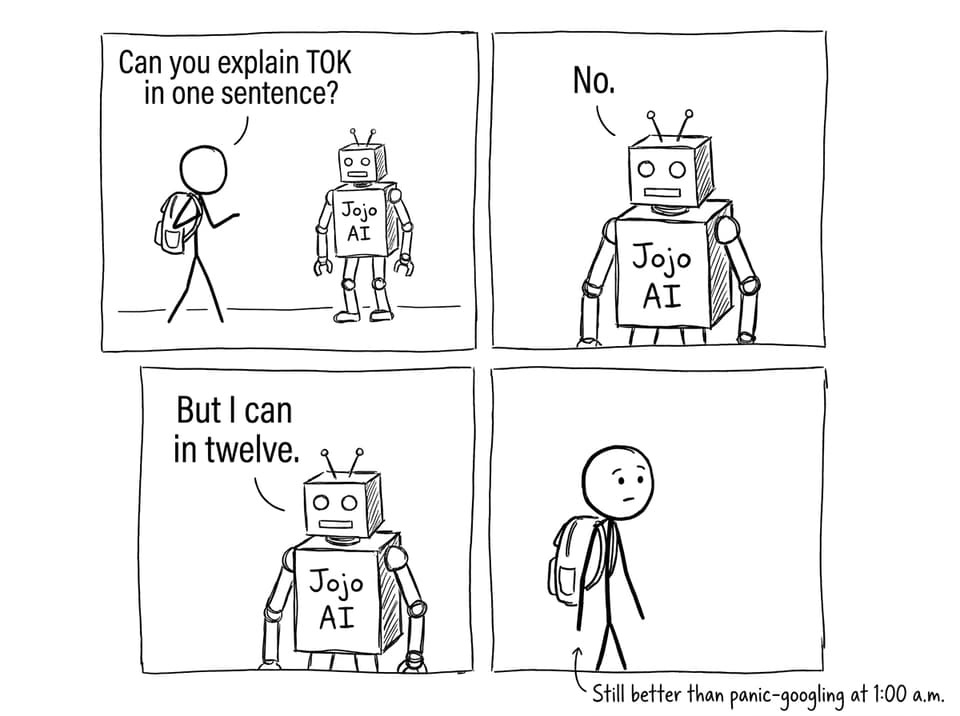
That’s why RevisionDojo’s AI Chat can be a calm companion: not to do the work for you, but to help you keep moving when your brain locks up. Pair that with Grading tools for mark-scheme-aligned feedback, and your revision becomes less guesswork and more adjustment.
What you actually gain from IB (that shows up later)
It’s tempting to treat IB as a tunnel you crawl through to reach university. But there’s a reason many graduates say the first year of university feels manageable afterward.
The IB trains you in:
-
Research habits (EE and strong IAs teach real inquiry)
-
Writing under rules (structure, citations, clarity)
-
Thinking in criteria (what earns marks vs what sounds smart)
-
Stamina (doing hard things repeatedly)
Even CAS has value when it’s done with intention, because it’s practice at being a person who can contribute beyond grades.
Exam prep in the IB: what students wish they’d done earlier
Most students don’t regret not “working harder.” They regret working hard in ways that didn’t transfer to marks.
Here’s what tends to work earlier than you think:
Use IB-style practice as soon as you can
The IB has a specific way of asking. Revision feels different when you’re learning those patterns.
Build that habit with the Questionbank, and when you’re ready to simulate full papers, use IB Predicted Papers by IB Examiners (Free) to rehearse timing and coverage realistically.
Treat feedback like a map
Doing questions isn’t the same as improving. Improvement comes from diagnosing recurring mistakes.
If you’re writing long responses, use Grading tools to learn what the mark scheme wants in your phrasing and structure. If you’re not sure what “evaluate” or “to what extent” really demands, ask AI Chat to translate the command term into an action plan.
Don’t let coursework sabotage your exams
Coursework matters, but it can quietly consume all your revision time.
If you’re in IA/EE/TOK season, reduce uncertainty by reading strong models in the IB Coursework Examples: IA, EE and TOK Exemplars. It’s not about copying. It’s about calibrating what “good” looks like so you stop rewriting blindly.
Closing reflection: the honest truth about the IB
The IB experience is not a constant grind, and it’s not a constant glow-up. It’s a repeating cycle of confusion, effort, small progress, and sudden deadlines.
But if you’re preparing for IB exams right now, here’s the good news: you don’t need to feel “ready” to start revising effectively. You need a routine that is small enough to repeat, and honest enough to show you what to fix.
RevisionDojo was built for that reality. Use the Questionbank to practise what the IB actually asks, Study Notes to clarify topics fast, Flashcards to keep memory alive, AI Chat to get unstuck, Grading tools to learn what earns marks, Predicted Papers and Mock Exams to build exam stamina, the Coursework Library to reduce IA/EE/TOK uncertainty, and Tutors when you want human guidance.
If the IB is going to demand two years of your attention, you might as well make those hours count.