


The quiet moment you realize the IA wasn’t “extra”
There’s a point in every IB year when the IA stops feeling like a project and starts feeling like a personality test. Not because it’s impossible, but because it asks something school rarely asks: Can you steer your own thinking for weeks without being carried by a worksheet?
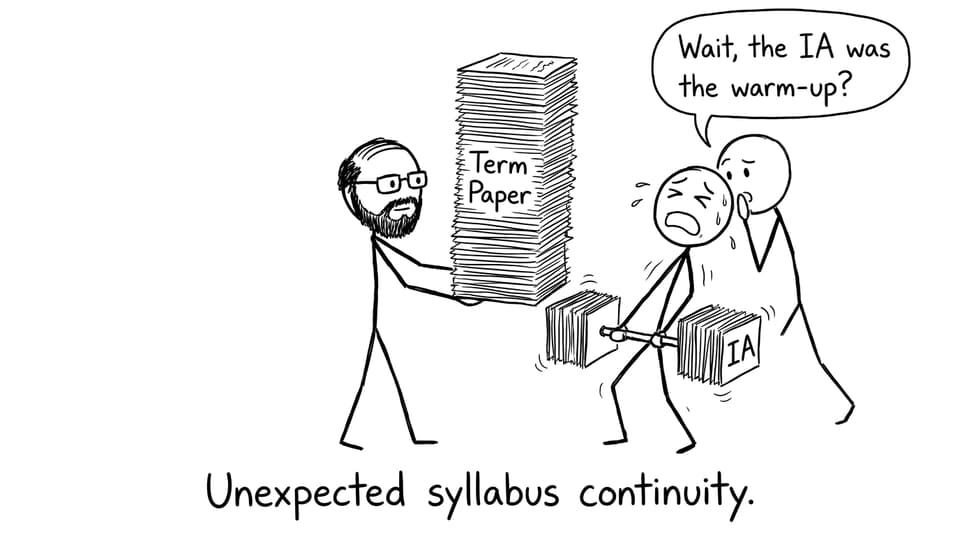
That’s why the IA is stressful. And it’s also why it’s useful. The Internal Assessment is designed as a small, controlled version of university work: independent research, evidence-driven writing, academic judgment, and long-term planning. If you treat your IA as training, university won’t feel like a new planet. It will feel like the next chapter.
IA to university: a fast checklist of what transfers
Here’s what your IA quietly prepares you for:
-
Defining a focused research question (without being told what it is)
-
Choosing sources and data that earn marks because they matter
-
Turning description into analysis (and analysis into judgment)
-
Managing deadlines with minimal supervision
-
Writing clearly enough that a tired marker can follow your logic
If you want the big picture of what the IA is across subjects, start with IB Internal Assessment: A Complete Guide.
Independent research: the IA teaches you to drive
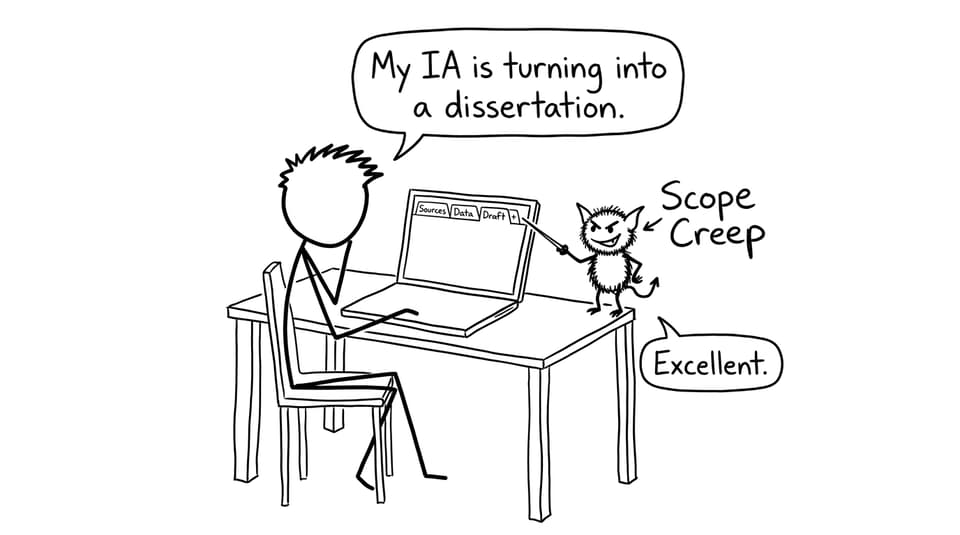
At university, you’ll be rewarded for choosing a good question more than for writing a long answer. The IA gives you that lesson early. You learn to narrow a topic into something testable, arguable, and finishable.
That’s why improving your research question is not “admin.” It’s the intellectual steering wheel. If yours is still wobbly, use Refine Your IA Research Question for Clarity and Focus as a reset button, and keep IB IA Guides open while you plan.
RevisionDojo makes this easier to practice intentionally: you can compare structures across subjects using the Coursework Guides and see what strong work looks like in the Coursework Exemplars Library.
Analysis and judgment: what the IA rewards is what university grades
University marking rarely rewards “more information.” It rewards better decisions: which evidence to use, what it proves, and what its limitations are.
That’s exactly what your IA rubric is trying to teach. When you move from “here are my results” to “here’s what they mean,” you’re building the muscle you’ll use in lab reports, essays, and dissertations.
If analysis feels like the hardest part of your IA, read What Real Analysis Looks Like in an IB IA. It’s the difference between narrating and arguing.
And when you’re writing, a strong opening matters more than students think. Your IA introduction is where you signal clarity, purpose, and scope. This guide helps: How to Write a Strong IA Introduction.
Time management: the IA is your first long deadline
The most surprising university shock isn’t difficulty. It’s distance. Deadlines are far away until they aren’t, and nobody checks whether you’ve started.
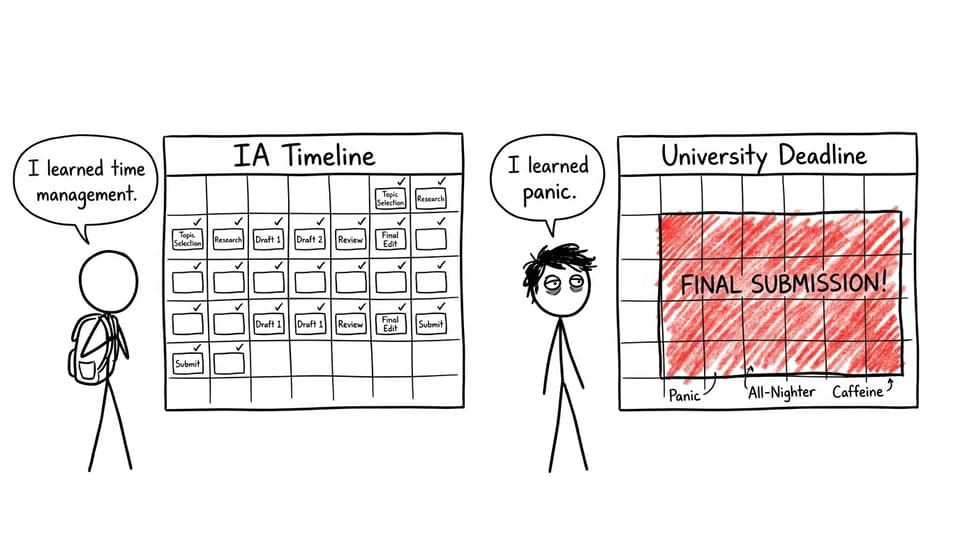
Your IA trains you for that reality. You learn to create momentum without daily validation, to plan in stages, and to keep going even when feedback is delayed.
For a calmer system that actually works, use How to Plan an IB IA Without Falling Behind.
How RevisionDojo helps you use the IA as real training
If you’re also preparing for exams, the goal is simple: finish a strong IA without sacrificing revision.
RevisionDojo is built for that kind of balance. You can:
-
Use the Questionbank to keep exam practice moving while coursework runs in the background
-
Build understanding fast with Study Notes
-
Lock in content with Flashcards
-
Get rubric-aligned feedback using the IB Coursework Grader
Those tools sit alongside RevisionDojo staples that students lean on when pressure rises: AI Chat for quick clarification, Grading tools for direction, Predicted Papers and Mock Exams for timing practice, a Coursework Library for models, and Tutors when you need a human to help you choose the next step.
The point of the IA is bigger than the grade
If you only see the IA as an obstacle, you’ll rush it and resent it. If you see the IA as rehearsal for university, you’ll notice something calmer: you’re already learning how to think like a student who can handle open-ended work.
When you’re ready to build that skill on purpose, start with the Coursework Guides and the IB IA Guides, then use RevisionDojo’s Questionbank, Study Notes, Flashcards, AI Chat, Grading tools, Predicted Papers, Mock Exams, Coursework Library, and Tutors to keep both coursework and exams moving in the same direction.


