
The first time someone asks, “What’s a good Pre-IB average?” it rarely feels like a math question.
It feels like a forecast.
Because if Pre-IB is the on-ramp, then the IB Diploma Programme is the highway: faster, wider, less forgiving of vague habits. Your average isn’t destiny, but it is a signal. It tells you whether your current system can handle the pace of IB essays, problem sets, internal assessments, and timed exams.
Below is a grounded way to understand expectations, translate grades across systems, and build a plan that makes IB feel manageable.
What Pre-IB is (and what it is not)
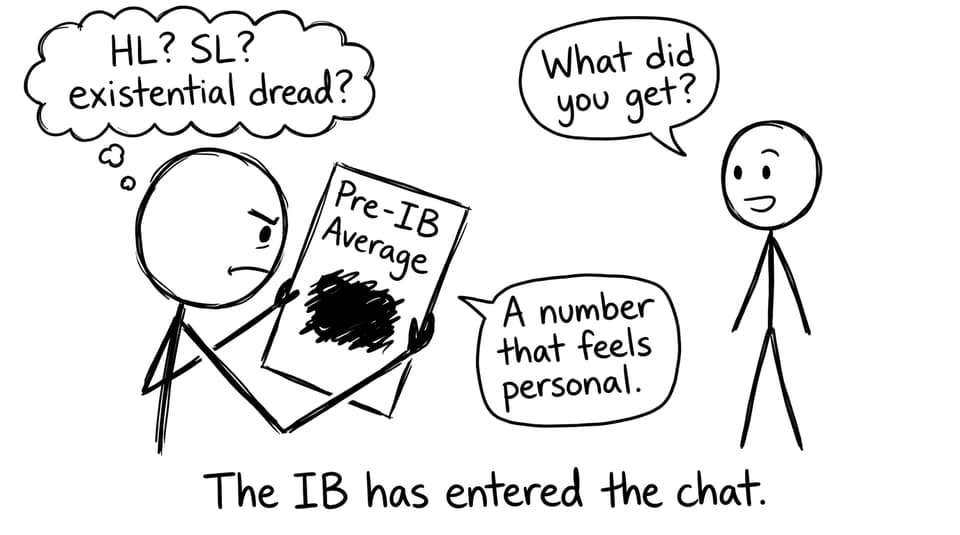
Pre-IB is usually a school-designed bridge into the IB Diploma Programme (DP). It’s not officially part of the IB organization, so the rules vary by school. But the intent is consistent: prepare you for IB-style thinking.
That means more than “harder homework.” It means practice with analysis, structured writing, multi-step problem solving, and the expectation that you can explain why an answer works.
If you’re still deciding whether the track is worth it, read Is a Pre-IB Diploma Worth It? What to Know. It clarifies what Pre-IB actually changes about your day-to-day learning.
Quick checklist: what schools usually mean by “good”
Before we talk numbers, use this short checklist. A “good” Pre-IB average for IB readiness usually includes:
-
Consistent performance across core subjects (not only one strength area)
-
Evidence you can handle writing and problem-solving under time pressure
-
A trend that’s steady or improving (schools notice momentum)
-
Teacher confidence that you can manage HL-level workload
Numbers matter, but schools often use them as a shortcut for these deeper traits.
What’s a good Pre-IB average for IB admission?
While every school sets its own thresholds, a commonly cited “strong” range looks like this:
-
GPA 3.7+ (out of 4.0)
-
85%+ average
-
Mostly A / B+ grades in core subjects
Many programs will still consider students closer to 80-85% (or about a 3.3 GPA) if there’s a strong upward trend, solid teacher recommendations, or a sensible HL/SL mix.
If you want to understand what programs typically check and which years matter most, see When Applying to IB What Grades Do They Look At?.
The practical interpretation
A good Pre-IB average for IB isn’t about perfection. It’s about margin.
IB workloads don’t arrive one at a time. They overlap. So a strong average usually signals you have enough buffer to handle a tough week without everything collapsing.
GPA vs percentage vs IB 1-7: a simple translation
Schools grade Pre-IB differently, but students all ask the same question: “What does my average mean?”
Here’s a helpful approximation many students use to sanity-check their position before IB:
-
GPA 4.0 ~ 90-100% ~ roughly IB 6-7 performance
-
GPA 3.7 ~ 85-89% ~ roughly IB 6 performance
-
GPA 3.3 ~ 80-84% ~ roughly IB 5 performance
-
GPA below 3.0 ~ below 80% ~ often IB 4 or below performance
This isn’t an official conversion. But it’s useful because it shifts your thinking from “Am I smart?” to “Am I building IB-level habits?”
If you like numbers and want to track progress once you start doing timed practice, bookmark the IB Grade Calculator.
Where your Pre-IB marks matter most (for IB success)
Not all grades carry the same predictive weight for IB.
English (and writing-heavy humanities)
If your writing process is slow or unclear now, IB will amplify it. Theory of Knowledge and the Extended Essay reward structure, precision, and calm thinking. A strong Pre-IB English average often predicts smoother DP years.
Math and sciences
These subjects punish small gaps. If you’re aiming for HL in math, chemistry, physics, or biology, your Pre-IB average matters because it reflects whether your foundations are automatic.
Your second language
Language skill grows through exposure and consistent practice, not last-minute bursts. If you’re weak here, your Pre-IB average can be the earliest warning sign.
To understand why IB gets intense so quickly, read How Hard Is the IB Program in Grades 11 & 12?.
How to raise (or protect) your Pre-IB average the IB way
The biggest shift is moving from “studying” to “training.” In the IB, marks come from what you can produce, under constraints, repeatedly.
Here’s a simple system that works even when motivation is low.
Build a loop: learn, recall, apply, correct
-
Learn (short): Use syllabus-aligned explanations so you stop over-reading.
-
Recall (daily): Lock key facts, definitions, and processes into memory.
-
Apply (often): Do exam-style questions, not only worksheets.
-
Correct (immediately): Track errors and reattempt them within 48 hours.
RevisionDojo is designed around this loop: Study Notes, Flashcards, a free Questionbank, AI Chat, Grading tools, Mock Exams, Predicted Papers, plus a Coursework Library and Tutors when you need human help.
Start with RevisionDojo for IB and build the habit of “notes then questions” using the Questionbank.
Use time boxes, not heroic sessions
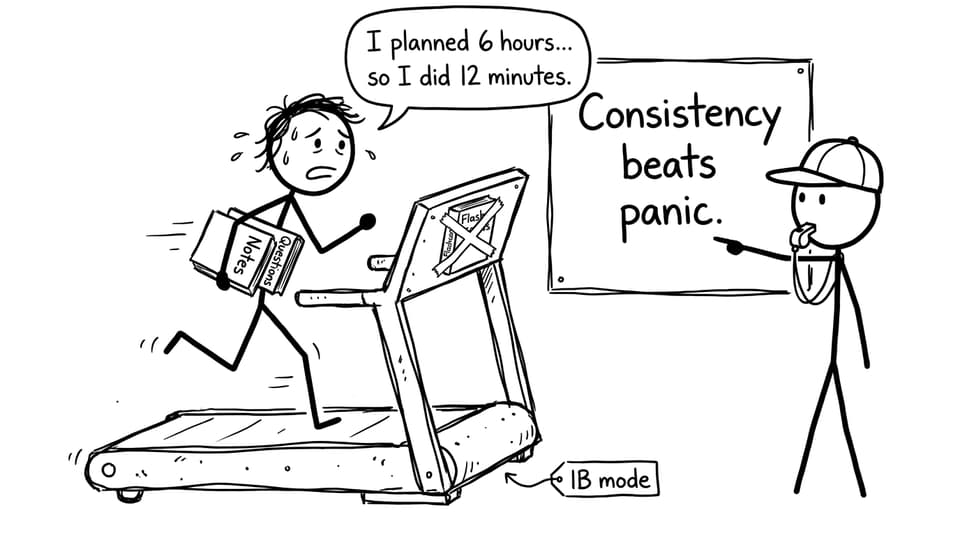
Pre-IB students often lose marks because they study in moods: long sessions when panic hits, and nothing when life gets busy. IB rewards boring consistency.
Try a 45-minute block:
-
15 minutes: Study Notes (one subtopic)
-
20 minutes: Questionbank practice (same subtopic)
-
10 minutes: mistake log + 3 flashcards
If you need a sustainable structure, Best Time Management Techniques for IB Students in 2025 is a practical reset.
Practice under pressure earlier than you think
Doing timed work in Pre-IB is like lifting light weights before the heavy season. You’re not proving greatness. You’re reducing surprise.
For realistic rehearsal later, understand how RevisionDojo uses full exam simulations with IB Predicted vs Specimen Papers: What They Mean and how students recover when things go badly in Failed Mock Exams? You Can Still Pass IB.
Common mistakes that quietly lower a Pre-IB average
Students don’t usually “stop caring.” They just build a fragile system.
Treating Pre-IB like a normal year
Pre-IB is supposed to be training for IB, not a tougher version of the same thing. If you only aim to finish assignments, you miss the point.
Overcommitting without a calendar
Many students try to prove they’re “IB material” by doing everything. But IB success is often about choosing fewer commitments and doing them with steadiness.
Passive studying
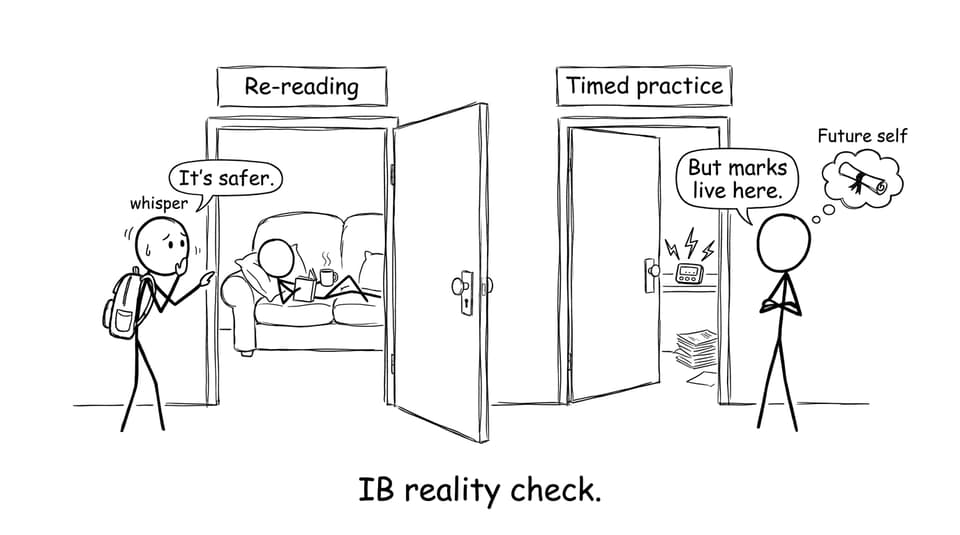
Rewriting notes and rereading chapters can feel productive. But IB marks reward retrieval, structure, and application. If you want to feel this difference, compare approaches in Average IB Student vs 45 Student: The Real Difference.
Conclusion: a “good” Pre-IB average is really a good IB system
A good Pre-IB average for IB readiness is often around 85%+ (or 3.7+ GPA), but the deeper goal is simpler: build habits that survive busy weeks.
If you’re already there, protect it by training like an IB student now: recall daily, practice often, correct quickly. If you’re not there yet, treat that as information, not a verdict.
When you’re ready to make improvement feel structured instead of stressful, start with RevisionDojo | IB & MYP Resources and build your loop using Study Notes, Flashcards, the free Questionbank, AI Chat, Grading tools, Mock Exams, Predicted Papers, the Coursework Library, and Tutors. The IB gets easier when your process becomes predictable.