

The first time most students hear about the IB, it sounds almost simple: six subjects, some extra “core” pieces, then exams.
Then real life arrives. A lab report lands on the same week as a history essay, your language oral is suddenly “soon,” and someone mentions an Extended Essay with the calm tone people use to describe storms they already survived.
This is what makes the IB Diploma Programme different: it’s not just a curriculum, it’s a two-year training ground for thinking, writing, and performing under pressure.
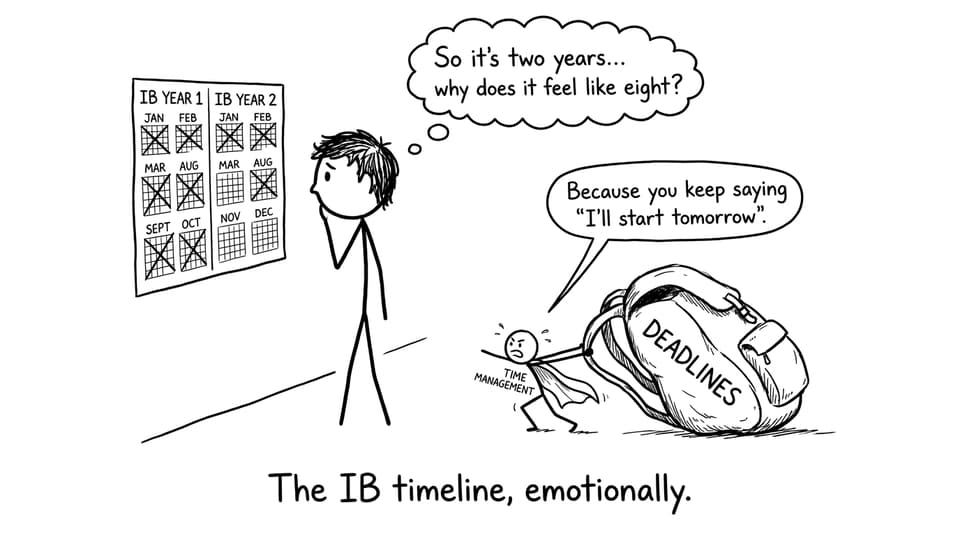
What is the IB Diploma Programme?
The IB Diploma Programme (often called the IB DP) is a globally recognised pre-university qualification designed mainly for students aged 16 to 19. It’s taught in schools across more than 150 countries and is known for balancing academic depth with breadth.
For exam-focused students, the practical point is this: the IB rewards students who can learn content and show skill. Not just “know the definition,” but explain it, apply it, evaluate it, and write it clearly under timed conditions.
If you want a high-level orientation to the ecosystem, start here: International Baccalaureate (IB) on RevisionDojo.
Quick checklist: what you actually have to complete in IB
Before we go deeper, here’s the simple map most IB students need:
-
Six subjects across required groups (with HL/SL choices)
-
The IB Core: Extended Essay (EE), Theory of Knowledge (TOK), and CAS
-
Internal Assessments (IAs) in subjects (coursework-style pieces)
-
Final exams at the end of the programme
To reduce the chaos, many students put everything into one workflow: learn content, practise questions, get feedback, then repeat. That’s exactly what RevisionDojo for IB is built for.
What subjects are included in the IB Diploma?
In the IB, you study six subjects across broad categories (languages, humanities, sciences, maths, and arts or an additional subject). Most students take three at Higher Level (HL) and three at Standard Level (SL), though schools vary.
The point of this structure isn’t to make you “do everything.” It’s to ensure you’re never only one kind of learner. The IB wants range: analytical writing, quantitative reasoning, structured argument, and interpretation.
When you’re revising, that range matters because it changes how you practise. Reading isn’t enough for most IB subjects. You need active recall and exam-style practice. A good starting place is RevisionDojo’s Study Notes feature, then turning key ideas into retrieval practice.
What is the IB Core (EE, TOK, CAS)?
The IB Core is what makes the diploma feel like more than “six courses.”
Extended Essay (EE)
A 4,000-word independent research project. It teaches you how to build a focused question, research efficiently, and write like someone with a deadline (because you are).
Theory of Knowledge (TOK)
TOK asks how we know what we claim to know. In practice, it trains you to argue clearly, use examples intelligently, and weigh perspectives.
CAS
Creativity, Activity, Service is the human part of the IB. It’s designed to make you do something real beyond grades.
If you’re juggling these while preparing for exams, the best strategy is to reduce friction. Many students use one hub for planning and revision so nothing disappears. RevisionDojo App: The Smarter Way to Prep for IB Exams explains how to keep notes, practice, and feedback in one loop.
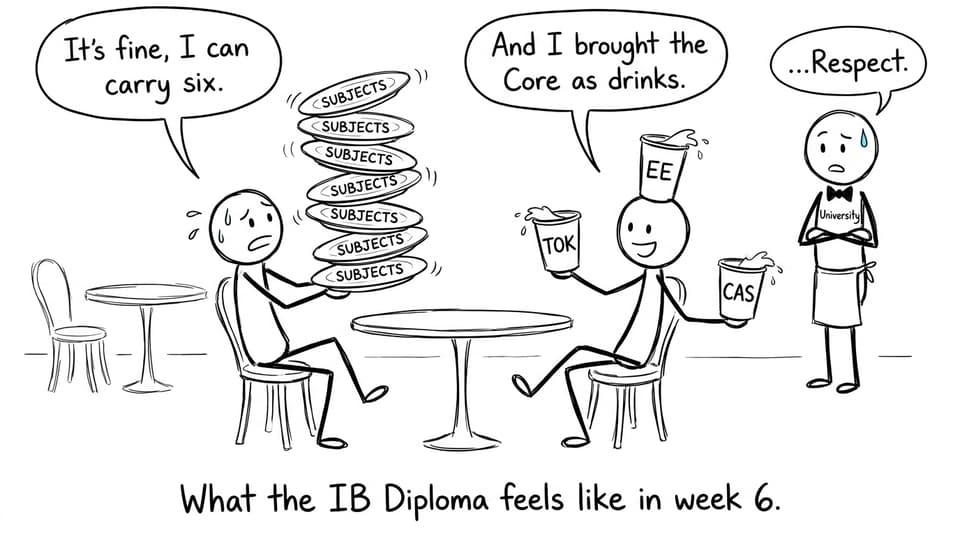
How long does the IB Diploma last?
The IB Diploma Programme lasts two academic years. Most students start in Grade 11 and finish in Grade 12 (or Years 12–13 in the UK system).
That two-year timeline is important for exam prep because you don’t “revise the IB” in one heroic sprint. You build the foundations in year one, then convert them into exam performance in year two.
Also worth knowing: once you earn the diploma, the IB qualification does not expire. Universities and employers can recognise it long after results day.
What makes IB hard (and how to make it manageable)
The difficulty of the IB isn’t one thing. It’s the stacking.
-
Six subjects create constant switching costs
-
The core creates long projects with invisible progress
-
IAs create deadlines that don’t care about your mood
-
Exams demand both knowledge and technique
To manage this, treat revision like training, not like panic.
A practical approach is:
-
Learn efficiently with Digital IB Study Notes
-
Convert what you learn into active recall using Flashcards (spaced repetition matters)
-
Prove it with exam-style practice in the Questionbank
-
Use AI feedback (like RevisionDojo’s AI Chat and grading tools) to fix mistakes fast
-
Build stamina with Mock Exams and Predicted Papers on RevisionDojo when you’re closer to exams
If you want the question-practice side broken down, see: IB Question Bank: Thousands of Practice Questions.
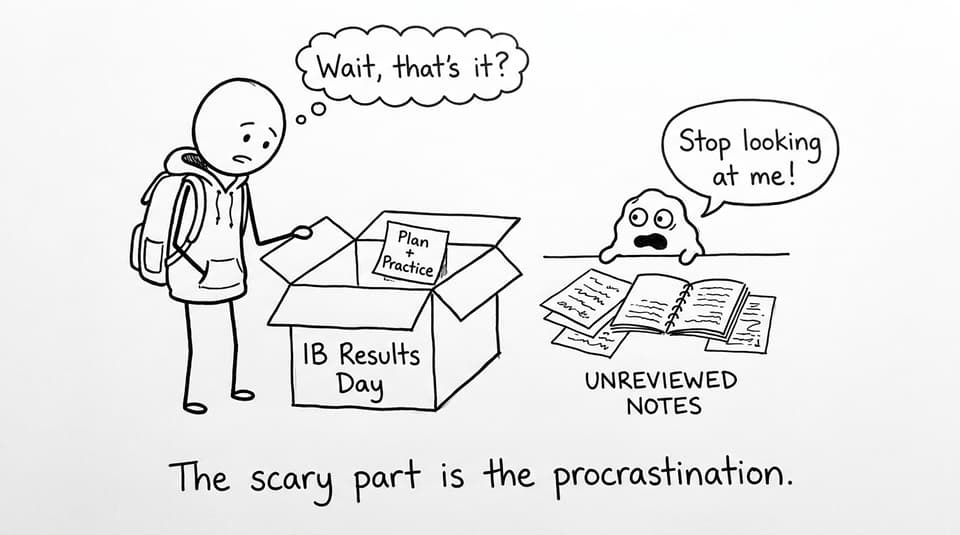
Conclusion: the IB is two years, but the habits last
The IB Diploma lasts two years, but it quietly builds skills that last longer: how to write under pressure, how to research without drowning, and how to keep showing up when motivation is unreliable.
If you’re an IB student preparing for exams, the goal isn’t to work endlessly. It’s to work in a loop that turns effort into marks: Study Notes for clarity, Flashcards for memory, Questionbank for exam skill, AI Chat and grading tools for fast feedback, and Mock Exams plus Predicted Papers for confidence under timing.
Build that system once. Then let it carry you through the two years that matter most. Start with RevisionDojo for IB.