


The moment costs stop being “just definitions”
In IB Business Management, cost questions often look gentle at first. Then you read the case study line: “Sales fell 15% last quarter.” Suddenly, your brain has to decide what changes, what doesn’t, and whether the business is in trouble.
That’s where the difference between fixed and variable costs becomes more than vocabulary. It becomes a way to predict pressure points: pricing, profits, break-even, and risk. And for exams, it gives you a clean chain of reasoning that examiners reward.
Fixed vs variable costs (exam-ready checklist)
Use this micro-checklist in any IB Business Management response:
-
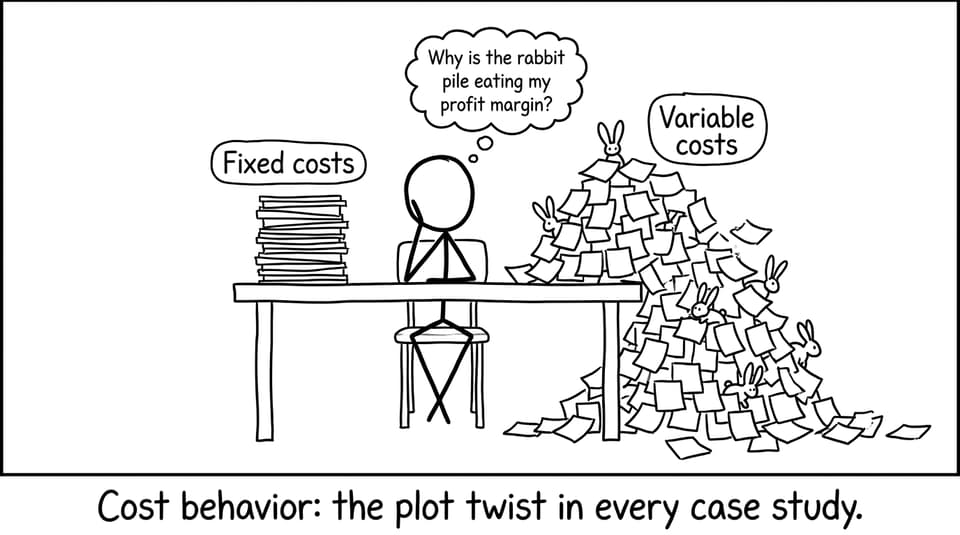
Define fixed costs: stay the same in the short run regardless of output (e.g., rent, insurance, salaried staff).
-
Define variable costs: change directly with output (e.g., raw materials, packaging, hourly wages, commission).
-
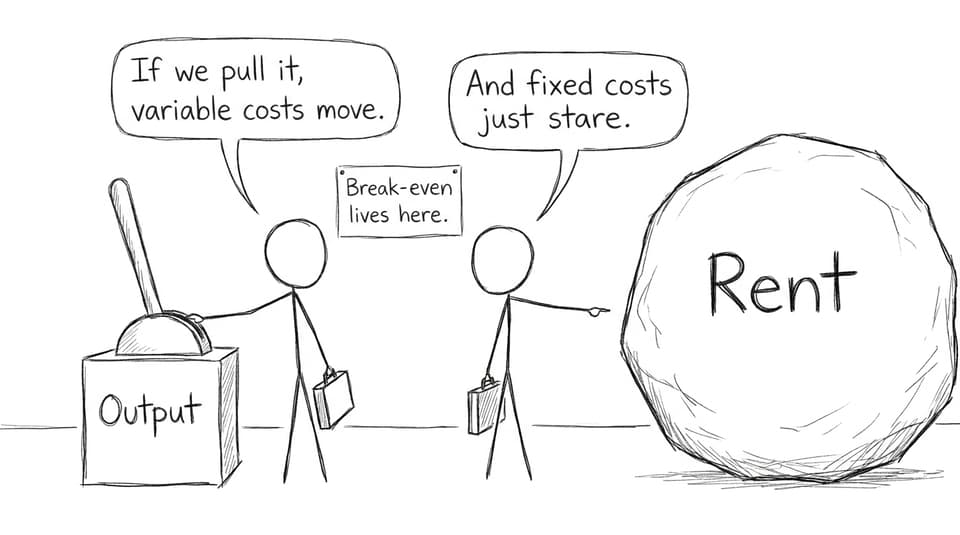
Link to break-even: higher fixed costs usually raise the break-even output.
-
Link to pricing: variable cost affects unit cost and contribution.
-
Link to risk: high fixed costs increase pressure when demand falls.
If you want the syllabus-aligned wording, start with 3.3.1 Types of costs.
Fixed costs in IB Business Management: the “baseline you must cover”
Fixed costs are the bills that arrive even if the business has a slow month. A shop still pays rent. A factory still pays its machinery lease. A company still pays insurance.
In IB Business Management, this matters because fixed costs shape operating leverage. If fixed costs are high, profit can rise quickly after break-even, but losses can appear quickly before it. That’s why businesses with expensive premises or automation can feel “fragile” when sales dip.
For revision, connect this to the broader finance unit: 3.3 Costs and revenues and the quick summaries in 3.3 Costs and revenues Cheatsheets.
Variable costs: the “per-unit reality” hiding inside every sale
Variable costs move with production. Make more units, and you usually buy more materials, use more packaging, and pay more hourly labour.
For IB Business Management exam technique, the key insight is that variable costs strongly influence:
-
Contribution per unit (selling price minus variable cost)
-
Profit margins
-
Whether a decision to increase output is actually worthwhile
This is also why operations decisions (outsourcing, automation, changing labour contracts) are cost decisions in disguise. If you need an operations-linked example, see 5.6.5 Cost to buy (CTB) vs cost to make (CTM).
Why the difference matters: break-even, pricing, and risk
Break-even analysis becomes easier (and more logical)
Break-even is the output where total revenue equals total costs. When fixed costs rise, the business must sell more units to cover that bigger “baseline.” When variable costs rise, each unit contributes less, so break-even can move further away too.
To practise this the way the IB asks it, use 5.5 Break-even analysis and the focused support in 5.5.2 Aspects of a break-even chart notes.
Pricing stops being guesswork
A business can’t price confidently if it doesn’t know its variable cost per unit. In IB Business Management, strong answers explain that price must at least cover variable costs in the short run, while fixed costs are recovered through total sales volume over time.
Risk becomes visible
High fixed costs create pressure in downturns because they must be paid regardless of output. High variable costs create a different kind of pressure: margins can shrink quickly as input prices rise. Either way, cost structure explains why a business feels stable or stressed.
How to use this in an IB exam answer
A high-scoring IB Business Management paragraph usually looks like this:
-
Define fixed and variable costs clearly.
-
Apply to the case (name one likely fixed cost and one variable cost).
-
Explain impact on break-even, pricing, or profit.
-
Add a judgement (risk increases/decreases, depends on demand stability, depends on operating leverage).
If you want exam-style practice with feedback, build reps using the 3.3 Costs and revenues Questionbank and explore topic sets from IB Business Management resources.
Closing: costs are the story beneath the numbers
The difference between fixed and variable costs matters because it explains why two businesses with the same sales can feel completely different levels of pressure. In IB Business Management, that insight helps you write sharper analysis about break-even, pricing strategy, and risk.
If you want this topic to feel automatic before exams, RevisionDojo makes it repeatable: review with Study Notes, lock in language with Flashcards, test application with the Questionbank, and use AI Chat to rehearse explanations until they sound like yours. Add Mock Exams, Predicted Papers, and Grading tools when you’re ready to practise under pressure, and you’ll stop fearing cost questions and start using them to score.