



A typical IB day doesn’t feel like a movie montage.
It feels like opening your laptop at 7:12 a.m., seeing three deadlines you swore were next week, and doing the quiet mental math of: “What can I move, what can I finish, and what can I start so Future Me doesn’t panic?” That is the hidden skill of the IB, not just intelligence, but rhythm.
This post breaks down what a realistic IB student routine often looks like during exam season, and how to make it calmer, not harder.
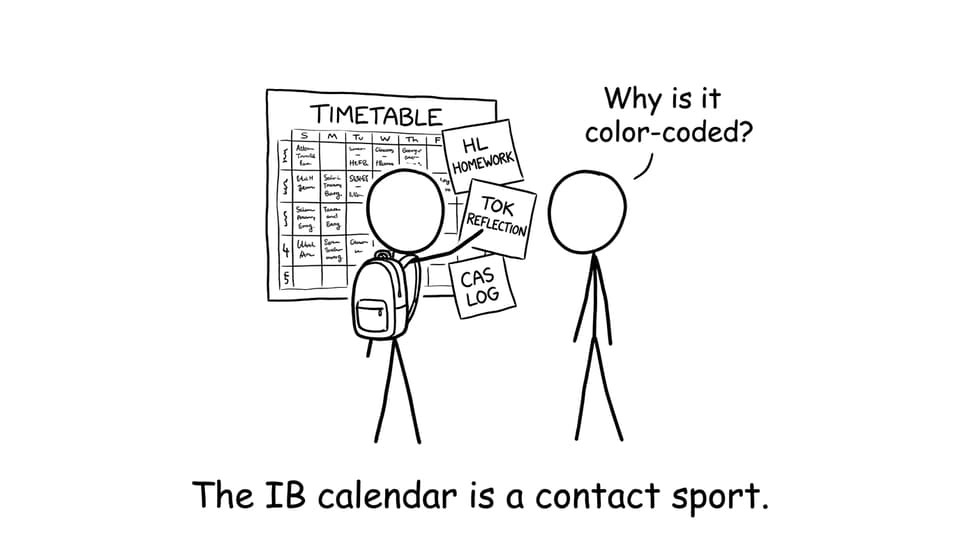
The typical IB day, at a glance (quick checklist)
Use this as a simple routine template and adjust it to your school schedule:
-
Morning classes: 2-4 academic lessons (often HL-heavy)
-
Midday: TOK or electives + a short recharge
-
Afternoon: STEM labs / writing workshops / study periods
-
After school: 2-4 hours of homework and revision
-
CAS: 30-90 minutes (some days, not all)
-
Night: light review, planning, and sleep protection
If you want your routine to actually support exam prep, build it around one loop: learn, recall, apply, review. RevisionDojo makes that loop easy with Study Notes, Flashcards, and the Questionbank.
Morning: classes that demand your best brain
Most IB school days start around 7:45-8:30 a.m. Morning lessons are usually where teachers place the highest-focus work: HL discussion, timed writing, problem-solving, or close analysis.
A realistic morning looks like:
-
You arrive and quickly scan what’s being assessed this week (tests, quizzes, IA checkpoints).
-
A class discussion turns into a mini-assessment because your teacher asks “So what’s the implication?”
-
You write something that’s graded on clarity more than effort.
This is where an underrated habit helps: keep your “morning friction” low. Instead of rewriting notes, skim a syllabus-aligned summary first, like RevisionDojo’s IB Notes hub, then mark the two points you want to ask about later.
Midday: TOK, electives, and the hidden admin time
Midday can feel like a gear shift. TOK discussions might move from ethics to language to “what counts as evidence?” within ten minutes. For many IB students, it’s also when the day’s quieter stress appears: CAS reflections, EE supervisor messages, group project coordination.
TOK days often include:
-
Knowledge questions that require examples, not opinions
-
Short reflective writing that’s easy to postpone (and then suddenly due)
-
Linking subjects together (which is great, unless your brain is tired)
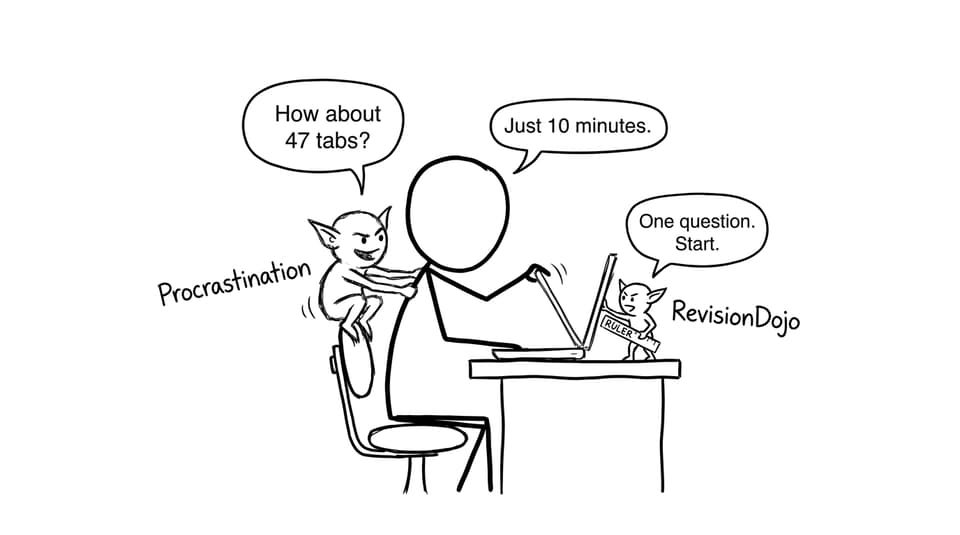
If TOK writing is piling up, use a quick support rule: draft ugly, then refine. When you get stuck, ask a precise question in RevisionDojo’s AI Chat (Jojo) and move forward, rather than waiting for “perfect clarity.”
Afternoon: where IAs, EE, and real studying happen
Afternoons are often more self-directed. This is where IB students either build momentum or lose it.
Depending on your subjects, you might have:
-
Science labs, data analysis, or IA experimentation
-
Math practice sets that punish small mistakes
-
Language or humanities writing workshops
-
Study periods that are supposed to be productive (but can disappear fast)
A good afternoon block has one clear output. Not “study biology.” Something like:
-
“Finish the IA method section draft.”
-
“Do 20 topic-filtered questions and correct mistakes.”
-
“Write one EE paragraph and add two citations.”
For exam prep, the fastest way to convert time into marks is targeted practice. Use the IB Question Bank guide and then go straight into the Questionbank feature to drill the exact topic you’re revising.
After school: the second shift (and how to keep it sane)
Classes often end around 3:30-4:00 p.m., but the IB day doesn’t. Most students do 2-4 hours of work, especially close to exams.
A sustainable after-school routine usually includes:
A short reset (15-30 minutes)
Food, shower, short walk. The goal is to mark the boundary between “school day” and “study session.”
One deep work block (45-90 minutes)
Pick the hardest subject first. Pair RevisionDojo Study Notes with a tight practice set, then review errors immediately.
One lighter block (30-60 minutes)
Flashcards work well here. A daily flashcard habit is tiny, but it compounds. RevisionDojo’s IB Flashcards with spaced repetition are built for short sessions that still count.
CAS on selected days
CAS is flexible, but it’s not optional. Many IB students do it 2-4 times a week and log reflections briefly after, while details are fresh.
Evening: planning, reflection, and protecting sleep
Evenings are where routines either become steady or chaotic.
A realistic IB evening isn’t heroic. It’s practical:
-
10 minutes: plan tomorrow’s one non-negotiable task
-
15 minutes: tidy loose ends (upload a draft, message a group partner)
-
10 minutes: quick recall session (Flashcards or a mini quiz)
If you’re close to exams, add one weekly timed simulation to train stamina. RevisionDojo’s Predicted Papers are designed to feel like the real thing, and you can pair them with feedback loops described in RevisionDojo App: The Smarter Way to Prep for IB Exams.
Closing: Make your IB day boring (in the best way)
The best IB routine isn’t dramatic. It’s repeatable.
A typical day works when you stop trying to “do it all” and start running a system: learn with clear notes, retain with flashcards, improve with practice questions, and build confidence with timed papers. If you want one calm home base for that entire loop, RevisionDojo brings it together with the Questionbank, Study Notes, Flashcards, AI Chat, Grading tools, Predicted Papers, Mock Exams, a Coursework Library, and Tutors, so your IB days feel structured instead of chaotic.