


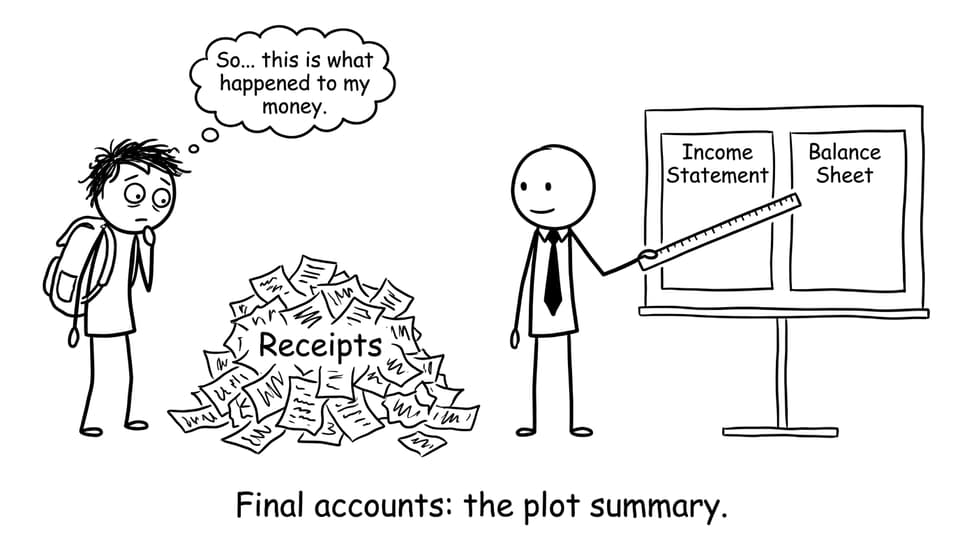
Final accounts are the moment a business stops telling stories about how it’s doing and shows the receipts.
In IB Business Management, that matters because exam questions rarely reward vibes. They reward evidence: profitability, stability, and whether the business can survive its own plans. Final accounts turn a year of decisions into two documents you can actually judge.
The quick checklist: what final accounts help you answer
When you see final accounts in IB Business Management, use them to ask:
-
Did the business make a profit (and is profit improving)?
-
Is the business financially stable (or dangerously leveraged)?
-
Can it pay short-term bills (liquidity) and survive long-term debts (solvency)?
-
Are managers making decisions based on data, not guesswork?
-
Would a bank, investor, or supplier trust this business?
If you want syllabus-aligned practice, start with the 3.4 Final accounts hub and keep the IB Business Management glossary open for precise definitions.
What final accounts show in IB Business Management
Final accounts are prepared at the end of an accounting period to show two different truths:
The income statement: performance over time
The income statement (also called a profit and loss account or statement of profit or loss) tells you what happened across the period: revenue came in, costs went out, and profit (or loss) is what remains.
In IB Business Management, this is where you spot operational effectiveness. If net profit is shrinking, it might not be because sales are low. It might be because expenses are rising faster than revenue, or because direct costs are eating gross profit. That’s why the income statement isn’t just a total at the bottom; it’s a trail of clues.
To revise the structure properly, use 3.4 Final accounts notes and then test yourself with the 3.4 Final accounts questionbank.
The balance sheet: position at a point in time
The balance sheet (statement of financial position) is a snapshot. It shows what the business owns (assets), owes (liabilities), and what’s left for owners (equity).
This matters in IB Business Management because a profitable business can still be fragile. A balance sheet with heavy current liabilities can signal pressure on working capital. A balance sheet with rising non-current liabilities might indicate ambitious expansion funded by debt. Neither is automatically “bad”; both require analysis.
For a focused breakdown, read How a balance sheet shows financial position.
Why final accounts matter for financial health (and your exam answers)
In IB Business Management, final accounts matter because they connect daily operations to strategic decisions.
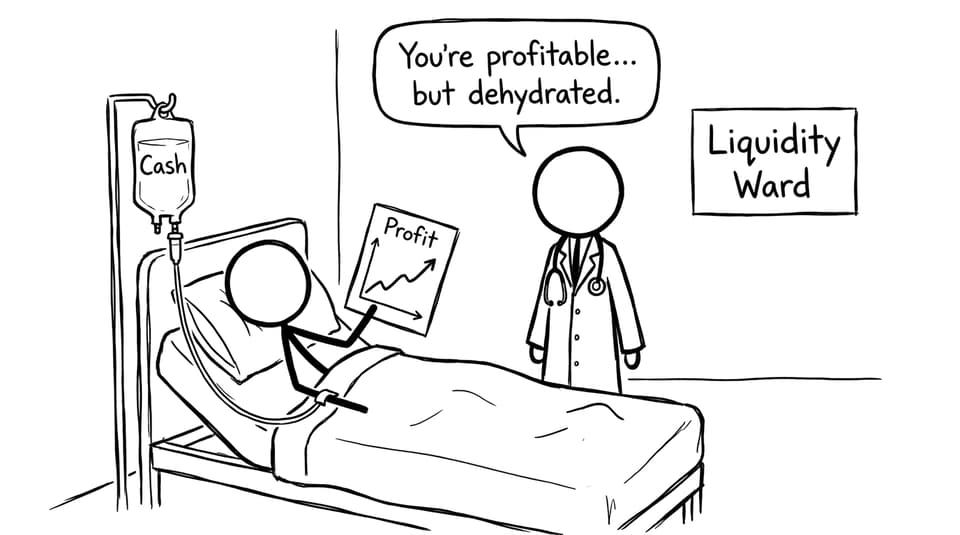
First, they support cash flow planning. Profit is an accounting measure; cash is survival. If a firm sells on credit, revenue may look strong while cash remains weak. Final accounts help flag that risk early, before the business becomes “profitable but stuck.”
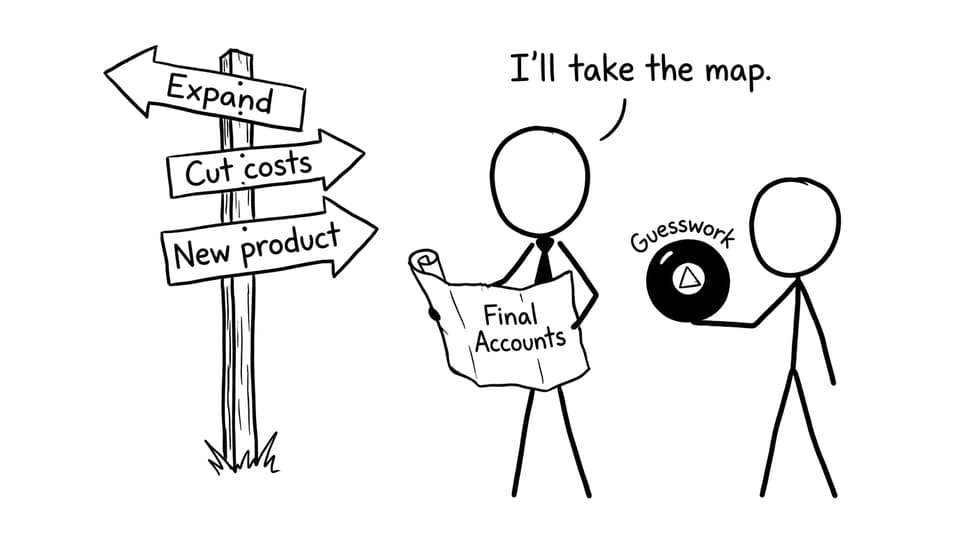
Second, they improve decision-making. Expansion, cost cutting, and new product launches should be justified with financial evidence. Examiners love when you anchor recommendations in accounts: “Given weak liquidity, the firm should delay expansion” is stronger than “expansion might be risky.”
Third, they build trust with stakeholders. Lenders, investors, and even suppliers use final accounts to judge whether they should offer finance, extend credit, or partner. In exam terms, final accounts reduce information asymmetry and make stakeholder reactions more predictable.
To practise turning numbers into analysis, use the IB Business Management Questionbank and ask RevisionDojo’s AI Chat to critique your evaluation points. Pair that with Study Notes, Flashcards, and Grading tools so your definitions, structure, and calculations are consistent under timed pressure.
Exam tip: how to write about final accounts in IB Business Management
When you’re given an income statement or balance sheet, don’t just describe. Do this:
-
Identify one strength (e.g., improving net profit or strong equity base).
-
Identify one risk (e.g., high current liabilities or rising expenses).
-
Link to a decision (e.g., adjust pricing, renegotiate credit terms, reduce overheads, delay expansion).
-
Evaluate the trade-off (short-term vs long-term impacts on profitability and liquidity).
RevisionDojo’s Mock Exams and Predicted Papers help you practise that full chain: data, interpretation, recommendation, evaluation.
Conclusion: final accounts are the business’s reality check
Final accounts show what a business achieved and what it can handle next. In IB Business Management, they’re also your shortcut to stronger analysis: income statement for performance, balance sheet for stability, and together they explain financial health.
If you want to revise final accounts with less stress and more structure, use RevisionDojo’s Questionbank, Study Notes, Flashcards, AI Chat, Grading tools, Mock Exams, Predicted Papers, and Tutors to turn financial statements into confident, exam-ready answers.


