

A quiet moment that changes everything
The first time most IB Dance students hear the question, it lands like a spotlight you did not rehearse for: “So… what are you going to do with dance?”
It is usually asked kindly. Sometimes it is asked nervously, like the person speaking is trying to protect you from disappointment.
But here is what people miss: IB Dance is not a narrow hallway to a single door labeled “performer.” It is a training ground for attention, pattern-recognition, communication, analysis, research, stamina, and reflective thinking. Those are career skills. Not dance-adjacent skills. Career skills.
This guide maps 15 exciting professions IB Dance can lead to, especially if you are an IB student preparing for exams and trying to connect your subject choices to real life.
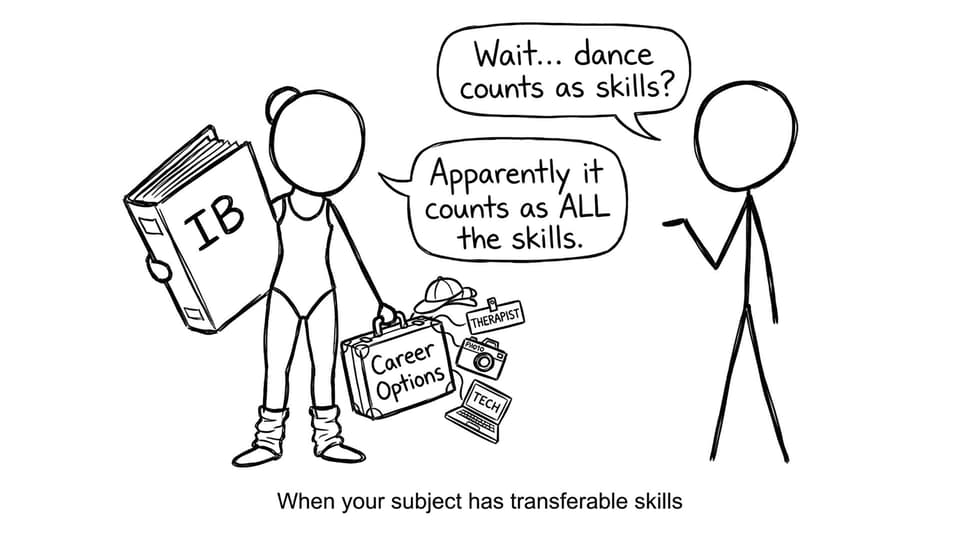
Quick checklist: how to translate IB Dance into career language
Before we list careers, use this quick translation framework. It helps in personal statements, interviews, and even when you are explaining your choices to yourself.
-
Performance: presence, precision under pressure, resilience
-
Choreography: ideation, structure, iteration, project leadership
-
Analysis: critical thinking, argumentation, clear writing
-
World dance studies: cultural literacy, ethical research, contextual awareness
-
Reflection: metacognition (knowing how you learn), improvement loops
If you want the clearest overview of assessment components, read the IB Dance syllabus guide. It is a useful anchor when you are describing what IB Dance actually involves.
Why IB Dance stays valuable long after the final deadline
Dance teaches you to notice things other people skip. Timing. Relationship. Intention. The difference between “doing the steps” and “communicating meaning.”
The IB adds a second layer: you must prove that noticing with research, reflection, and structured explanation. That dual strength, creative plus analytical, is exactly why IB Dance can lead to careers far beyond the stage.
If you are still deciding whether the subject fits you, IB Dance: Is it worth taking? is a helpful reality-check.
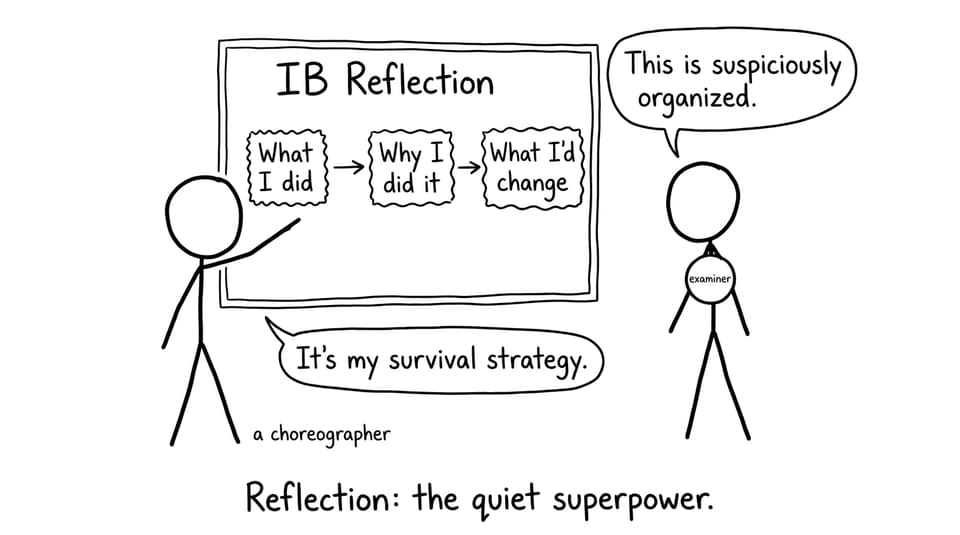
15 career paths IB Dance can lead to (beyond performing)
Performing and creating (yes, but not only this)
Professional dancer
This is the obvious path, and it is real. Companies, commercial gigs, cruise entertainment, independent projects. IB Dance helps because you already know how to document process, respond to feedback, and manage high-stakes performance moments.
Choreographer
Choreographers build meaning with movement the way writers build meaning with sentences. Your IB choreographic process (planning, experimentation, revision, reflection) is already a professional workflow in miniature.
Musical theatre performer
Musical theatre rewards versatility: rhythm, storytelling, stamina, and fast adaptation in rehearsal. If your IB experience taught you to take notes quickly and refine choices, you are closer than you think.
Dance filmmaker / videographer
Dance on camera is its own language: framing, editing rhythm, and collaboration with performers. IB Dance analysis makes you unusually good at seeing what reads clearly to an audience.
Content creator for dance and movement
This can be educational content, behind-the-scenes rehearsal documentation, choreography breakdowns, or cultural explainers. Your IB research habits help you create responsibly, especially when discussing styles from different communities.
Teaching, coaching, and research
Dance teacher (school or studio)
If you like seeing someone “get it,” teaching is a direct extension of your skills. You already understand technique, rehearsal structure, and how to give feedback without crushing motivation.
University lecturer or academic tutor
This path usually requires further study, but IB Dance gives you a real start: analysis, writing, and referencing. If you enjoy the theory side, this is a natural direction.
Dance historian / researcher
Some people fall in love with the questions: Where did this form come from? What did it mean then? What does it mean now? That is research. That is IB thinking applied to the world.
Movement coach
Movement coaching shows up in sports, acting, public speaking, and corporate wellbeing. A strong coach can explain alignment, efficiency, and presence in ways that change how people perform in their own fields.
Wellness, health, and therapy
Dance movement therapist
This blends movement with psychology and clinical practice. If you are drawn to emotional expression, healing, and structured support, this path can feel deeply aligned.
Physiotherapy or sports rehab (dance focus)
Many dancers eventually become the person who prevents injuries rather than pushing through them. It is science plus empathy plus biomechanics.
Yoga / Pilates / mobility instructor
This is not “dance-lite.” It is a serious profession built around anatomy, cueing, and safe progression. IB Dance students tend to excel because they can demonstrate, observe, and correct with precision.
Arts management, production, and leadership
Arts administrator
Grants, programming, budgets, partnerships, outreach. This is how art stays alive in public life. IB Dance gives you fluency in both the artistic goals and the planning reality.
Event producer / festival coordinator
Producing is choreography at the systems level: people, schedules, tech, marketing, stakeholder expectations. If you like structure and creativity together, it is a strong fit.
Talent agent / casting assistant
You are matching people to projects, negotiating terms, and spotting potential. Your IB experience helps you speak the language performers use and understand what a role actually demands.
Cultural policy advisor / arts advocacy
This is the big-picture lane: funding models, access, representation, and cultural impact. If world dance studies made you curious about power and culture, this career turns that curiosity into action.
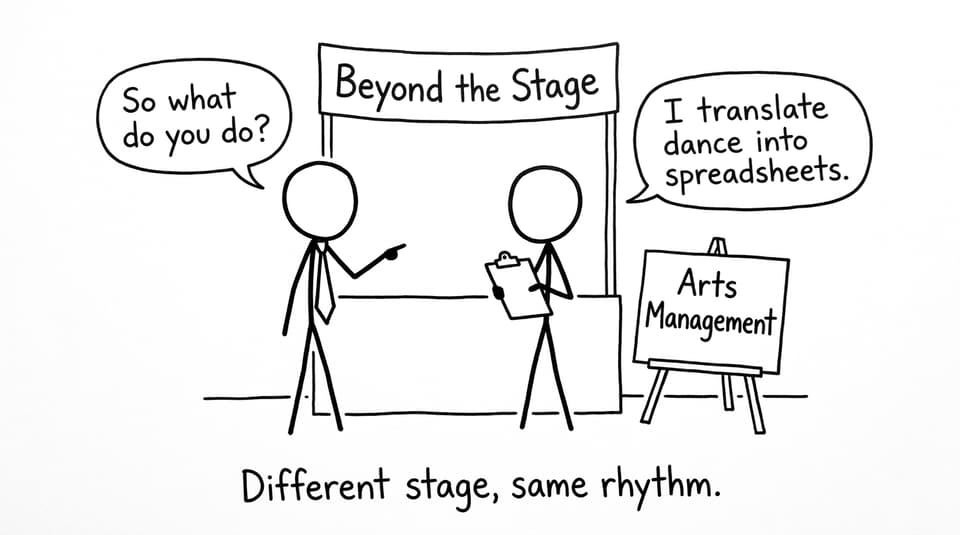
How to choose the right path (without panicking)
Most IB students think choosing a career should feel like certainty. In reality, it often starts as a pattern of energy: what you keep returning to even when nobody assigns it.
Use these prompts:
-
In IB Dance, do you prefer making (choreo), performing, writing, or researching?
-
Do you enjoy leading rehearsals or supporting others quietly?
-
Are you more energized by people, systems, or ideas?
Then build a small experiment: volunteer at a studio, help film a showcase, shadow a teacher, assist with a school production. A week of real exposure beats months of imagining.
If you are choosing Group 6 options more broadly, Choosing your Group 6 subject can help you compare what each arts subject develops.
Exam prep angle: make your IB Dance workload feel lighter
Here is the paradox: thinking about careers can reduce exam stress. It reminds you that your work is building something, not just being graded.
A simple IB workflow many students use with RevisionDojo looks like this:
-
Use the Study Notes feature to clarify theory and terminology quickly.
-
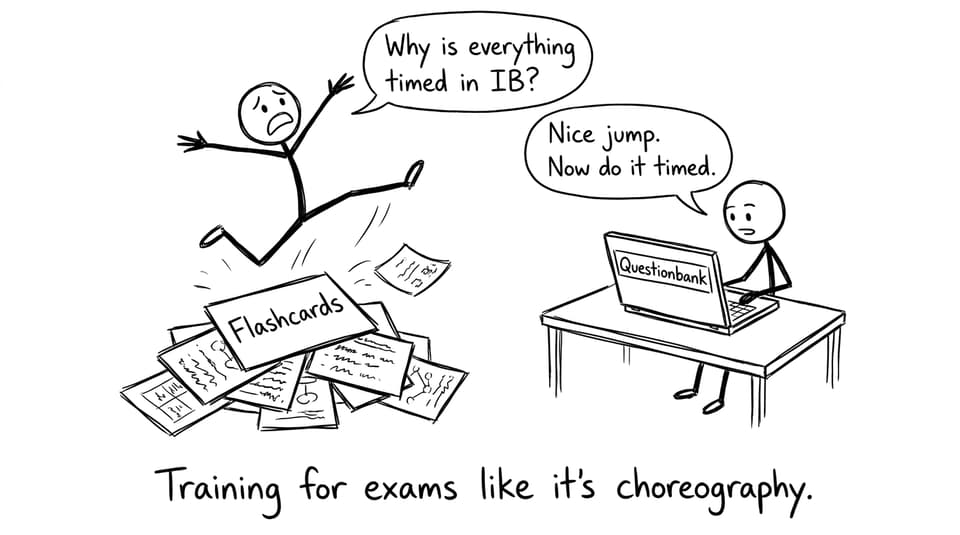
Turn key concepts into daily retrieval using Flashcards (especially definitions and analysis vocabulary).
-
Practice exam-style thinking using the Questionbank, even if your subject is arts-heavy; the habit of answering under constraints transfers.
-
For written components, get criterion-focused feedback with Grading tools (so you improve faster than guessing).
-
When you feel stuck mid-process, ask AI Chat to quiz you on command terms or help you tighten a reflection paragraph.
For the time-management reality of a physically demanding subject, How to balance IB Dance practice with other subjects is worth saving.
A short “career proof” exercise you can do this week
Pick one career from the list. Then create a three-line proof using your IB experience:
-
Skill: What ability does the job require?
-
Evidence: Where have you demonstrated it in IB Dance?
-
Next step: What is one small action to test interest?
Example: Event producer
-
Skill: planning complex projects with many moving parts
-
Evidence: rehearsals + filming + iterative choreographic process + reflection deadlines
-
Next step: assist with a school show schedule or budget spreadsheet
If you want more on creative career skill-building across arts, see Can IB Group 6 help build skills for creative careers?.
Closing: let IB Dance widen your definition of success
The best part of IB Dance is that it refuses to let you be only one thing. You are an athlete and a thinker. An artist and a researcher. A collaborator and a self-editor.
So when someone asks what career paths IB Dance can lead to, the honest answer is: more than they expect, and more than you can see on your tired days.
If you want to make the academic side feel calmer while you keep training creatively, build your routine inside RevisionDojo: use the Questionbank for structured practice habits, Study Notes for fast clarity, Flashcards for daily recall, AI Chat for quick explanations, Grading tools for criteria-aligned feedback, and Mock Exams plus Predicted Papers to stay steady under pressure. Your future self will feel the difference, in exams, and beyond them.
For more Dance-specific support, browse all IB Dance posts and anchor your plan to the RevisionDojo IB hub.