



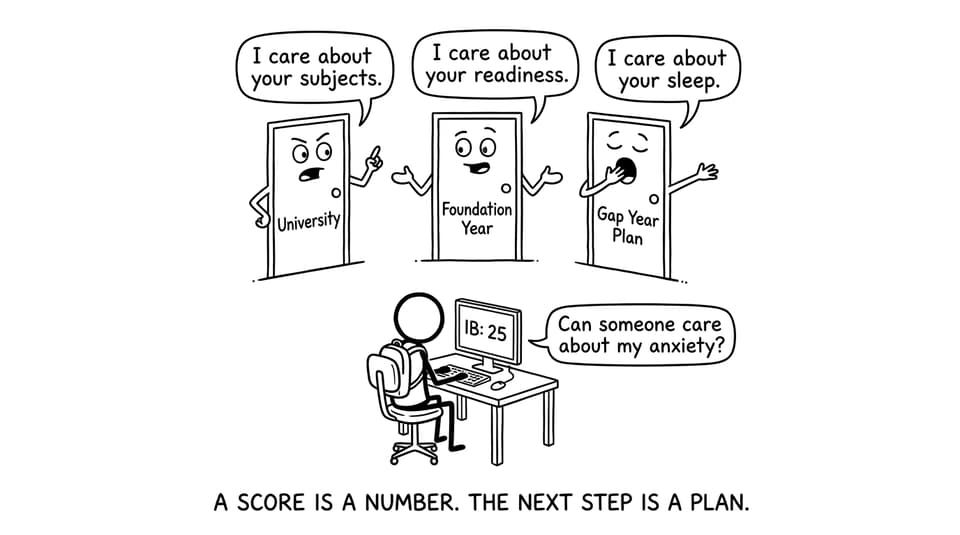
A 25 in IB can feel like a cliff edge
You open your results, see 25 points, and your brain does that strange thing where it tries to translate a number into a whole future. In the IB, 25 sits in an emotionally awkward place: it’s above the pass line, but it’s also close enough to the minimum that you might wonder what it “counts for” outside your school.
Here’s the calmer truth: an IB score of 25 is not a dead end. It’s a signal. It tells you you met the Diploma threshold, and it also tells you where you’ll want to be more deliberate next, about university fit, subject requirements, and how you prepare for the workload that comes after exams.
What a 25-point IB score means (and what it doesn’t)
A quick grounding point: the IB Diploma is awarded at 24 points, as long as you meet the IB’s other conditions (like minimum requirements across subjects and no disqualifying combinations). So with 25 points, you typically:
-
Earn the full IB Diploma
-
Hold a qualification that is internationally recognized
-
Meet a basic benchmark of academic completion
But a 25 is also a tight pass. For some universities, that’s enough. For others, it’s enough only if your Higher Level subjects and grades match the program you’re applying for. In other words, your next step is less about defending the number and more about interpreting it correctly.
If you want a central hub to explore how the Diploma is structured and recognized, start here: International Baccalaureate (IB).
A simple checklist: what you can do with 25 IB points
Use this as a practical way to decide your next move:
-
Confirm you received the Diploma and that you met HL and grade conditions
-
List your HL subjects and grades (many decisions depend on them)
-
Check program-specific entry requirements (not just general minimums)
-
Look for universities with flexible entry or strong academic support
-
Plan a “readiness upgrade” so first-year doesn’t feel like a surprise
That last point matters. A 25 in IB often means you can access opportunities, but you’ll benefit from improving your foundations and exam skills quickly.
University access with an IB score of 25: where doors stay open
With 25 points in IB, you’re generally in range for:
Less selective universities and broad-entry programs
Many institutions have minimum diploma requirements that sit in the mid-20s, especially for broader degrees where you choose a major later. These programs can be a good fit if you want room to adjust and prove yourself.
Systems with alternative pathways
Some countries and universities offer foundation years, preparatory programs, or conditional admission routes. These aren’t “failure tracks.” Often, they’re structured bridges for students whose potential is real but whose academic base needs strengthening.
Credit and placement (varies a lot)
In places like the US, some universities may award credit based on your HL grades rather than only your total points. With a 25, credit is possible in some cases, but it’s rarely automatic. Your subject choices, your HL performance, and your intended major matter more than the headline number.
How competitive is a 25 in IB?
A helpful way to think about this: universities aren’t only selecting students; they’re selecting risk. A 25-point IB score can read as “meets requirements, but may need support.” That’s why you should expect higher scrutiny for:
-
Highly selective universities
-
Programs with heavy prerequisite knowledge (medicine, engineering, advanced economics)
-
Systems with strict progression thresholds
But competitiveness isn’t permanent. It changes when you provide evidence of readiness: stronger supporting grades, clearer motivation, and proof you can handle exam-style thinking.
The smartest next steps after scoring 25 in IB
A 25 doesn’t demand panic. It demands precision.
Audit your HL foundation first
If university will feel harder, it’s often because HL content was shaky. Start with the topics you consistently lost marks on, not the topics you “didn’t mind.”
RevisionDojo is built for that kind of targeted rebuild: Study Notes for clarity, Flashcards for daily recall, and a Questionbank that turns understanding into marks.
Try these starting points:

Replace “more studying” with “better feedback loops”
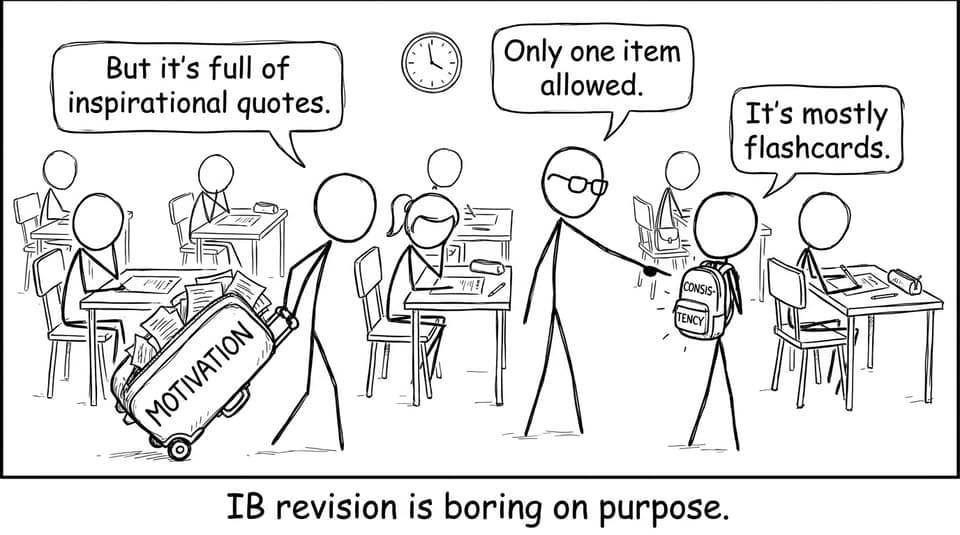
A common reason students land at 25 in IB is not low effort. It’s effort spent in places that don’t return marks: rereading, rewriting, highlighting, and hoping.
A tighter loop looks like this:
-
Learn one concept using RevisionDojo for IB
-
Lock it in with Flashcards and IB Flashcards with Spaced Repetition (SRS)
-
Prove it under exam conditions using the Questionbank and Mock Exams
-
Ask Jojo AI Chat when you get stuck, and use Grading tools to understand how marks are awarded
If you want a structured routine, these guides help:
Practice like the real thing (without guessing)
Timed practice reduces the “shock factor” that often separates a narrow pass from a comfortable one. RevisionDojo’s Predicted Papers and Mock Exams are designed for realistic rehearsal, with feedback that points to specific fixes.
Explore:
A 25 in IB is a result, not an identity
An IB score of 25 points means you cleared a difficult program. It also means your next move should be intentional: pick universities and pathways that fit your subject profile, and upgrade your readiness so the first semester feels manageable.
If you’re preparing for exams and you can feel yourself hovering around 25, treat that number as useful information. Then build the plan. RevisionDojo gives you the full system to do it: Questionbank, Study Notes, Flashcards, AI Chat, Grading tools, Predicted Papers, Mock Exams, a Coursework Library, and Tutors when you need human support. Your score is a snapshot. Your process is what changes the story.