



Academic misconduct in the IB rarely starts with a movie-scene decision.
It usually starts with something quieter: a late night, a half-finished draft, and a sentence you copy “just to keep moving.” Or a group chat where someone drops a paragraph and says, “Use this if you want.” Or an AI tool that writes a cleaner version of what you were trying to say, and you tell yourself you’ll edit it later.
Then the IB does what it’s designed to do: it protects the credibility of assessment. That’s why penalties for academic misconduct in the IB can feel severe. Not because the organization is trying to be harsh, but because a diploma only means something if the work behind it is trusted.
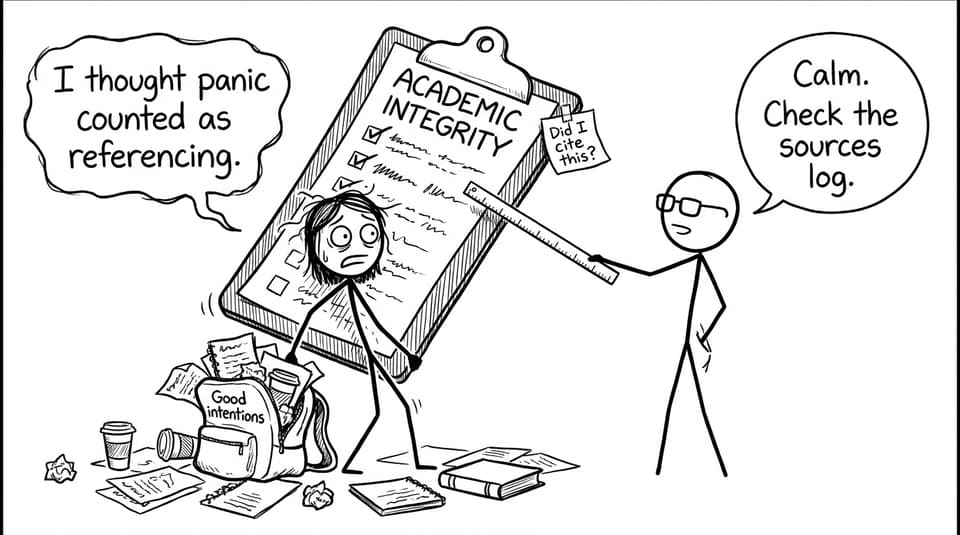
IB academic misconduct penalties: quick checklist
If you want the fastest “don’t mess this up” summary for IB assessments, use this:
-
Know the big categories: plagiarism, collusion, exam misconduct, duplication, fabrication, and AI misuse.
-
Assume pressure creates mistakes: build an evidence trail (drafts, notes, sources log).
-
Cite as you go: citation done at 2 a.m. is how accidents happen.
-
Collaborate safely: discuss ideas, then write separately.
-
Use AI ethically: for explanations, planning, and feedback, not as a ghostwriter.
-
If suspected, respond calmly: your school handles communication with the IB.
For integrity-first study routines (practice without shortcuts), RevisionDojo’s guide on how to uphold academic integrity in IB assessments is a solid starting point.
What counts as academic misconduct in the IB?
The IB defines academic misconduct as behavior (intentional or unintentional) that gives, or could give, an unfair advantage in assessment. The key detail is “could.” You don’t need to succeed at cheating for it to still be treated as misconduct.
Common forms show up across coursework and exams:
Plagiarism in IB work
Plagiarism is using someone else’s words, structure, ideas, or data without correct acknowledgment. In IB terms, this can happen in an IA, EE, TOK essay, or even smaller submitted components. It includes copying from websites, study guides, classmates, or old student work.
If you’re writing the EE, the boundaries are especially strict. This is why RevisionDojo’s explainer on IB’s expectations for academic honesty in the Extended Essay (EE) is worth reading early, not after you’ve drafted.
Collusion vs collaboration
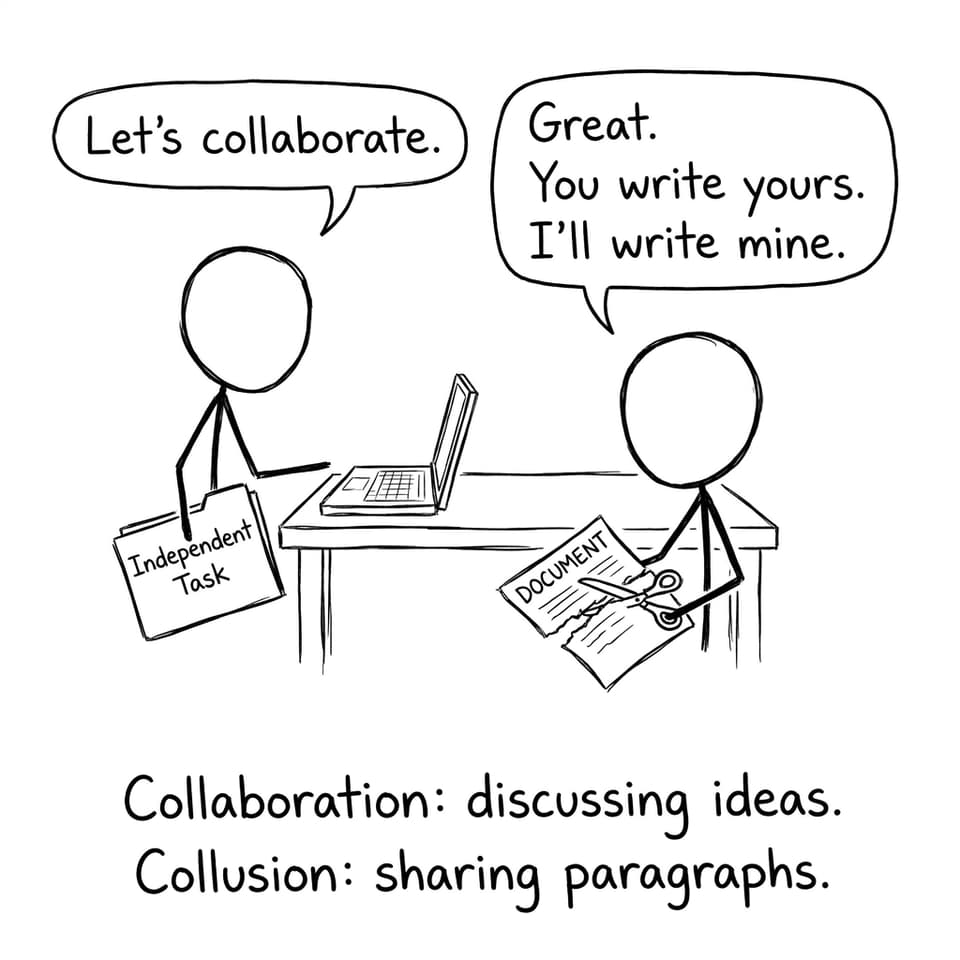
Collusion is working together on something meant to be produced independently. Collaboration (discussing ideas, comparing interpretations, checking understanding) is often fine. But sharing paragraphs, calculations, unique analysis, or finished responses is where IB issues start.
Exam misconduct
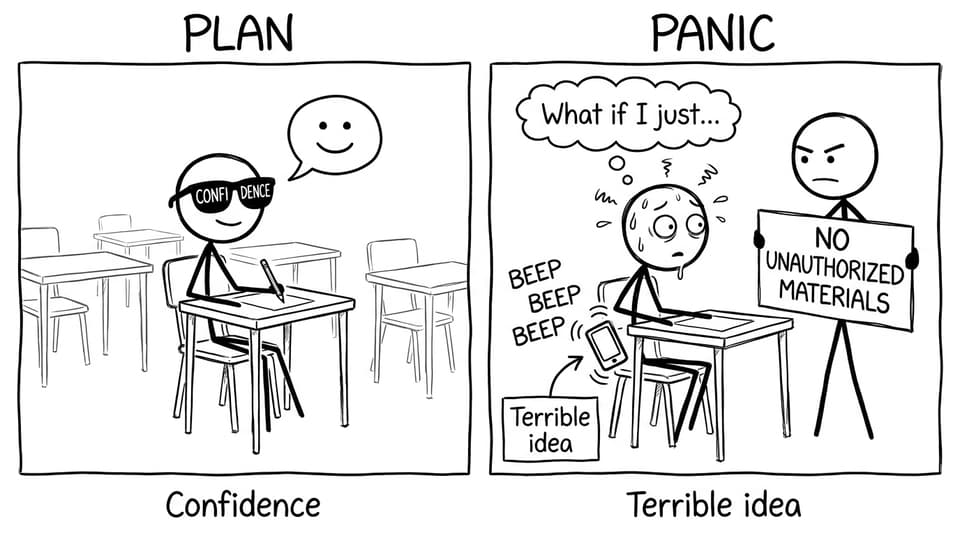
This includes bringing unauthorized materials, communicating during an exam, using prohibited calculator functions, or accessing restricted content. In the IB, exam integrity is treated as a high-severity category because it affects fairness across thousands of candidates.
Misuse of AI tools
The direction is simple: if AI produces assessed writing and you present it as yours, you’re taking credit for authorship you didn’t do. In IB assessment, that can be treated as academic misconduct.
RevisionDojo helps students use AI in a safer way: for explanations, practice feedback, and study planning. For example, you can drill exam technique ethically using the Questionbank, then use AI Chat to clarify why a mark scheme rewards certain phrasing, while still writing your own final response.
Fabrication or manipulation of data
Inventing results, altering data to fit a hypothesis, or “cleaning” a dataset until it tells a nicer story is a serious breach. This is common in science investigations, but it can also appear in humanities when sources are misrepresented.
How the IB detects and investigates academic misconduct
Students sometimes imagine the IB as a single plagiarism detector. It’s broader than that.
-
Schools often use similarity detection tools for coursework submissions.
-
Examiners are trained to notice shifts in voice, structure, and sophistication.
-
Schools must report suspected cases with evidence.
-
The IB may ask for drafts, planning documents, research notes, and explanations.
This is why keeping a “proof of process” matters. If your writing evolved through drafts, you want that trail available.
If you’re ever in this situation, read what happens if you’re accused of academic misconduct in the IB. It lays out the process in a way that feels calmer and more practical.
What happens immediately when misconduct is suspected?
When suspicion arises, a few things can happen quickly:
-
Your grade for the affected component may be withheld temporarily.
-
Your teacher and IB coordinator are informed.
-
You may be asked for a written explanation of your process.
This stage is not the final outcome. It’s the review phase. The best move is to be honest, provide your drafts/notes, and let your coordinator guide the response.
Penalties for proven academic misconduct in the IB
Penalties depend on severity, scale, and context. The important thing for students preparing for exams is that IB consequences can affect a single component, an entire subject, or the diploma outcome.
Minor or first-time issues
Examples include incomplete citation, clumsy paraphrasing, or referencing mistakes that don’t indicate large-scale copying. Outcomes can include warnings or mark impacts. Even “minor” problems can still be serious if they appear across multiple sections.
Component-level penalties
If misconduct is confirmed within a specific assessment (for example, copied IA sections or unauthorized collaboration), a common outcome is zero marks for the affected component. Because many IB subjects weight coursework meaningfully, this can pull down your final subject grade sharply.
If you’re working on coursework, build safer habits using RevisionDojo’s IB IA Guides and Coursework Guides hub. They’re designed to show structure and criteria clearly, so you’re less tempted to borrow wording you don’t own.
Subject-level penalties
High-severity cases (like exam cheating, large-scale plagiarism, or AI-generated submissions presented as original) can lead to no grade being awarded for the subject.
Diploma consequences
In the most severe situations, the IB Diploma can be withheld. This is the outcome students fear most, and it’s why protecting integrity in the final months matters as much as content revision.
A practical warning: duplication across components (sometimes called “double-dipping”) can also trigger misconduct decisions. If you’re unsure what can be reused safely between assignments, read Can your EE and IA use the same material?.
Can you appeal an IB academic misconduct decision?
Yes, appeals are possible, but they typically go through your school’s IB coordinator. You’ll need a clear written statement and supporting evidence (drafts, notes, source logs, and timeline).
Appeals can take time, and outcomes are not guaranteed. The strongest appeals usually aren’t emotional arguments. They’re documentation arguments: what happened, what you did, what you can prove.
How academic misconduct affects university admissions
Even when the immediate IB penalty feels like the main issue, the longer shadow can be university trust.
-
Universities may withdraw conditional offers if final results change.
-
Schools may need to disclose academic integrity issues in references.
-
Some institutions ask directly about prior misconduct.
The deeper point is simple: admissions teams use the IB because it’s standardized and trusted. Misconduct breaks the signal.
How to avoid academic misconduct in IB (without becoming paranoid)
Most students don’t need more fear. They need a system.
-
Keep a running sources log from day one.
-
Separate “quotes,” “paraphrase notes,” and “my ideas” in your working document.
-
Use AI like a tutor: ask for explanations, then write in your own voice.
-
Practice under timed pressure so panic doesn’t push shortcuts.
RevisionDojo is built for that system. You learn fast with Study Notes, lock it in with Flashcards, and test it honestly with the Questionbank. When you want exam realism, use Mock Exams and Predicted Papers. When you want clarity, use AI Chat. And when you want human reassurance, use Tutors.
If you’re building your exam routine now, this is a helpful pairing: IB Question Bank: how to use it effectively and the broader guide to IB exam-style questions.
A final word for IB exam season
The IB is demanding, but it’s also predictable: it rewards clarity, consistency, and authentic thinking.
If you’re preparing for exams, make integrity part of your routine, not a last-minute check. Practice honestly. Keep drafts. Cite early. Use AI for learning, not for outsourcing your voice.
And if you want a calmer way to do all of that, build your system on RevisionDojo: Study Notes for understanding, Flashcards for recall, Questionbank for exam technique, Mock Exams and Predicted Papers for timing, Grading tools for feedback, a Coursework Library for models you don’t copy, and Tutors when you want human guidance.
Because the real goal isn’t just avoiding IB academic misconduct penalties. It’s walking into your exams knowing the work is yours, and that you can defend every line of it.