

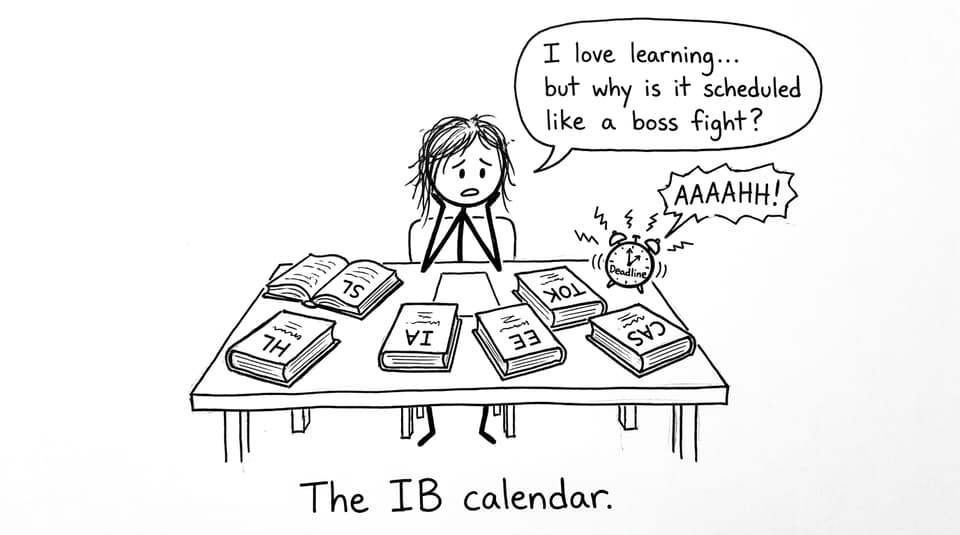
The week before mocks, the IB can feel less like a curriculum and more like a calendar that is quietly trying to outsmart you. One teacher says the Internal Assessment is “just a draft.” Another says it needs “polish.” Your TOK prompt changes shape every time you reread it. And somehow CAS is still asking for reflections.
That feeling isn’t laziness. It’s a clue. The IB Diploma Programme is brilliant at building breadth and resilience, but it also has a few structural flaws that can make exam preparation harder than it needs to be. If you can name those flaws, you can plan around them.
A quick checklist: the biggest IB pain points
If you’re revising for exams, these are the common “fault lines” in the IB:
-
Workload overlap (HL/SL + IA + EE + TOK + CAS at the same time)
-
Stress and burnout risk, especially near deadlines
-
Unequal access depending on school funding and support
-
Assessment pressure (high-stakes exams plus moderated coursework)
-
Inconsistent implementation between schools and teachers
If you want a practical system to counter the chaos, start with Time Management Strategies for IB Students and keep it open while you read.
The workload flaw: everything happens at once
The IB isn’t just “a lot of work.” It’s concurrent work. Six subjects run in parallel while major core tasks stack on top. Even if each piece is reasonable alone, the overlap creates friction: switching context, tracking deadlines, and constantly feeling behind.
This is why many students don’t fail because they “don’t understand content.” They fail because they can’t keep the system stable long enough to show what they know.
A useful antidote is building one master rhythm and sticking to it. RevisionDojo helps here because the workflow is designed for the IB reality: Study Notes for clarity, Flashcards for daily recall, and the Questionbank for exam-style practice you can filter by topic. If you’re stuck in “I study all day but nothing sticks,” see IB: I Study All Day but Remember Nothing.
The mental health flaw: pressure can crowd out learning
The IB often rewards consistency, but it can punish students who hit a bad month. When deadlines cluster, sleep and exercise become “optional,” and optional becomes nonexistent. The result is the classic IB trap: you work more, you retain less, and every task takes longer because your brain is tired.
The fix is not motivation. It’s engineering.
-
Shorten your planning horizon (think 7--14 days, not a whole term).
-
Protect sleep like a subject.
-
Use timed practice to reduce fear of the exam setting.
If you need a reset plan, How to Study for IB Exams When You Feel Behind is built for that exact moment.
The access flaw: the IB isn’t experienced equally
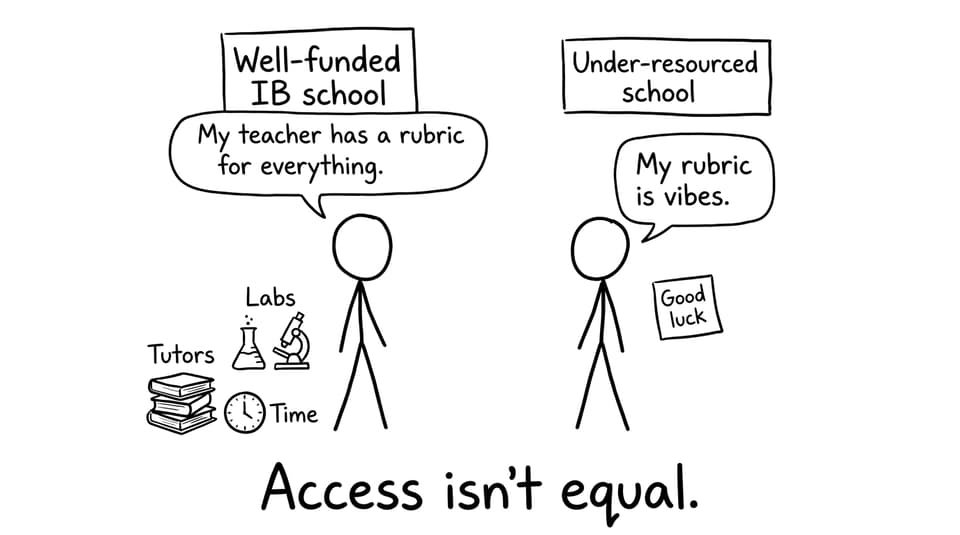
Officially, the IB is standardized. In real life, your experience depends heavily on your school: teacher training, feedback quality, lab access, scheduling, even whether your coordinator prevents deadline pileups.
That’s not a moral critique of schools. It’s a structural weakness. A student in a well-resourced environment often gets clearer rubrics, tighter feedback loops, and better pacing.
This is where independent support matters. RevisionDojo can reduce the “resource gap” by giving any IB student access to a full ecosystem: Questionbank practice, examiner-style Study Notes, spaced-repetition Flashcards, AI Chat for instant explanations, Grading tools to diagnose weaknesses, plus Tutors when you need a human plan.
The assessment flaw: performance is filtered through technique
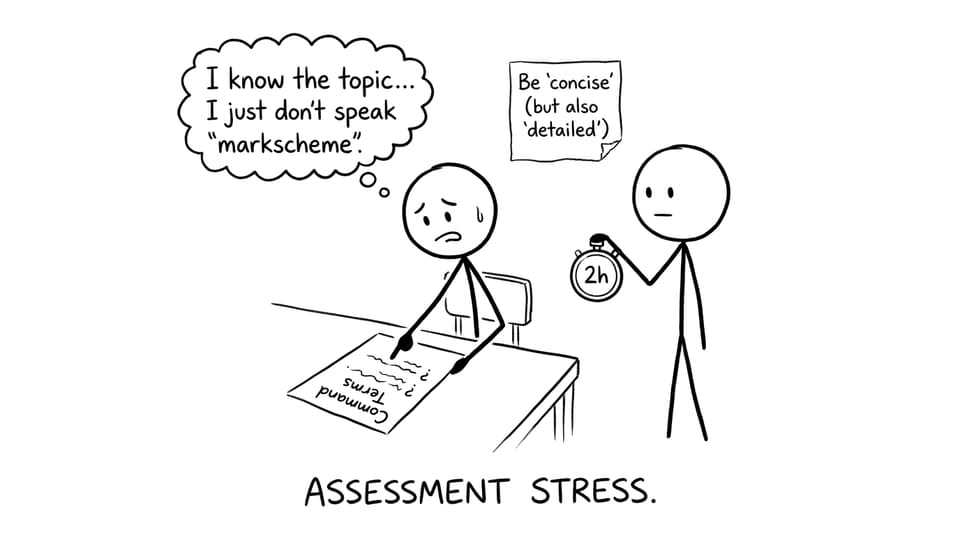
In the IB, marks are not only about knowledge. They’re also about interpretation: command terms, time allocation, and writing in a way that matches criteria. Many students can explain a concept perfectly in conversation, then lose marks because the answer doesn’t “behave” like the markscheme expects.
High-stakes exams amplify this. Internal assessments add another layer: you’re judged on process, structure, and evidence selection, not just insight.
If coursework is part of what’s stressing your revision season, use the guides: IB Internal Assessment Guides and IB Extended Essay Guides. For scheduling specifically, How to Balance IB EE With Other Coursework and Exams makes the workload feel less like a surprise attack.
The implementation flaw: “your IB” depends on your teachers
Two students can take the same IB subject and live in different universes. One gets explicit rubric language and targeted practice. The other gets vague feedback like “add more analysis” with no model for how.
That inconsistency is why exam prep should be anchored in stable materials, not only class notes. RevisionDojo’s subject hubs and tools aim to be that stable layer: consistent Study Notes, repeatable Mock Exams, realistic Predicted Papers, and practice sets inside the Questionbank that train you for what exam questions do.
For timed training, see Custom IB Mock Exams: Build Practice Tests by Topic and Why IB Mock Exams Matter for Diploma Success.
Conclusion: name the flaws, then use the right tools
The major flaws of the IB aren’t a secret conspiracy. They’re structural: overlapping workload, uneven support, assessment technique barriers, and a level of pressure that can crowd out learning. But once you see those patterns, you can respond like a strategist instead of a victim.
If you want a calmer, more effective way to prepare for IB exams, build your routine inside RevisionDojo: Study Notes for fast understanding, Flashcards for daily recall, the Questionbank for targeted practice, AI Chat and Grading tools for feedback, plus Predicted Papers, Mock Exams, a Coursework Library, and Tutors when you need extra support. Start with one subject, one topic, and one timed set today. Momentum is a form of relief.