


The moment most IB Theatre Solo Pieces start to wobble
There’s a specific kind of panic that hits in IB Theatre when you realise your Solo Theatre Piece isn’t “bad”: it’s just… ordinary. The performance might be sincere. The lines might be memorised. The costume might even be excellent. But somewhere in the back of your mind, you know the examiner is looking for something else: proof that you can think like a theatre-maker, not only perform like an actor.
The Solo Theatre Piece is hard because it’s a balancing act. You’re building a 6-8 minute performance rooted in a theatre theorist’s ideas, and supporting it with a portfolio that shows research, experimentation, and reflection. Most students lose marks by drifting away from that centre.
Quick checklist before you rehearse again
-
Choose a theatre theorist with clear, researchable principles
-
Commit to 2-3 key conventions you can apply deeply
-
Rehearse to test theory, not just to polish delivery
-
Build reflection into the process (not as an afterthought)
-
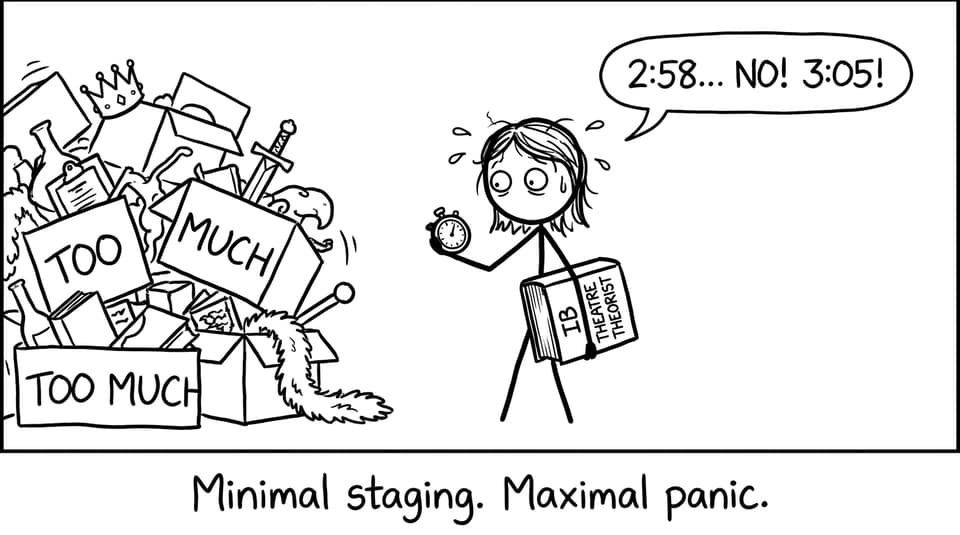
Time every full run to stay inside 6-8 minutes
If you want a wider view of how this fits into IB Theatre, start with the IB Theatre syllabus overview.
Common IB Theatre Solo Piece mistakes (and what to do instead)
Choosing a theorist you can’t actually use
In IB Theatre, “interesting” isn’t enough. If you can’t find reliable sources, definitions, and examples of practice, your portfolio becomes guesswork. Choose a well-documented practitioner whose methods translate into playable stage choices.
Avoid it by: picking someone with accessible principles and a track record of classroom-friendly application. If you’re stuck, reading how others balance practitioner ideas can help: How to Balance Creativity and Theory in the Solo Theatre Piece.
Trying to include every convention (and proving none)
A classic IB Theatre trap: cramming the performance with techniques until it becomes a highlight reel. Examiners reward clarity. Depth beats breadth.
Avoid it by: choosing 2-3 conventions and pushing them through multiple moments. Show how they shape voice, movement, space, audience relationship, and meaning.
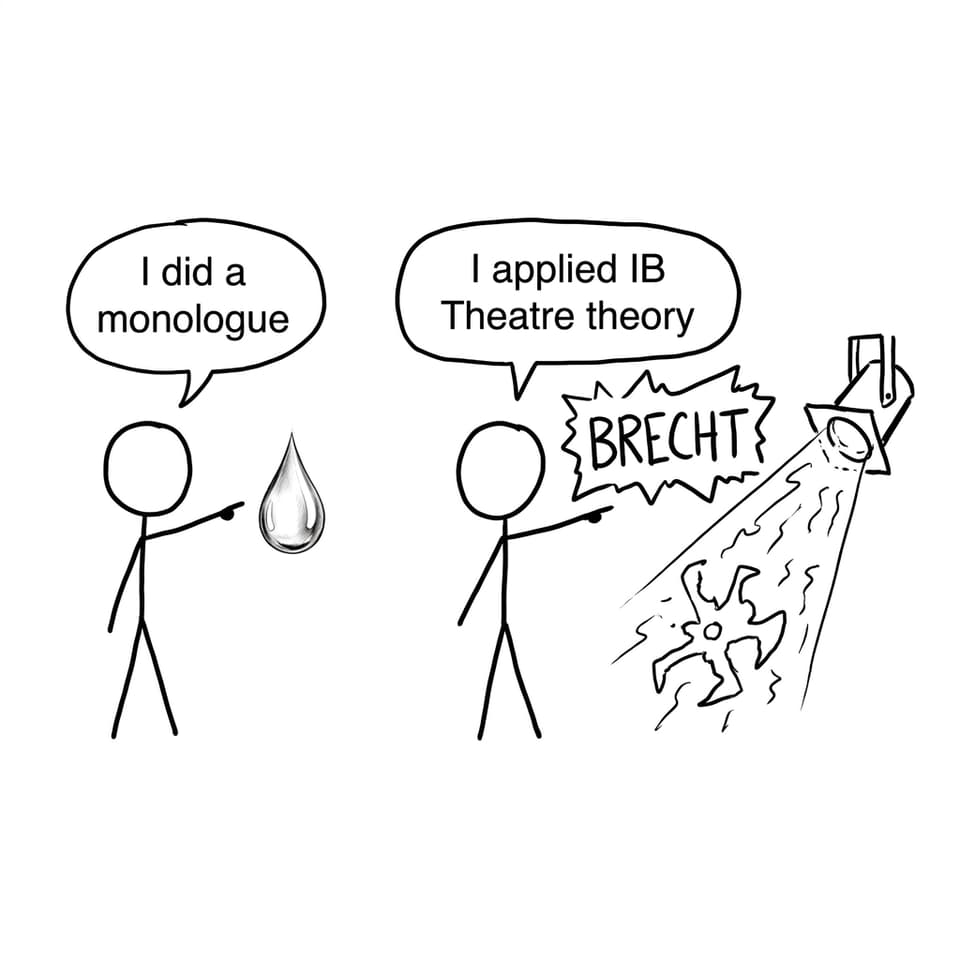
Performing a monologue instead of a theorist-driven piece
If it could be performed in a drama club showcase with no mention of theory, it’s probably not meeting the IB Theatre brief. The Solo Theatre Piece is about transformation: how the theorist changes the performance language.
Avoid it by: labeling your choices in rehearsal: “This is my alienation choice,” “This is my poor theatre moment,” “This is where I challenge realism.” Then prove those choices with evidence in your portfolio.
Treating rehearsal like memorisation practice
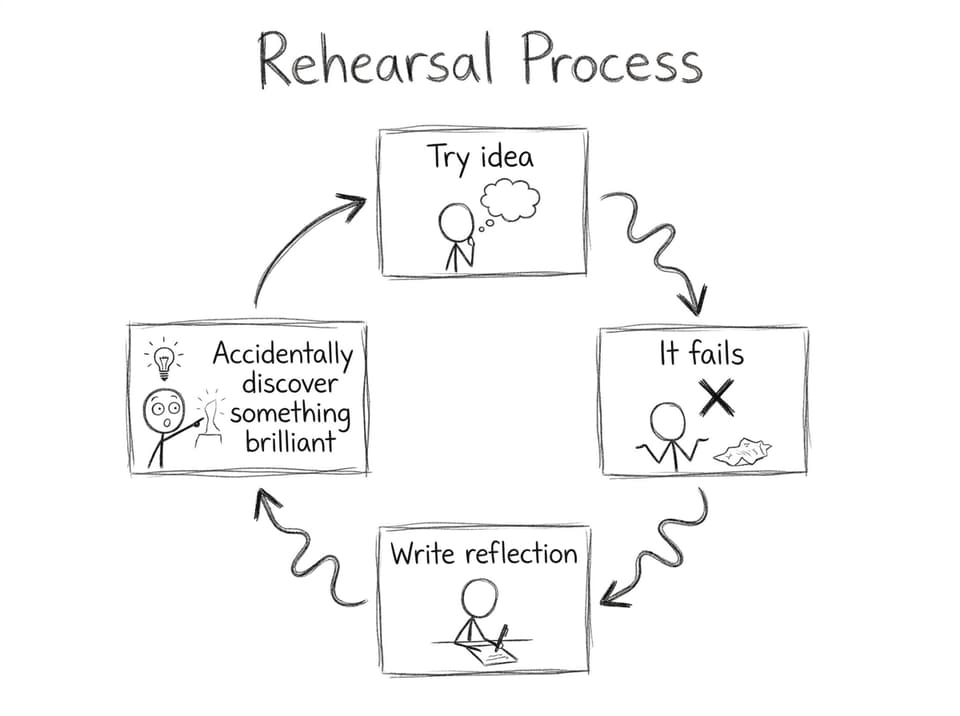
Memorisation is necessary, but IB Theatre rewards experimentation: trials, errors, revisions, and discoveries. A smooth performance with a thin process often scores lower than a bold piece with documented learning.
Avoid it by: planning rehearsals as experiments. Run a scene three ways. Change spatial rules. Remove props. Switch tempo. Then write what changed and why. For a framework, use How to Critically Reflect on Your IB Theatre Process for Higher Marks.
Reflection that describes, but doesn’t evaluate
In IB Theatre, “what I did” is the weakest kind of writing. The examiner wants “why I did it,” “what it achieved,” and “what I changed after seeing results.” Reflection is where your intelligence becomes visible.
Avoid it by: writing in cause-and-effect. Use mini-claims like: “When I altered X, the audience focus shifted to Y, which better matched my theorist’s intention because…”
Breaking the 6-8 minute rule
Timing is not a small detail in IB Theatre. Too short can feel underdeveloped; too long risks penalties.
Avoid it by: rehearsing with a timer from the early stages. Don’t wait until the final week. For performance-day preparation, use How to Prepare for Assessment Day in the IB Solo Theatre Piece.
Overbuilding staging and underbuilding intention
Big props can become a hiding place. In IB Theatre, “simple but precise” often reads as more sophisticated than “busy but unclear.”
Avoid it by: keeping design choices minimal, repeatable, and theorist-justified. If an item doesn’t serve the method, it’s probably decoration.
How RevisionDojo helps you fix these fast
RevisionDojo is built for the exact pressure points of IB Theatre: the moment you need structure without losing creativity. Use Study Notes and Flashcards to tighten theorist knowledge, AI Chat to test whether your choices truly connect to theory, and the Grading tools to check whether your portfolio reads like an assessed document instead of a diary.
When it’s time to rehearse strategically, RevisionDojo’s Mock Exams, Predicted Papers, and Questionbank help you stay fluent across the course, so the Solo Theatre Piece doesn’t swallow your whole year. If you need human feedback, the Tutors and Coursework Library can help you see what examiners tend to reward.
For broader course strategy, read Best Study Strategies for IB Theatre Students (SL & HL) and keep the IB Theatre tag hub bookmarked.
Closing: make the examiner’s job easy
The best IB Theatre Solo Theatre Pieces don’t feel like students trying to impress. They feel like students making clear choices, testing those choices, and explaining them with calm precision. Pick a theorist you can research, apply a small set of conventions deeply, rehearse like a laboratory, and reflect like an analyst.
If you want a faster, clearer path, build your Solo Theatre Piece workflow inside RevisionDojo, from theorist Study Notes and Flashcards to AI Chat, Grading tools, and targeted support that keeps your IB Theatre work both creative and examiner-ready.