
Every results day has its own weather.
Some years it’s bright and predictable. Other years it’s the kind of morning where one email can rearrange your whole life.
If you’re an IB student walking into exams right now, you’ve probably pictured results day as a single door: you either walk through it, or you don’t. But UCAS doesn’t work like that. Results day is more like a corridor with multiple exits. And UCAS Clearing is one of the biggest ones.
This post shares real-world-style UCAS Clearing success stories that reflect what students actually do when plans change. The names are anonymised, but the patterns are accurate: speed, clarity, and the calm confidence that comes from preparation.
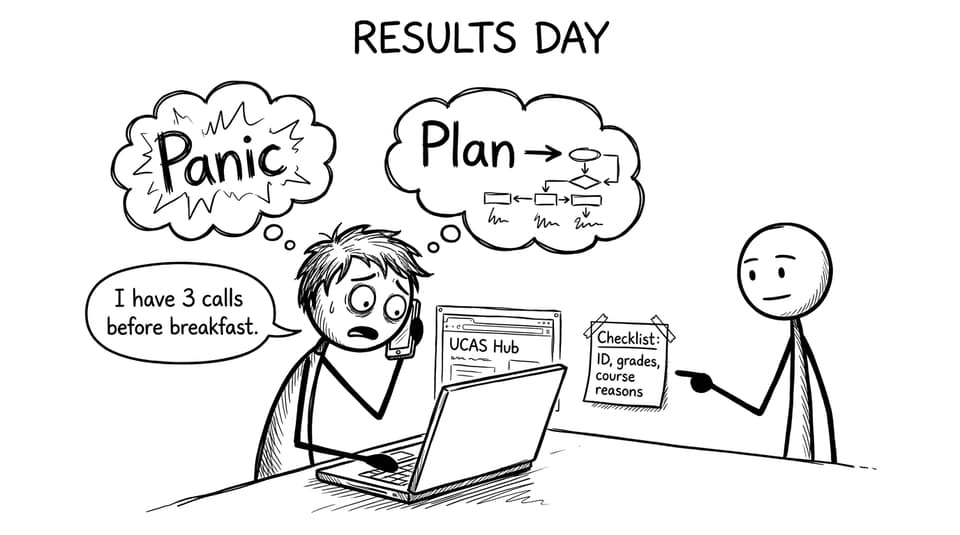
UCAS Clearing, in one calm checklist
Before the stories, here’s the mental model. UCAS Clearing rewards students who reduce friction.
-
Confirm what UCAS Hub/Track shows first (don’t guess) via UCAS Track Explained: Understand Your Application Status
-
If you have no confirmed place, use UCAS Clearing and move quickly
-
Keep your essentials ready: UCAS ID, grades, a short “why this course” pitch
-
Call departments when possible (faster decisions, better fit)
-
Only lock it in once it’s confirmed inside UCAS Hub
If you want the practical version of that list, keep this open on results day: UCAS Clearing Checklist 2025: What to Prepare Before You Call.
Success Story 1: Missing one condition, keeping the long game
Aamir walked into results day with a clear plan and a tight offer. His HL combination was strong, but one subject landed just below the condition. The first emotion was the obvious one: “So that’s it.”
Then he did something that looks small but changes everything. He stopped thinking in course titles and started thinking in pathways.
Instead of chasing the exact original degree through UCAS, he asked: what course keeps the same destination open? That led him to a related subject with modules that still aligned to his long-term aim.
When he called, he didn’t lead with apologies. He led with intent: what he enjoyed in the IB, which parts he wanted to deepen, and why the university’s structure fit. Within the hour he had an informal offer.
The hidden win wasn’t the call. It was the preparation beforehand: he’d built exam confidence using timed practice, so results day didn’t feel like a verdict on his ability.
For results-day logic, this explainer helps: What Happens If You Don't Meet Your Firm Choice.
Success Story 2: Using UCAS Clearing to upgrade, not recover
Sana didn’t “need” Clearing. Her results were higher than predicted. But the moment the numbers arrived, her original choice stopped fitting.
This is the part students rarely admit: sometimes the plan was reasonable when you made it, and too small when you outgrow it.
Sana released herself and used UCAS Clearing strategically. She targeted universities with stronger course alignment and called early, while vacancies were still real options.
She also did one crucial thing: she contacted the department directly, not just the general switchboard. Her pitch was short, specific, and calm. She knew her HLs, could point to an IA topic that proved interest, and asked practical questions about modules.
By mid-morning, she’d secured a better-fit course.
If you’re planning choices before you ever reach Clearing season, this guide reduces regret: How to Rank Your UCAS Choices Strategically.
Success Story 3: The international pivot done in 24 hours
Mina’s issue wasn’t academic. It was timing.
A visa delay meant her original plan outside the UK became impossible close to term start. That kind of disruption can feel unfair, because it has nothing to do with your revision or your effort.
But UCAS Clearing is built for late movement. Mina treated the day like an operations problem:
-
shortlist course families (not one course)
-
call, ask about international flexibility, then follow up immediately with documents
-
keep a simple spreadsheet of who said what
She got an offer within a day.
The lesson for IB students: build optionality before you need it. That doesn’t mean lower ambition. It means knowing what “nearby” degrees still make sense.
Success Story 4: The subject switch that finally felt honest
Theo had been drifting away from his original subject for months. Results day didn’t cause the change; it just forced the decision.
Clearing is one of the few times universities expect rapid reinvention. Theo used that permission.
He rewrote his personal statement fast by focusing on evidence, not adjectives: what he built, what he read, what he designed, what he learned. He called the department and asked how they evaluate late applicants. Then he sent the updated statement within minutes.
Offer secured.
This is where IB preparation quietly helps. When you’ve practised thinking under pressure (timed Paper 1s, full mock runs, markscheme-style review), you can speak clearly when it matters.
To understand how Clearing compares to other results-day routes inside UCAS, read: UCAS Adjustment vs Clearing 2025: Which Is Right for You?.
Success Story 5: Confidence beats a perfect script
Leila missed her offer by one grade. Her first instinct was to keep refreshing UCAS and spiralling into “what if.”
Instead, she took a 10-minute reset, then made multiple calls with one simple structure:
-
confirm grades + UCAS ID
-
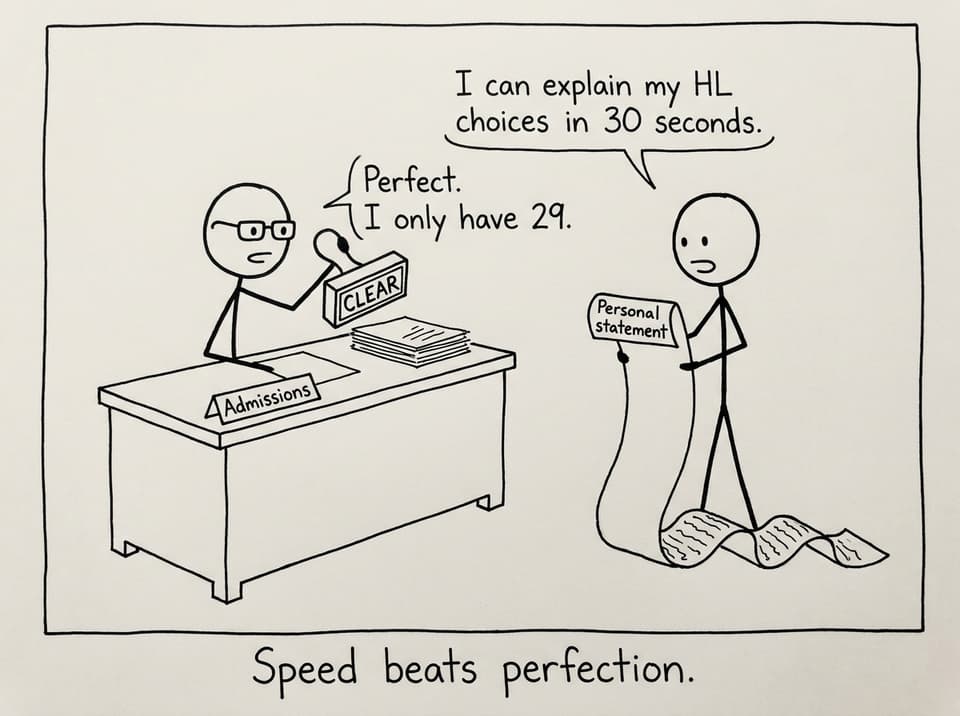
30-second reason for the course
-
one detail that proves fit (experience, IB topic, project)
-
ask what happens next and how fast they can confirm
She didn’t sound flawless. She sounded ready.
By lunch she had a place.
And when the offer came through, she followed the post-offer steps immediately (accommodation, finance, enrolment documents). This checklist is the one students wish they’d saved earlier: What to Do After Accepting a UCAS Clearing Offer.
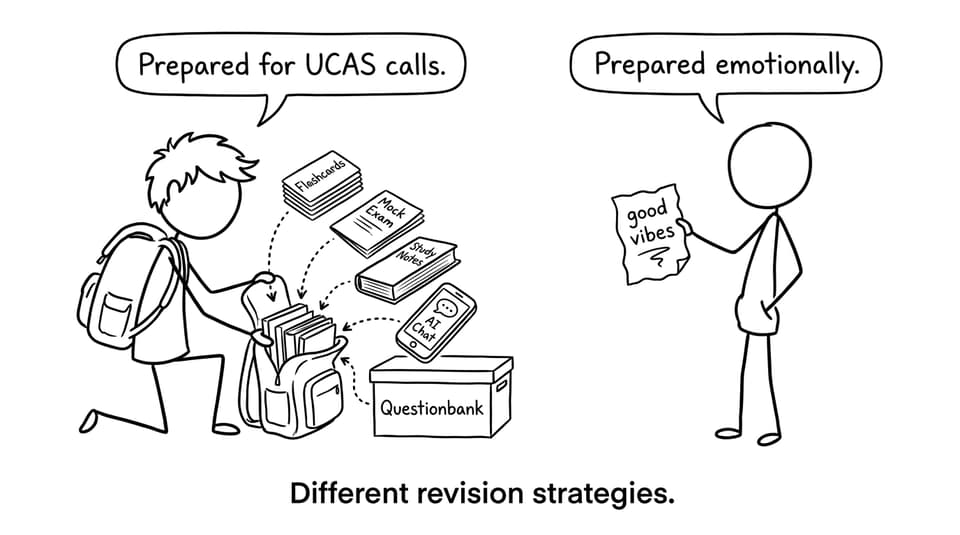
How IB exam prep quietly improves your UCAS outcomes
Here’s the part most guides miss: your UCAS Clearing performance is connected to your IB exam preparation.
Not because universities care about your revision app. But because the skills you build with good prep are the same skills Clearing demands:
-
fast recall (your grades, your reasons, your strengths)
-
calm structure under pressure (a short pitch, not a ramble)
-
evidence-based confidence (you can talk about what you’ve actually done)
RevisionDojo is built for that kind of readiness: Study Notes when you need clarity, Flashcards for daily recall, and the Questionbank to turn knowledge into marks. When you’re stuck, AI Chat helps you move again. When you need realism, Mock Exams and Predicted Papers give you pressure practice. And when coursework stress leaks into exam season, Grading tools and the Coursework Library keep it contained. If you want human guidance, Tutors can help you plan both your revision and your results-day strategy.
If your UCAS journey is the destination, your revision system is the vehicle.
Closing: UCAS Clearing is a second starting line
Results day can feel like a judgment. But UCAS was designed for movement, not just selection.
The students who win in UCAS Clearing aren’t the ones with perfect scripts. They’re the ones who act early, speak clearly, and stay flexible about routes while staying loyal to what they actually want.
If you’re preparing for IB exams now, use RevisionDojo to build that calm: practise with the Questionbank, lock recall with Flashcards, sharpen understanding with Study Notes, and rehearse pressure with Mock Exams and Predicted Papers. Then, if results day shifts the plan, you’ll still have options and the confidence to claim them through UCAS.
For more guides, explore All #UCAS Posts.