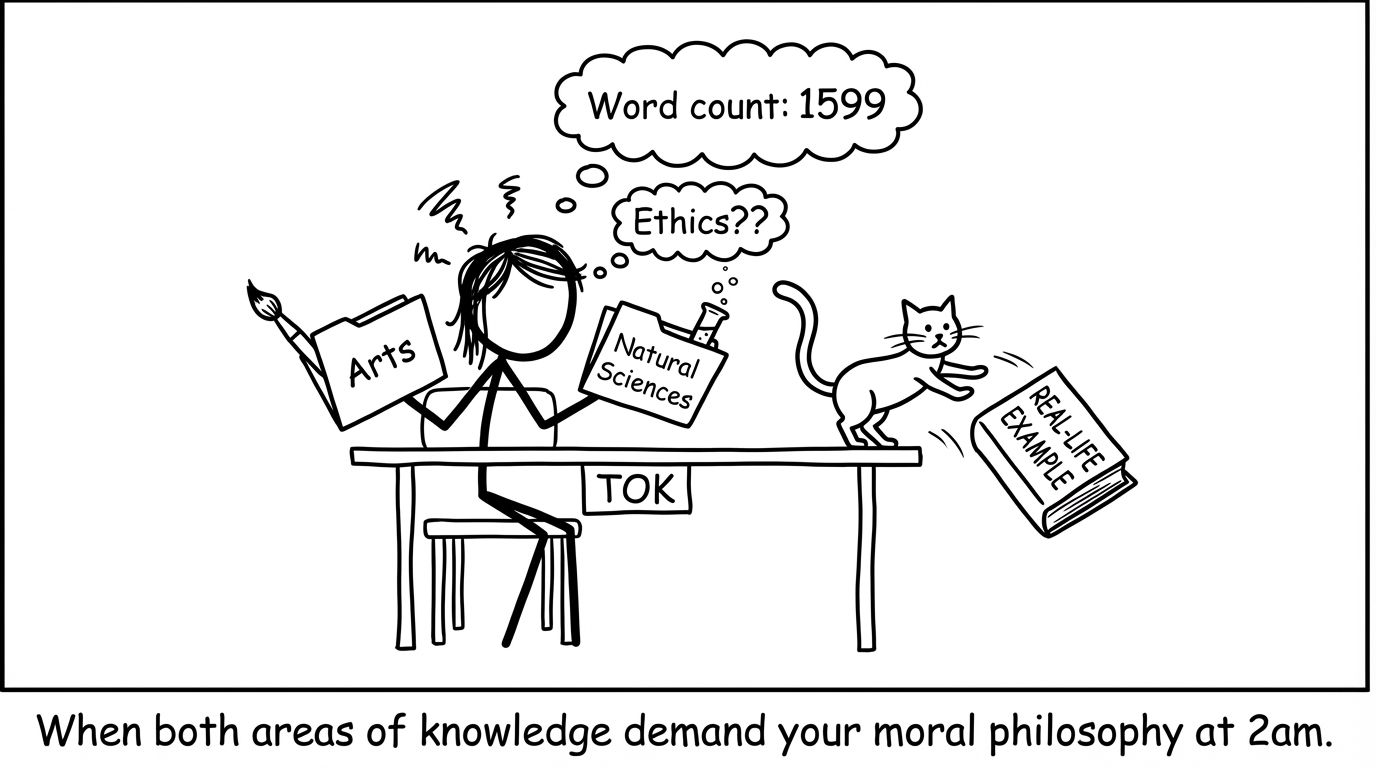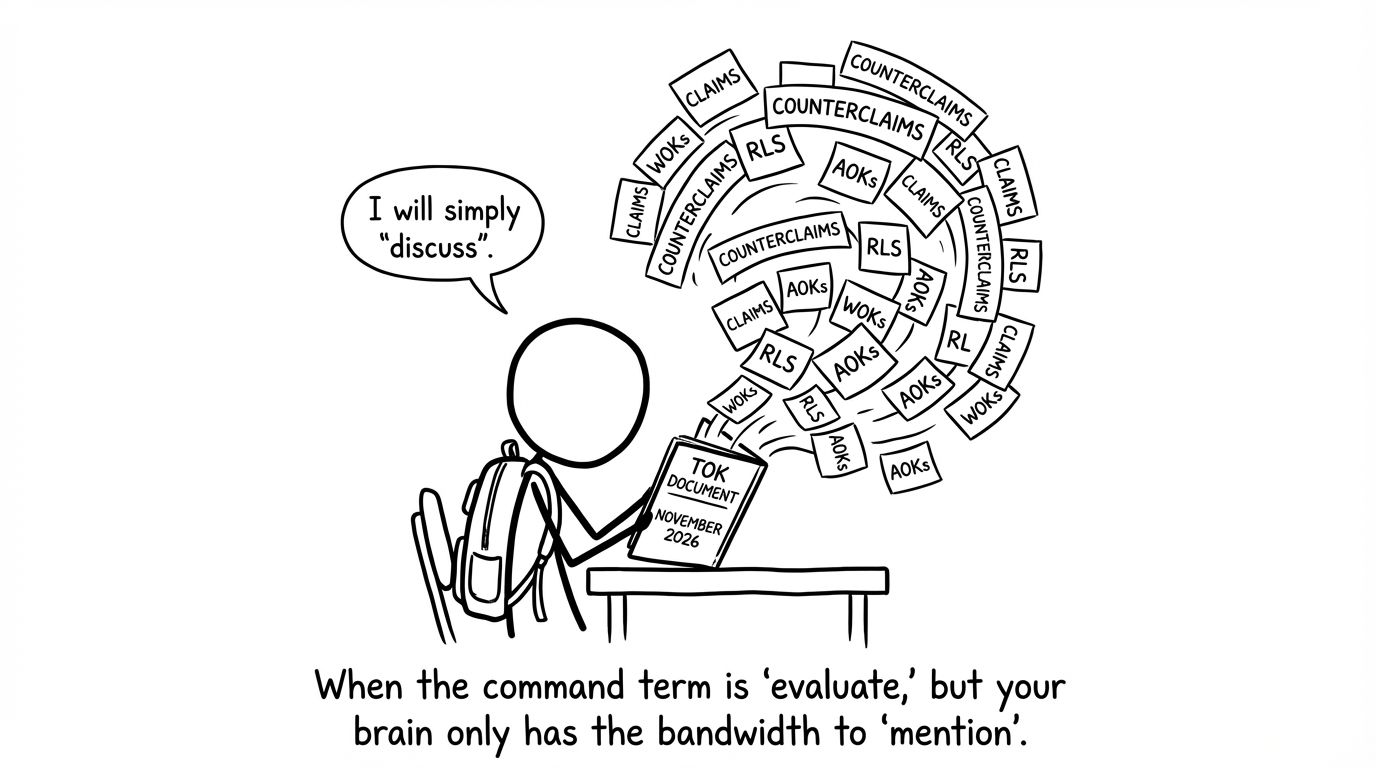

When you’re stressed, you start counting.
Minutes until the deadline. Marks you “need” on the next test. Hours of sleep. You can feel the comfort in it: numbers look clean, certain, controllable. Then TOK shows up and asks a question that ruins that comfort in the best way: to what extent do you agree with Pythagoras that “all things are numbers”?
This TOK title is not really about whether math exists. It’s about what happens when we treat numbers as the whole truth instead of one powerful language among many.
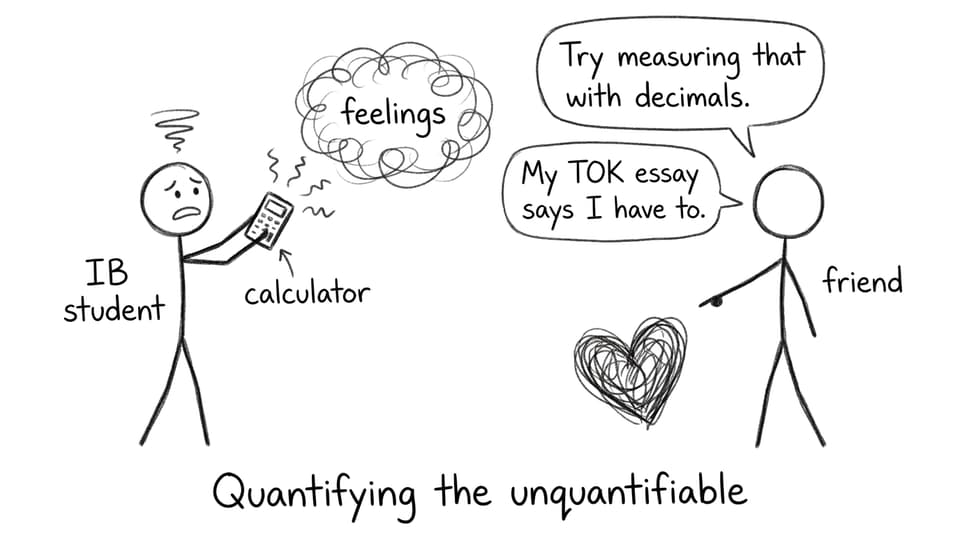
TOK quick plan for Title 5 (save this)
Use this checklist to keep your TOK essay controlled and criterion-friendly:
-
Define what “numbers” means (measurement? ratios? models? statistics?).
-
Define what “all things” means (physical reality? human experience? knowledge?).
-
Build one claim and one counterclaim per AOK.
-
Use the arts and the human sciences as your core comparison.
-
Add at least one WOK (reason, emotion, language, imagination) only when it changes the evaluation.
-
Finish with a judgment that answers to what extent (not “yes/no”).
If you want a wider map of the May 2026 prompts, keep RevisionDojo’s TOK May 2026 essay guide open while you plan.
TOK: What Pythagoras gets right about numbers
There’s a strong TOK reason Pythagoras’ claim keeps resurfacing: numbers let us compress messy reality into patterns we can test, share, and refine.
In many areas of knowledge, numbers act like a passport. They travel across languages and cultures. They can be checked. They invite replication. In the human sciences, a dataset can reveal trends no individual could notice. In the arts, proportion and rhythm can create structure that the audience feels even before they can explain it.
So the claim has force in TOK: perhaps “all things are numbers” means the world becomes knowable when we quantify it.
But TOK never lets you stop at usefulness. You must ask: useful for what, and at what cost?
TOK in the arts: numbers create structure, not meaning
In TOK discussions of the arts, numbers usually show up as form.
In music, rhythm is countable, harmony can be described in frequency ratios, and composition can be built from patterns. You can even measure tempo changes and dynamics precisely. This supports the claim: in the arts, numbers are not outside the work, they are part of how it is made.
Visual art offers similar leverage. Proportion systems and compositional rules can guide balance and focus. You can point to the golden ratio, symmetry, or repeated geometric motifs and argue that numbers explain why something looks “right.”
TOK counterclaim: even when the structure is numerical, the knowledge we gain from art is often qualitative. Meaning depends on context, culture, symbolism, and the viewer’s interpretation. Two people can agree on the ratio in a painting and disagree completely about what the painting says.
That’s a clean TOK evaluation move: numbers can describe features of art, but struggle to capture significance.
For a practical way to compare AOKs without drifting into vague statements, use Connecting TOK essay ideas to Areas of Knowledge.
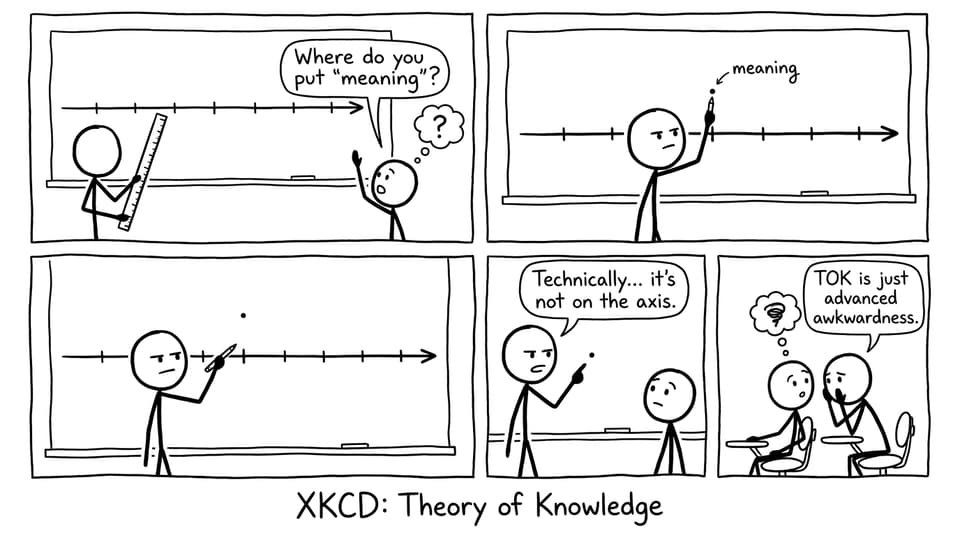
TOK in the human sciences: numbers reveal patterns, but depend on framing
The human sciences are where “all things are numbers” feels most tempting. Psychology, economics, and sociology often rely on surveys, experiments, and statistical models to turn behavior into variables.
A TOK claim here is straightforward: quantification helps reduce bias, improve clarity, and make debates publicly testable. If you can measure something consistently, you can track change over time, compare groups, and evaluate policies.
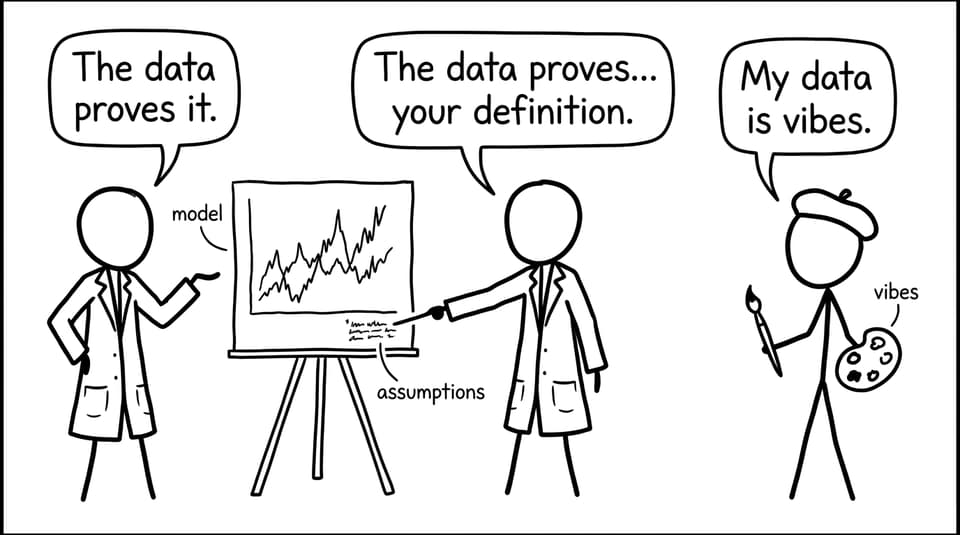
TOK counterclaim: human sciences do not just “discover” numbers -- they decide what counts as a measure. Operational definitions shape what the numbers mean. A happiness score, an intelligence test result, or an unemployment rate is never pure reality. It’s reality filtered through categories, assumptions, and incentives.
This is where your TOK analysis can sharpen: numbers can be accurate while still being incomplete. A model can fit the data and still miss what matters ethically or culturally.
If you need a focused source of common pitfalls and tensions, build your examples around The human sciences and their TOK challenges.
Ways of Knowing: how TOK judges “numbers” differently
A strong TOK essay makes it clear that numbers don’t float alone. They are used by knowers.
-
Reason supports the Pythagorean pull: it loves consistency, pattern, and proof.
-
Language matters because measurement requires agreed terms; change the definition, change the dataset.
-
Emotion matters because it’s often what we’re trying to describe but cannot fully quantify (especially in the arts, and sometimes in psychology).
-
Imagination matters because models are invented before they are tested; you have to picture a simplified world first.
Your evaluation can become more sophisticated by showing that TOK isn’t “numbers vs no numbers” but numbers plus the WOKs that interpret them.
Essay moves that lift your TOK mark
-
Use “to what extent” as a steering wheel: agree strongly in some contexts, cautiously in others.
-
Add one sentence per paragraph that re-anchors the title: “This suggests that in TOK terms…”
-
Don’t just praise quantification; interrogate what gets lost.
When you want feedback that is actually aligned to the rubric language, draft once, then run it through the RevisionDojo Coursework Grader. Pair it with RevisionDojo’s AI Chat to ask why a paragraph feels descriptive instead of evaluative, then turn the answer into a sharper claim/counterclaim.
Closing: TOK’s real lesson about numbers
In the end, TOK May 2026 Title 5 is less a debate about Pythagoras and more a question about intellectual humility. Numbers are one of humanity’s best inventions for making knowledge shareable and testable. But the moment you confuse “what can be counted” with “what matters,” your knowledge becomes thinner.
If you want to turn that nuance into a high-scoring TOK essay, build your plan with IB Theory of Knowledge resources, practice with RevisionDojo’s Study Notes and Flashcards, test yourself with the Questionbank, and refine your draft using the Grading tools, Mock Exams, Predicted Papers, and the Coursework Library. If you need a human nudge, RevisionDojo Tutors can help you pressure-test your claims until your “to what extent” actually means something.
That’s the point of TOK: not to abandon numbers, but to understand where they illuminate the world -- and where they only cast a shadow.