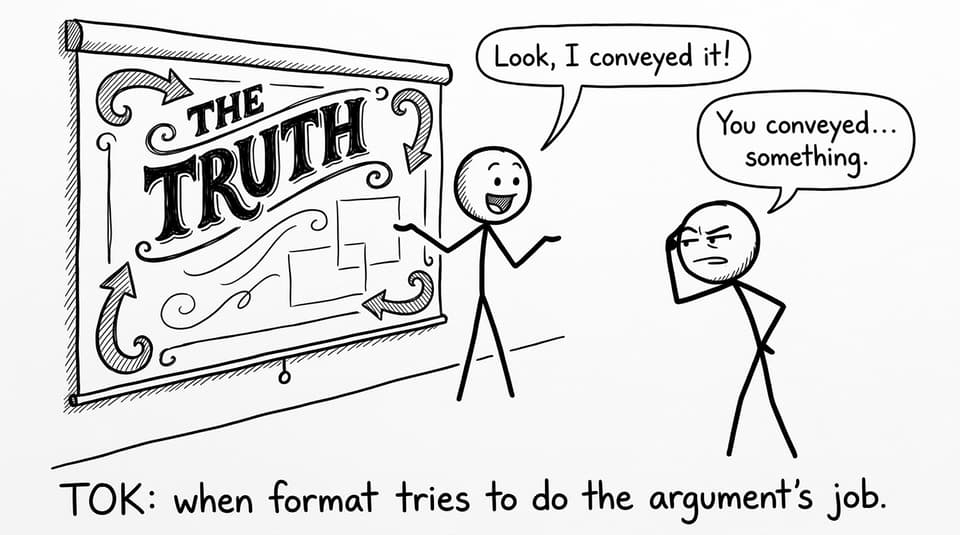
Knowledge can feel like electricity: invisible until it travels through a wire. In TOK, May 2026 Title 3 asks a deceptively simple question: “Is the power of knowledge determined by the way in which the knowledge is conveyed?” If you have ever understood a topic only after a friend explained it, you already know why this matters. The knowledge didn’t change. But its reach, credibility, and impact did.
In a strong TOK essay, you are not just deciding whether conveyance matters. You are judging when it matters, for whom, and in which Areas of Knowledge (AOKs).
A quick TOK checklist for Title 3
Use this mini-plan before you draft:
-
Define power (influence, authority, usefulness, action, accessibility).
-
Define conveyed (language, visuals, media, genre, tone, context).
-
Pick two AOKs with real contrast (often Mathematics and History).
-
Build one claim and one counterclaim per AOK.
-
Choose specific real-world examples you can explain in 4--6 sentences.
-
Make sure every paragraph points back to the title (power + conveyance).
If you want planning support across all prompts, start with TOK May 2026 Essay Prescribed Titles: Complete Guide and then sharpen your structure using TOK Essay Planning Templates for May 2026 Titles.
What “power of knowledge” means in TOK
In TOK, “power” rarely means “true.” It often means what the knowledge can do in the world. Powerful knowledge can:
-
persuade people to change their minds,
-
coordinate action (laws, policies, engineering standards),
-
exclude or include groups through accessibility,
-
become “official” through authority and repetition.
Conveyance matters because it is the bridge between private understanding and public influence. Even accurate knowledge can become weak if it is misunderstood, ignored, or locked behind specialist language.
TOK in Mathematics: truth survives, power shifts
Mathematics is the classic place to argue that knowledge has intrinsic strength. A theorem is still valid even if no one has read your explanation. That supports a clear TOK claim: mathematical knowledge is not determined by how it is conveyed.
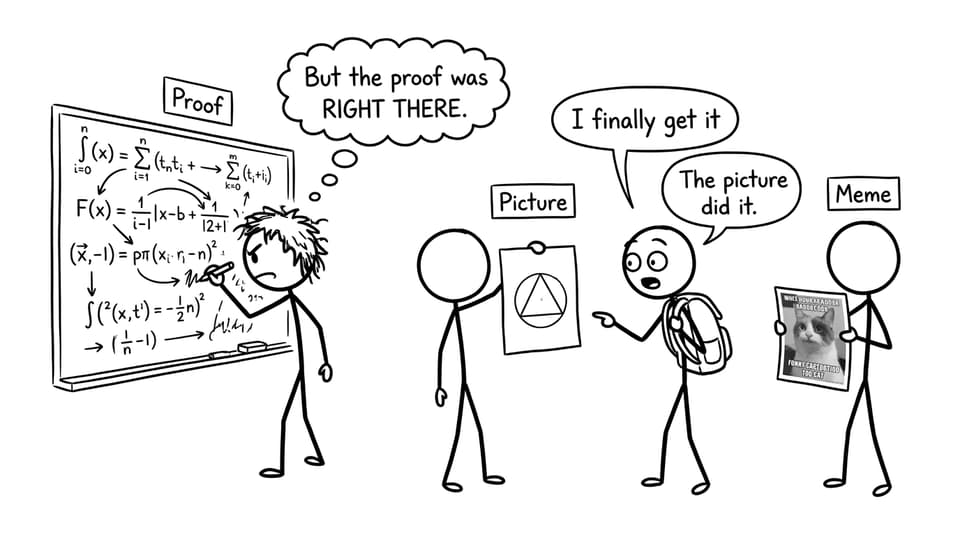
But the title asks about power, not mere existence. A proof can be correct and still fail to influence anyone if it is inaccessible. Andrew Wiles’ proof of Fermat’s Last Theorem is a useful reference point: its acceptance depended on a community being able to check, communicate, and teach the ideas. The mathematical truth wasn’t created by presentation, but its uptake depended on clarity.
A strong mathematics claim and counterclaim
-
Claim: Mathematical knowledge is powerful because it is independent of rhetoric; validity comes from logical justification.
-
Counterclaim: Mathematical knowledge gains practical power through conveyance: diagrams, analogies, notation choices, and pedagogy decide who can use it.
In practice, graphs, models, and visual proofs often do what formal symbolism cannot for learners. In TOK, that becomes evaluation: the status of the knowledge may be stable, but its social power expands or shrinks with conveyance.
TOK in History: conveyance can become the power
History is less about timeless proofs and more about interpretation, selection, and narrative. That makes it a natural fit for the view that conveyance strongly shapes power.
Consider how different Cold War accounts can frame the same events as “defense,” “aggression,” “containment,” or “imperialism.” The underlying documents may be identical, yet textbooks, speeches, and films can steer collective memory. Wartime propaganda is an extreme example: the conveyance method can amplify a message until it becomes politically decisive, even when accuracy is questionable.
A strong history claim and counterclaim
-
Claim: In History, knowledge becomes powerful through narration; framing and medium affect what societies remember and what they ignore.
-
Counterclaim: Conveyance cannot create durable historical knowledge alone; evidence, corroboration, and historiographical debate limit what storytelling can legitimately claim.
A sophisticated TOK move is to show that conveyance is both a tool and a threat: it can increase accessibility, but it can also turn history into persuasion rather than justified knowledge.
Ways of Knowing: the hidden engine of conveyance
This title quietly invites you to use WoKs as mechanisms:
-
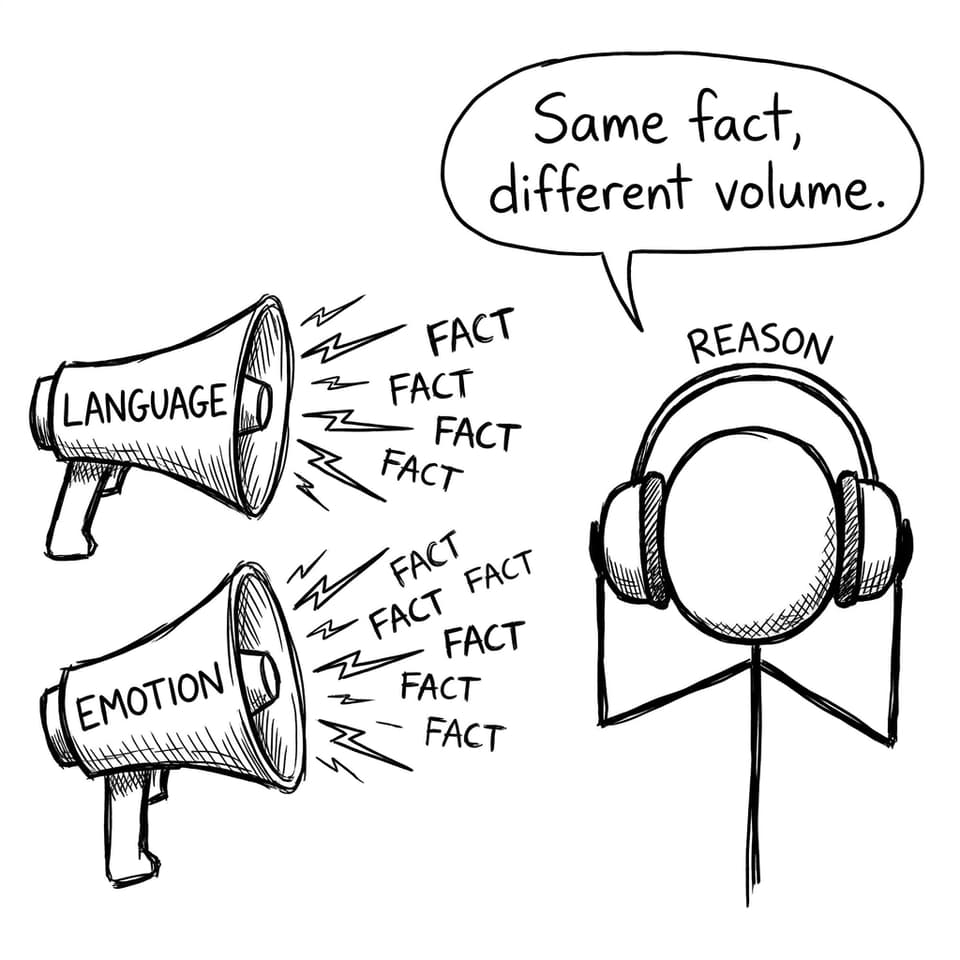
Language sets precision, ambiguity, and persuasion.
-
Reason structures explanations and exposes fallacies.
-
Emotion can make knowledge memorable, urgent, or biased.
-
Imagination helps us model, simplify, and re-present complexity.
For exam-level TOK, don’t just list WoKs. Show how they change who trusts the knowledge and what the knowledge can do.
Writing tips to make your TOK essay examiner-friendly
-
Extract a knowledge question for focus. RevisionDojo’s guide on Using Knowledge Questions in Your TOK May 2026 Essay is a reliable starting point.
-
Use a stable structure. If your paragraphs drift, anchor them with Comprehensive Guide to IB TOK Essay Structure.
-
Build real counterclaims, not weak opposites. See TOK Counterclaims for May 2026 Titles (Best Picks).
-
If you’re still choosing prompts, compare your options with How to Choose the Best TOK May 2026 Title for Your Essay.
And when you revise, use RevisionDojo like a loop: plan with Study Notes, test ideas in the Questionbank, convert weak spots into Flashcards, ask Jojo AI Chat to pressure-test your claim/counterclaim, and use Grading tools for rubric-aware feedback. If you need examples of what “good” looks like, the Coursework Library and IB Theory of Knowledge (TOK) Examples can calibrate your standards, and Tutors can help you tighten evaluation.
Conclusion: TOK Title 3 is really about reach
So, is the power of knowledge determined by how knowledge is conveyed? In TOK, the most defensible answer is conditional: some knowledge retains power through justification alone, but much of its real-world power depends on conveyance that makes it trusted, understood, and usable.
If you want your Title 3 essay to feel calm and sharp, build it the RevisionDojo way: collect examples, plan claims and counterclaims, test your clarity with Jojo AI Chat, and refine with rubric-aware feedback. Conveyance can change everything--so make your own conveyance (your writing) the reason your knowledge feels powerful to the examiner.