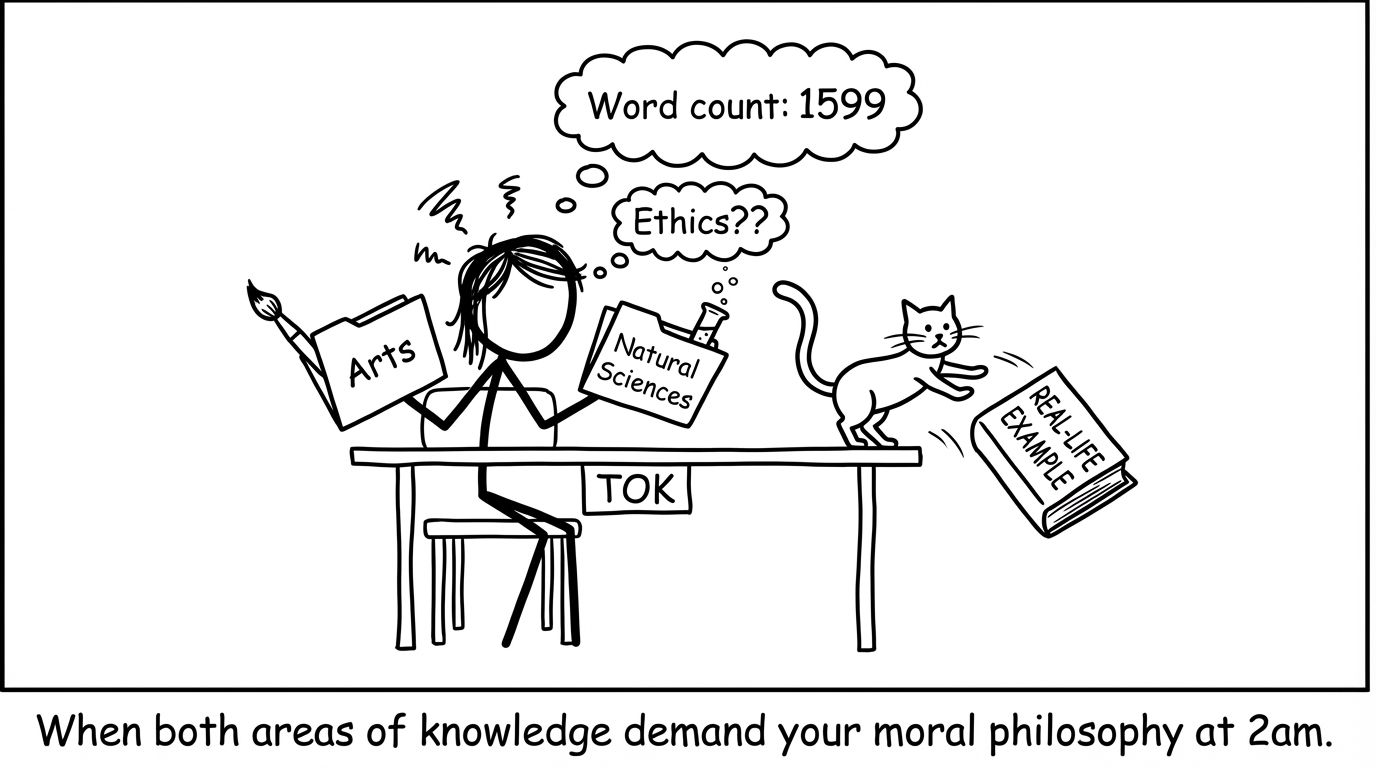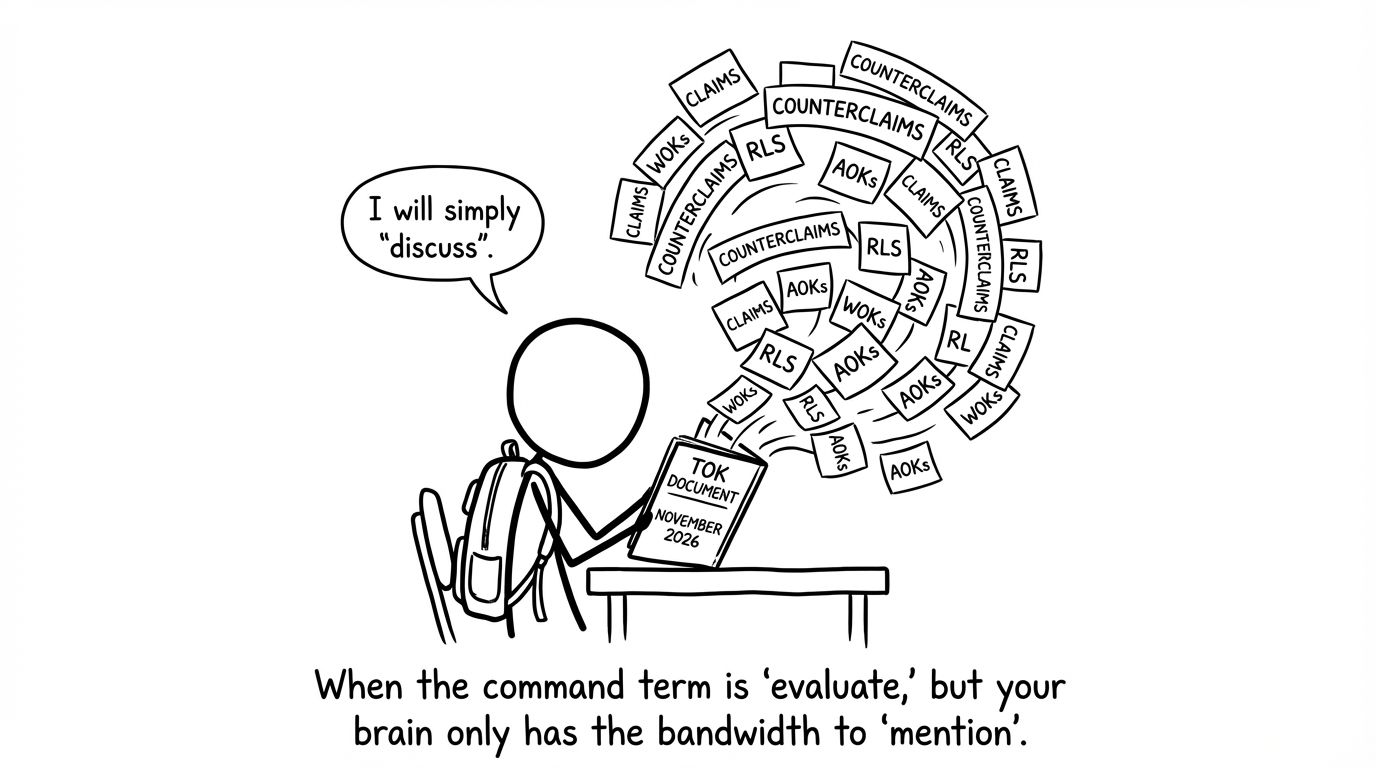
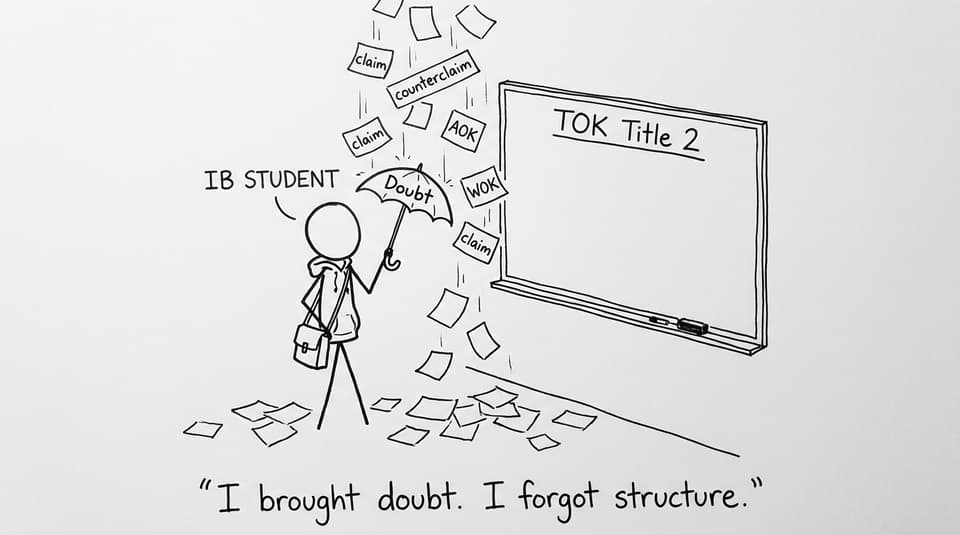
The night before a draft is due, doubt doesn’t feel philosophical. It feels personal. You reread a paragraph you liked yesterday and suddenly it sounds too confident, too neat, too certain. In TOK, that moment can be annoying--but it can also be useful. Because TOK May 2026 Title 2 asks you to judge something most students experience daily: “To what extent do you agree that doubt is central to the pursuit of knowledge?”
The trick is to treat doubt like a tool, not a mood. Used well, it sharpens methods, exposes bias, and improves justification. Used badly, it becomes paralysis: a refusal to commit to any conclusion.
TOK May 2026 Title 2: A quick essay checklist
Before you write, make your TOK plan visible:
-
Define doubt (productive questioning vs. radical skepticism).
-
Define central (necessary? frequent? most important?).
-
Define pursuit of knowledge (production, testing, sharing, and trusting knowledge).
-
Choose two AOKs with contrast (Natural Sciences + Human Sciences works well).
-
Build one claim and one counterclaim per AOK.
-
Use one specific real-life example per claim/counterclaim.
-
Add evaluation: When does doubt help most? When does it harm?
If you need planning support, borrow structure ideas from Comprehensive Guide to IB TOK Essay Structure and Structuring for Success in IB TOK Essays.
TOK and doubt in the Natural Sciences
In the Natural Sciences, doubt is almost a job description. Scientists don’t get rewarded for having beliefs--they get rewarded for designing tests that could prove them wrong.
A strong TOK claim: doubt is central because it creates methods (hypothesis testing, replication, peer review) that filter out error. Think of medical research: doubt about whether a treatment actually works is why clinical trials exist. Or consider physics: doubt about whether Newton’s mechanics explains extreme conditions helped open the door to relativity.
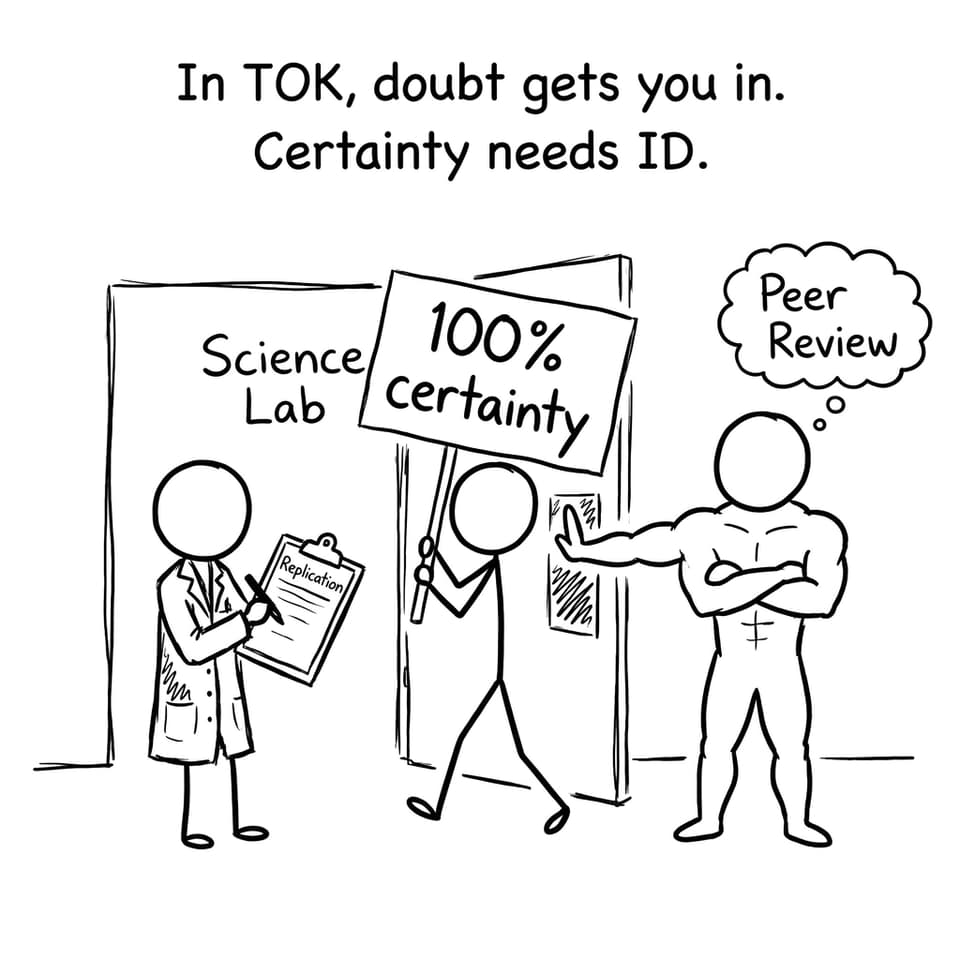
A strong TOK counterclaim: too much doubt can delay action and distort public trust. Climate science, for example, is shaped by constant refinement and debate, but selective “manufactured doubt” can make people feel like nothing is knowable, so nothing should be done. The knowledge may be strong, yet doubt gets weaponized as confusion.
Your evaluation sentence matters: in the Natural Sciences, doubt is most central when it is disciplined by shared standards (methods and evidence), not when it becomes endless skepticism.
For May 2026 support across all prompts, use RevisionDojo Ultimate TOK May 2026 Essay Guide and the TOK May 2026 Essay Prescribed Titles: Complete Guide.
TOK and doubt in the Human Sciences
The Human Sciences (psychology, economics, sociology) make doubt feel more intimate because the “data” is people--and people react to being studied.
A useful TOK claim: doubt is central because it forces researchers to question interpretation, bias, and methodology. Doubt about broad, story-like theories (for example, classic Freudian explanations) helped push psychology toward more empirical and testable approaches. In economics, doubt about models is constant because real-world systems change, and predictions fail.
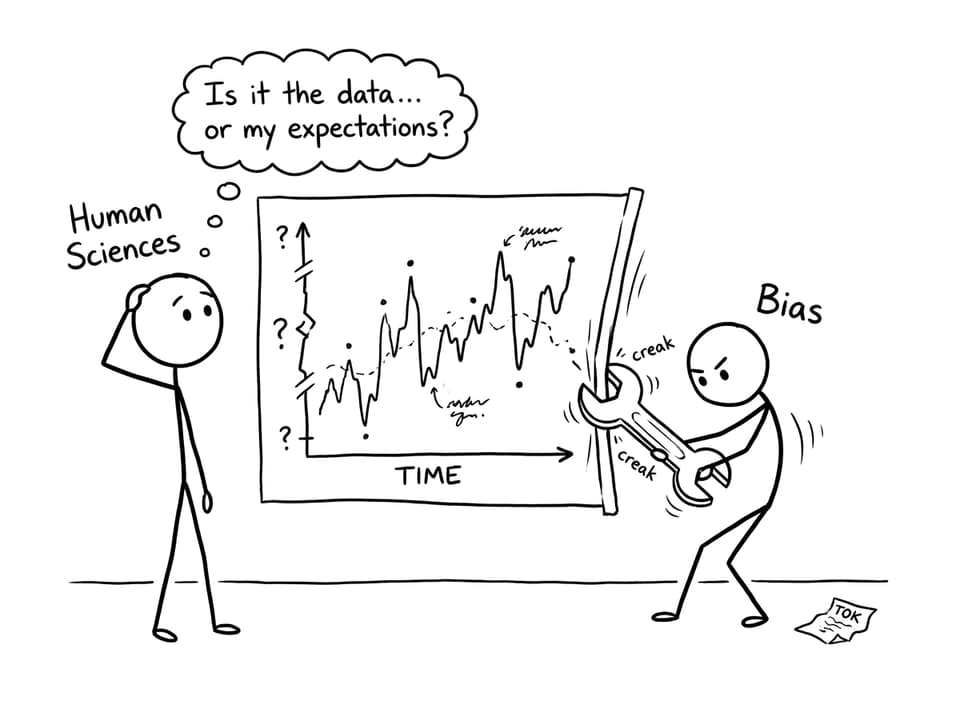
A careful TOK counterclaim: excessive doubt can erode trust in well-supported findings, especially in public-facing areas like health or education. If every conclusion is framed as “just one perspective,” people stop distinguishing between responsible uncertainty and baseless opinion.
Your evaluation can sound like this: doubt is central in the Human Sciences because complexity demands it, but it becomes destructive when it prevents reasonable, evidence-based confidence.
To choose AOKs that actually compare well, see Connecting TOK Essay Ideas to Areas of Knowledge and Overview of the Five Areas of Knowledge in TOK.
Ways of Knowing: where TOK makes doubt “mechanical”
One reason TOK essays score well or badly is whether doubt stays abstract. Anchor it in WOKs:
-
Reason: doubt becomes testing logic, spotting fallacies, checking assumptions.
-
Sense perception: doubt becomes verification (instruments, measurement error, controlled observation).
-
Language: doubt becomes defining terms and noticing how wording frames conclusions.
-
Emotion: doubt can motivate curiosity, but also trigger anxiety and avoidance.
For intros and focus, use TOK Essay Introductions That Grab Attention and for counterclaim quality, see TOK Counterclaims for May 2026 Titles (Best Picks).
Conclusion: make doubt work for you in TOK
So, to what extent is doubt central? In TOK, the best answer is that doubt is central when it is structured: tied to methods, standards, and the willingness to update beliefs. Without that structure, doubt becomes noise.
If you want to turn that insight into higher marks, RevisionDojo helps you practise the exact skills this title demands: build arguments with the Questionbank, sharpen examples with study notes and flashcards, pressure-test ideas with AI Chat, and use grading tools, predicted papers, mock exams, and the coursework library to refine your essay decisions. Doubt is already in your head--RevisionDojo helps you turn it into usable TOK thinking.