A hook you can feel in your bones
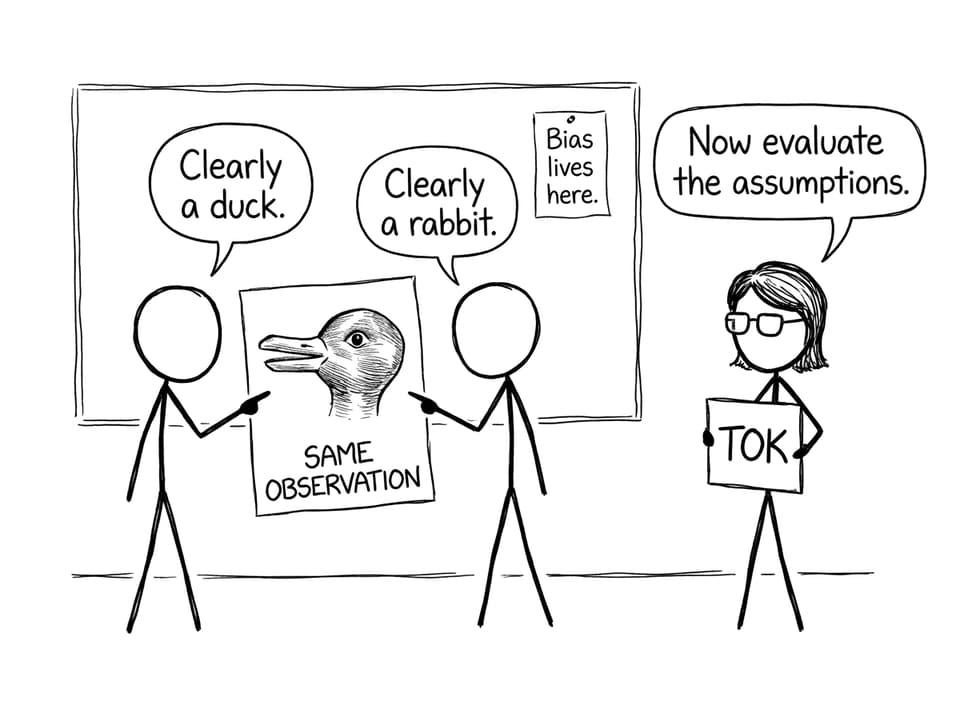
In the week before a deadline, observation starts to feel like the most honest thing you have. You look at a graph, a painting, a quote, a lab result, and you think: there. Evidence. Then you blink, reread, zoom in, and suddenly the same “evidence” looks… different. The unsettling part isn’t that you were careless. It’s that observation is both essential and flawed, and TOK May 2026 Title 1 is asking whether that tension actually matters in the production of knowledge.
This is a great TOK title because it’s quietly practical. It doesn’t ask you to praise observation or attack it. It asks you to judge whether knowledge changes when its most basic tool is unreliable. And that’s exactly the kind of balanced evaluation examiners reward.
What the title is really asking (TOK unpacking)
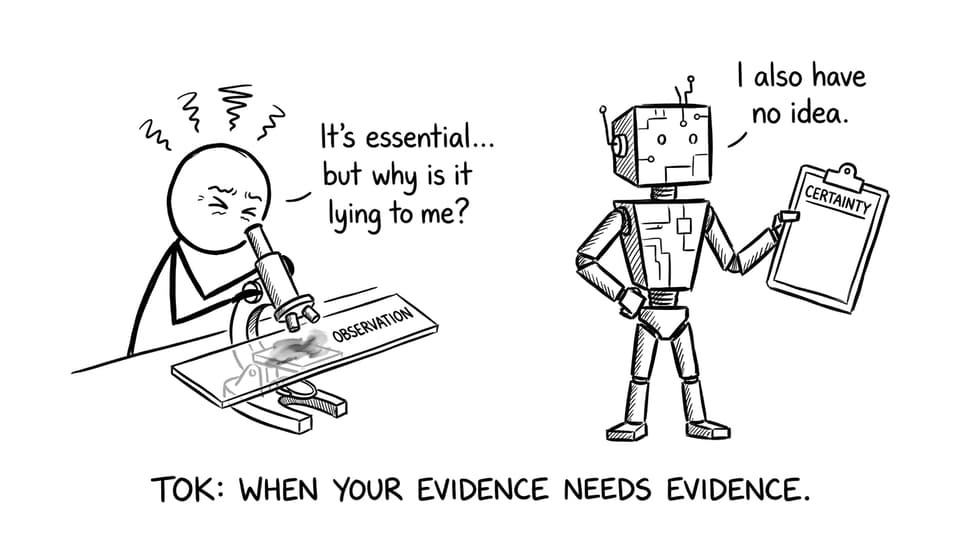
The prescribed title is: “In the production of knowledge, does it matter that observation is an essential but flawed tool?”
A strong TOK move is to turn that into a knowledge question you can actually argue:
-
To what extent can knowledge be reliable if observation is inherently limited?
-
When do the flaws of observation become a serious threat to knowledge?
-
How do different Areas of Knowledge handle observational error differently?
Notice the built-in balance: “essential” forces you to concede observation’s necessity; “flawed” forces you to concede its limits. Your job in TOK is to show how knowledge communities respond to that fact.
If you want a bigger map of the May 2026 prompts, use RevisionDojo’s ultimate TOK May 2026 essay guide and the TOK May 2026 prescribed titles complete guide.
A quick checklist (use this to plan your TOK essay)
Keep this TOK checklist beside your outline:
-
Define observation (sense perception and instrument-aided observation).
-
Define flawed (bias, limits of senses, measurement error, interpretation).
-
Define production of knowledge (methods, validation, community standards).
-
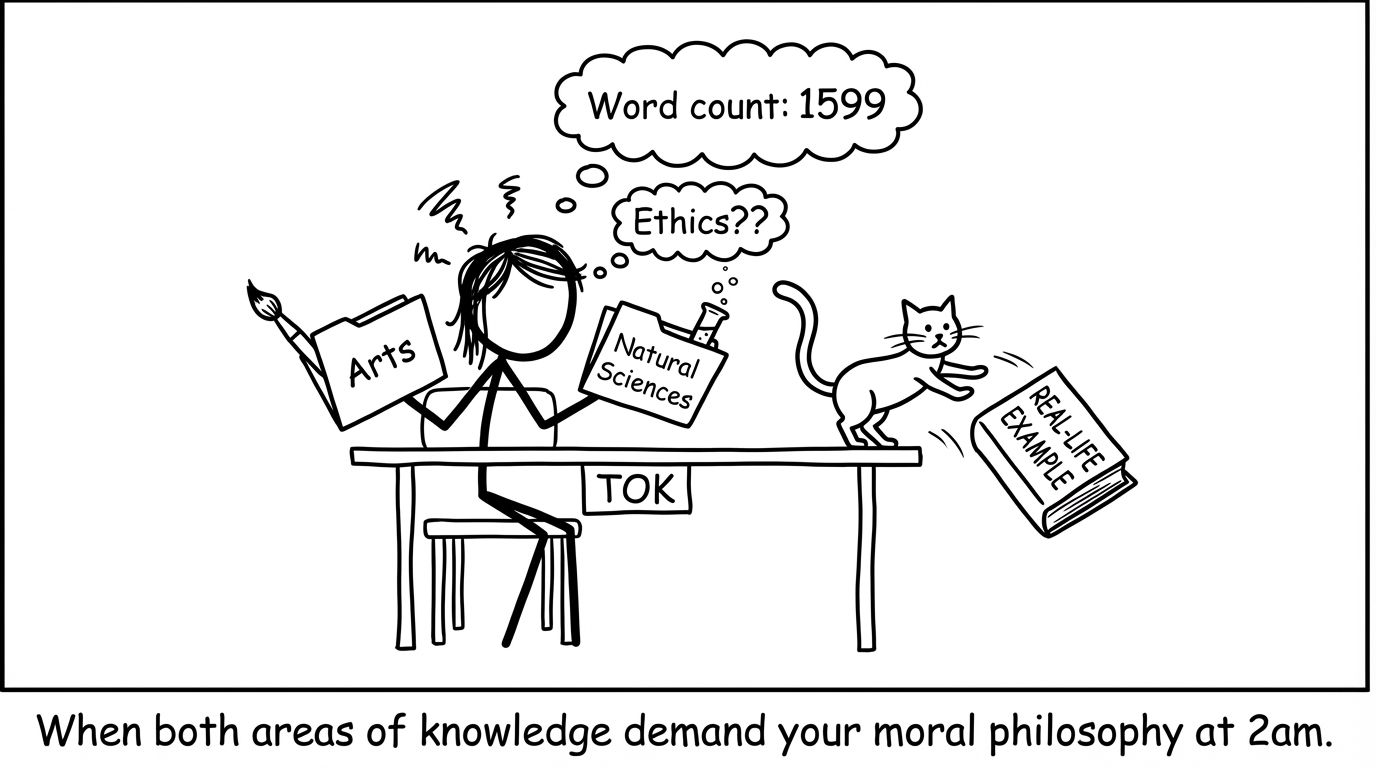
Pick two AOKs where observation functions differently (e.g., Natural Sciences + Arts, or Natural Sciences + Human Sciences).
-
Build one claim and one counterclaim per AOK, each with a specific real-life example.
-
Show how other WoKs (reason, language, emotion, imagination) repair or distort observation.
-
End by answering “does it matter?” with conditions, not a slogan.
For structure support, lean on Comprehensive Guide to IB TOK Essay Structure and Structuring for Success in IB TOK Essays.
TOK in the Natural Sciences: observation as evidence (with safeguards)
In the Natural Sciences, observation is not just “looking.” It’s carefully designed contact with reality: controlled experiments, repeatable measurements, calibrated instruments. This is where the title’s word “essential” feels unavoidable. Without observation, science becomes pure speculation.
Claim (Natural Sciences): Observation matters because it grounds scientific knowledge in the world.
A classic example is Galileo’s telescopic observations, which challenged geocentric models. But in a TOK essay, the interesting part is not “Galileo was right.” The interesting part is that early telescopes introduced distortions, and observers had to learn how to interpret what they were seeing. Knowledge didn’t emerge from raw observation alone; it emerged from observation plus reasoning, mathematical modelling, and scientific community debate.
Counterclaim (Natural Sciences): Observation’s flaws matter because they can mislead entire research programmes.
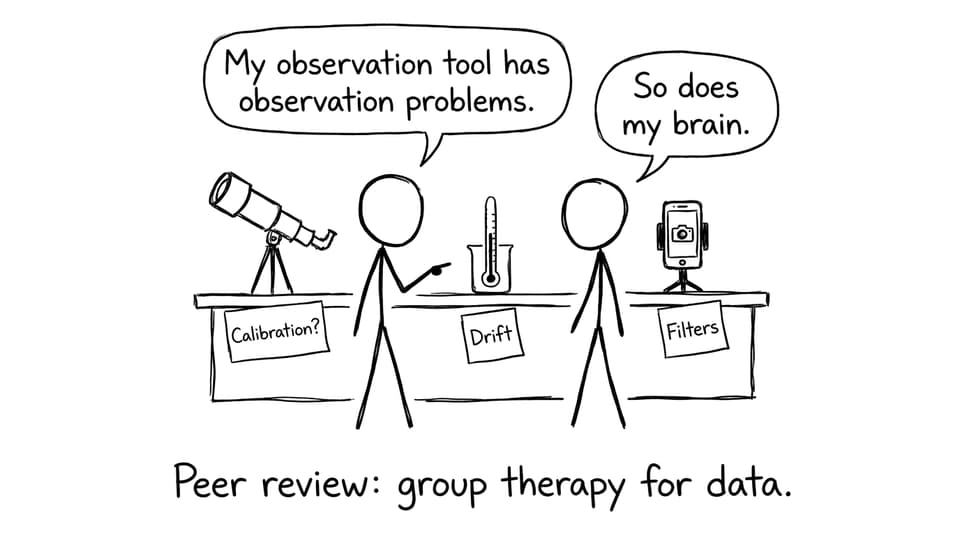
Modern science often relies on instruments that extend the senses, but instruments come with their own assumptions. Particle physics detectors, satellites measuring climate data, and even basic sensors can drift or be miscalibrated. The flaw is not only in the machine; it’s also in interpretation: what counts as “signal” versus “noise” depends on theory. In TOK terms, observation is “the start of justification,” not the end of it.
So, does it matter that observation is flawed? In science, it matters--but the AOK has built-in “damage control”: replication, peer review, error bars, statistical significance, and evolving methods. The community treats flawed observation as normal and designs systems to reduce it.
TOK in the Arts: observation as raw material (not a final verdict)
In the Arts, observation is essential in a different way. Artists observe light, bodies, emotion, politics, power, everyday life. But artistic knowledge is rarely trying to be a literal record. It’s often trying to reveal something that literal accuracy cannot.
Claim (Arts): Observation matters because it supplies the world the artist transforms.
Impressionist painting is a useful TOK reference: artists such as Monet observed scenes, but they used colour, brushwork, and selective focus to show perception in motion rather than photographic precision. The “flaw” (subjectivity) isn’t only tolerated; it’s part of the point.
Counterclaim (Arts): Observation’s flaws matter because they can narrow representation and reinforce bias.
What an artist notices is shaped by culture, training, and emotion. In literature, authors observe human behaviour, but they craft narratives that guide interpretation. Orwell’s 1984 draws on observed political patterns, yet the knowledge it produces is mediated by metaphor and story design. In TOK, you can argue that the Arts show observation is never neutral: it always arrives with a perspective.
The Arts therefore answer the title differently: flawed observation matters, but not always as a weakness. Sometimes the “flaw” is the feature that produces insight.
Ways of Knowing that change what observation can do
This title becomes sharper when you show how TOK Ways of Knowing interact with observation:
-
Reason helps transform observations into patterns, models, and explanations. It can correct mistaken first impressions, but it can also overfit data, forcing neat stories onto messy reality.
-
Language labels what we see. A label can clarify (“correlation is not causation”) or trap us in categories that distort perception.
-
Emotion guides attention. It can make an artist notice what others miss, but it can also make a scientist interpret ambiguous results too optimistically.
-
Imagination fills gaps. It generates hypotheses and creative leaps, but it can also manufacture certainty where the observation is weak.
A high-scoring TOK paragraph often shows a chain like: observation (data) → reason (interpretation) → language (communication) → community (validation). This chain is where “production of knowledge” actually happens.
For planning your KQ and linking to AOKs cleanly, see Breaking Down TOK Essay Titles: What Are Knowledge Questions? and Connecting TOK Essay Ideas to Areas of Knowledge.
How to turn Title 1 into a simple, examiner-friendly argument
A reliable TOK thesis for this prompt looks like this:
Observation’s flaws matter because they shape what can be known, but they matter differently across AOKs; robust knowledge is produced when communities pair observation with methods that expose and correct its weaknesses.
Then structure your essay in two AOK blocks:
-
AOK 1 (Natural Sciences): observation as essential evidence, flaws managed by method.
-
AOK 2 (Arts or Human Sciences): observation as selective perspective, flaws sometimes productive, sometimes ethically risky.
If you want drafting support, RevisionDojo’s How to Write a Good TOK Essay: A 10-Step Guide and Tips for Writing a Clear and Coherent TOK Essay are designed for exactly this kind of title.
Closing: what this TOK title is really teaching you
This TOK prompt is quietly generous: it gives you a tool you already use every day (observation) and asks you to notice the cost of relying on it. Yes, observation is essential. And yes, it is flawed. What matters is how knowledge communities respond: with calibration, peer review, modelling, and debate in the sciences; with interpretation, perspective, and sometimes deliberate distortion in the arts.
If you want to practise this kind of argument quickly, RevisionDojo is built for it: use the IB Theory of Knowledge (TOK) hub to organise your syllabus thinking, drill skills with the TOK Questionbank, strengthen examples with Study Notes, and polish drafts using the Coursework Grading tools and AI Chat inside RevisionDojo. Then return to the title one last time in your conclusion and say it plainly: in TOK, flawed observation doesn’t ruin knowledge--it explains why knowledge needs methods, not just eyes.