In the middle of the IB, the hardest part is rarely intelligence. It’s deciding what matters on a Tuesday night when you’re tired, your IA is looming, and your brain wants a comforting lie like, “I’ll just read my notes again.”
The students who get good grades in IB aren’t always the ones who work the most. They’re the ones who build a small system that keeps working even when motivation doesn’t show up. This guide gives you that system: how IB points work, how to plan, how to revise, and how to turn RevisionDojo into an advantage you can actually feel.
How IB grades really work (so you aim correctly)
To get good grades in IB, you first need to know what the game is.
The IB Diploma Programme is marked out of 45 points:
-
Six subjects x 7 points = 42 points
-
Up to 3 core points from TOK and the Extended Essay (EE)
-
You generally need 24 points to earn the diploma
Most subjects combine:
-
External exams (Paper 1, Paper 2, sometimes Paper 3)
-
Internal Assessments (IAs), often worth 20-30% of the final grade
Higher Level in IB isn’t just “more content.” HL usually demands deeper understanding, sharper exam technique, and more disciplined writing under time pressure.
If you want one place to keep your coursework expectations straight, start with RevisionDojo’s IA Guides hub and its broader Coursework Guides.
Your IB success checklist (save this)
When grades rise in IB, it’s usually because this loop becomes consistent:
-
Clarify what the assessment wants (rubric + command terms)
-
Plan weekly outputs (not vague “revise topic 3”)
-
Recall daily (flashcards and retrieval)
-
Practice exam-style questions often
-
Review mistakes and turn them into rules
-
Simulate timed pressure early
-
Iterate coursework drafts with real feedback
RevisionDojo is built around that exact loop: Study Notes, Flashcards, a Questionbank, AI Chat, Grading tools, Predicted Papers, Mock Exams, a Coursework Library, and access to Tutors when you need a human to unstick the hard parts.
You can see the platform overview on the RevisionDojo home page.
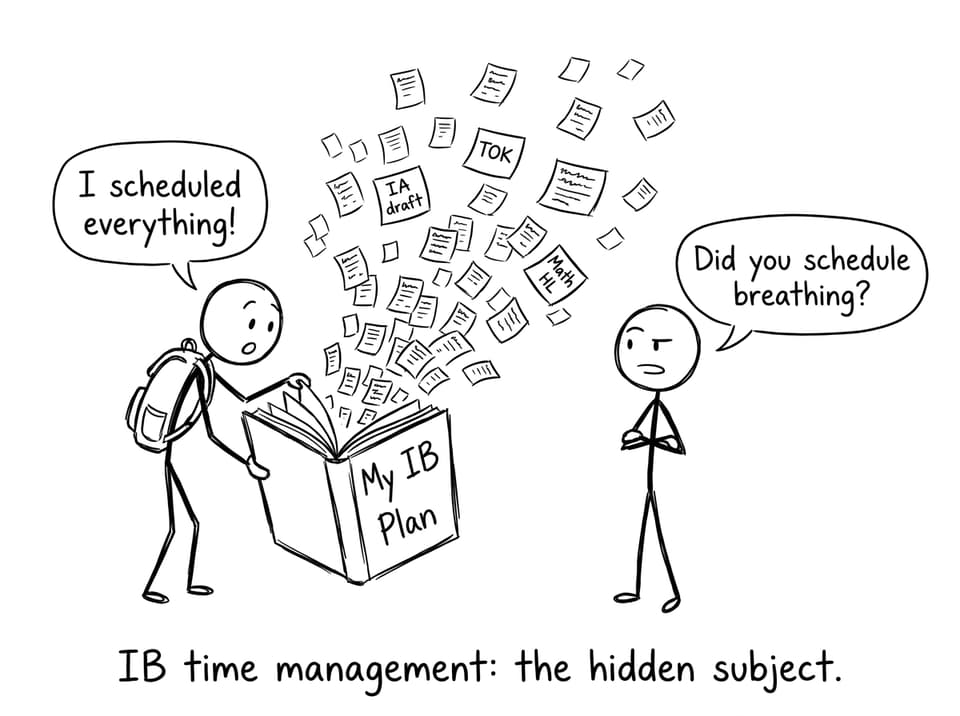
Time management in IB: make your week do the thinking
IB time management works best when it removes daily negotiation. You don’t want to “decide to be disciplined” every day. You want a timetable that makes the next right action obvious.
Plan by outputs, not hours
Instead of “two hours of Biology,” write something measurable:
-
“Finish 25 Questionbank questions on topic X”
-
“Draft IA analysis paragraph and check against criteria”
-
“Write one timed essay plan”
This is the difference between effort and progress in IB.
Use short blocks and protect recovery
Use 25-50 minute blocks with small breaks. It’s not just a productivity trick; it’s an attention management trick.
For a calmer approach to scheduling, borrow ideas from IB Exams Without Pausing Your Life.
Study methods that actually raise IB grades
A lot of IB study feels productive but doesn’t convert into marks. The fix is simple: learn actively, then practice like the exam.
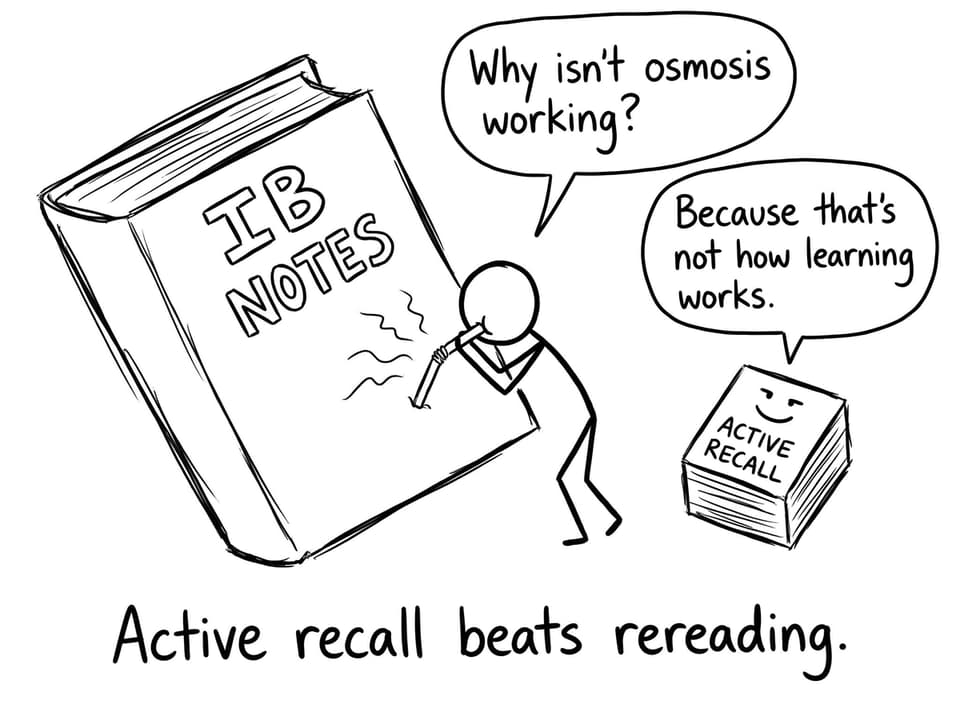
Active recall (your brain has to retrieve)
Rereading feels smooth. Active recall feels slightly uncomfortable. That discomfort is the point.
Use RevisionDojo Flashcards to run daily retrieval, then build on it using the Flashcards feature page to keep spaced repetition working quietly in the background.
Spaced repetition (review before you forget)
In IB, cramming creates short-term familiarity that collapses under exam stress. Spaced repetition turns the same minutes into long-term retention.
A practical rhythm:
-
Same day: quick recall
-
2-3 days later: mixed review
-
7 days later: reattempt missed concepts
Practice questions (knowledge becomes marks)
You don’t fully understand IB content until you can use it under constraints: command terms, markbands, time.
Use the RevisionDojo Questionbank to target one topic at a time, and steal the process from What’s the Best Way to Revise for IB Exams? and The Ultimate Guide to Revision for IB Students.
Coursework that boosts your IB total: IAs, EE, and TOK
Strong coursework is the quiet multiplier in IB. It’s also where students leak marks through preventable mistakes.
How to score higher on IAs
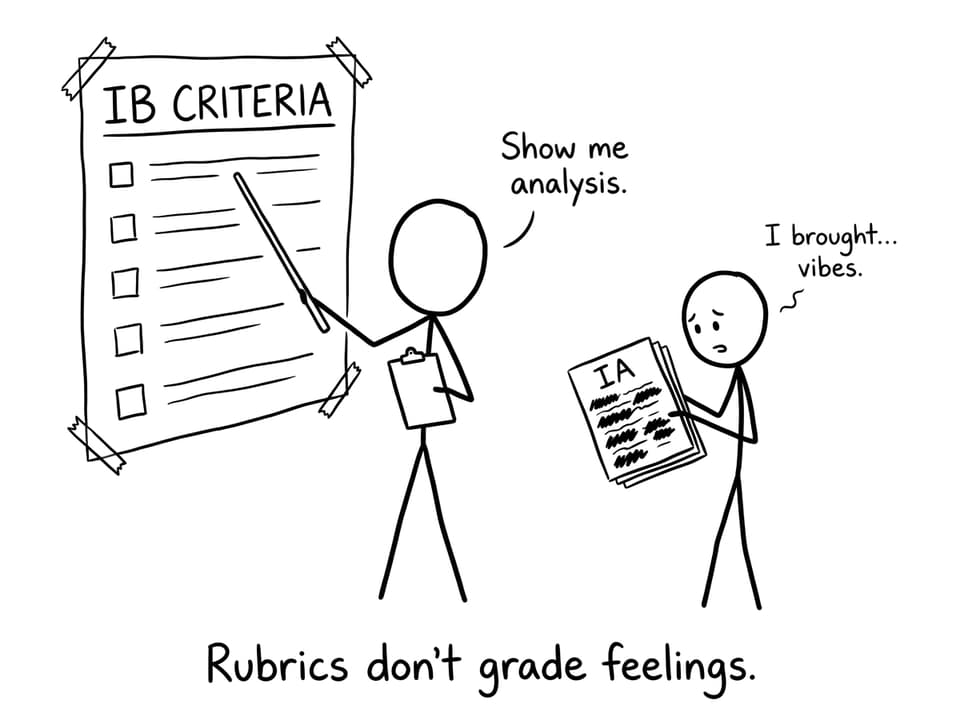
The rubric is not decoration; it’s the marking machine.
-
Read the criteria before you start, not after you draft
-
Choose a focused question you can actually answer with evidence
-
Prioritize analysis and evaluation over description
-
Get feedback early and revise in cycles
If you need a clean overview, read IB Internal Assessment: A Complete Guide and browse the IA posts collection. For subject-specific help, the IB Computer Science IA guide is a good example of what “step-by-step” should feel like.
Use TOK to strengthen your EE (and your thinking)
TOK and the EE can add up to 3 points. But more importantly, TOK-style thinking (claims, counterclaims, limits) is what upgrades a descriptive EE into an argument.
If you’re stuck, use How to Use TOK to Enhance Your Extended Essay and the IB Extended Essay Guides hub.
Subject-specific IB exam prep: small tactics that matter
Different IB subjects reward different habits:
-
Sciences: practice data handling and explain processes clearly, not just correctly.
-
Humanities: plan arguments fast; your structure is half the grade.
-
Math: do problems until steps feel automatic, then do them timed.
-
Languages: short daily exposure beats rare long sessions.
When you want a repeatable framework, steal one from 10 Proven Study Techniques for IB Students.
A final IB strategy: make your effort compound
The best IB advice is surprisingly calm: do fewer things, more consistently, and measure whether they turn into marks.
Start today with one cycle: 15 minutes of Flashcards, one targeted Questionbank set, then a short mistake review. Use RevisionDojo’s Study Notes to patch gaps, its AI Chat to clarify what you’re avoiding, its Grading tools to tighten coursework, and its Mock Exams and Predicted Papers to build real exam calm. That’s how IB grades climb: not in heroic bursts, but in small sessions that keep showing up.


