
The night before a big IB exam has a specific kind of silence.
It’s not the peaceful kind. It’s the kind where you open ten tabs, reread the same paragraph three times, and still feel unsure whether you’re revising or just circling your anxiety.
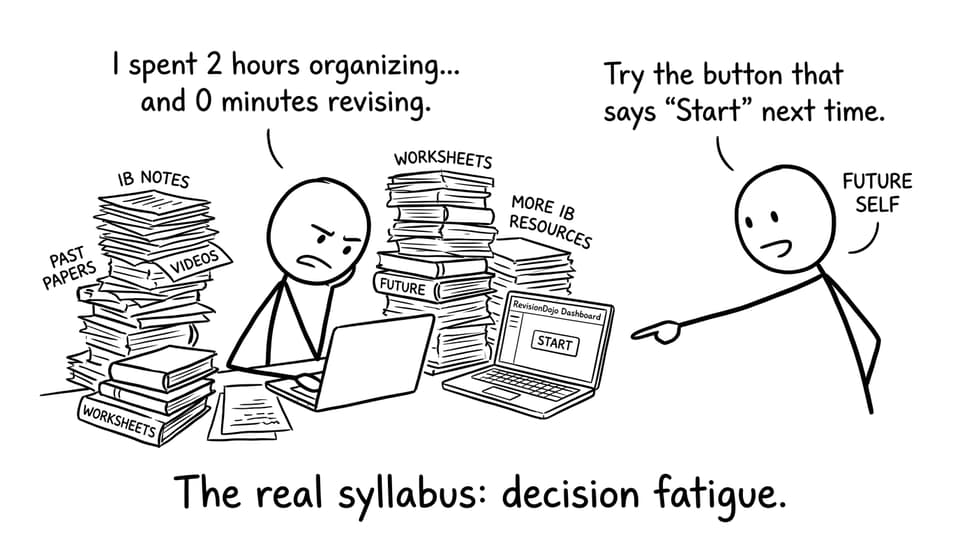
Most IB students don’t struggle because they’re lazy. They struggle because the programme is wide, timed, and unforgiving about small gaps. The real challenge isn’t effort. It’s direction.
That’s where RevisionDojo earns its reputation: it turns IB preparation into a loop you can actually run--learn, practise, get feedback, and improve--without losing hours to guessing what matters.
The quick checklist: a results-focused IB revision loop
If you want the simplest way to use RevisionDojo for IB results, use this checklist as your default workflow:
-
Clarify the topic with Study Notes
-
Lock memory with IB Flashcards (short daily sessions)
-
Convert knowledge into marks using the Questionbank
-
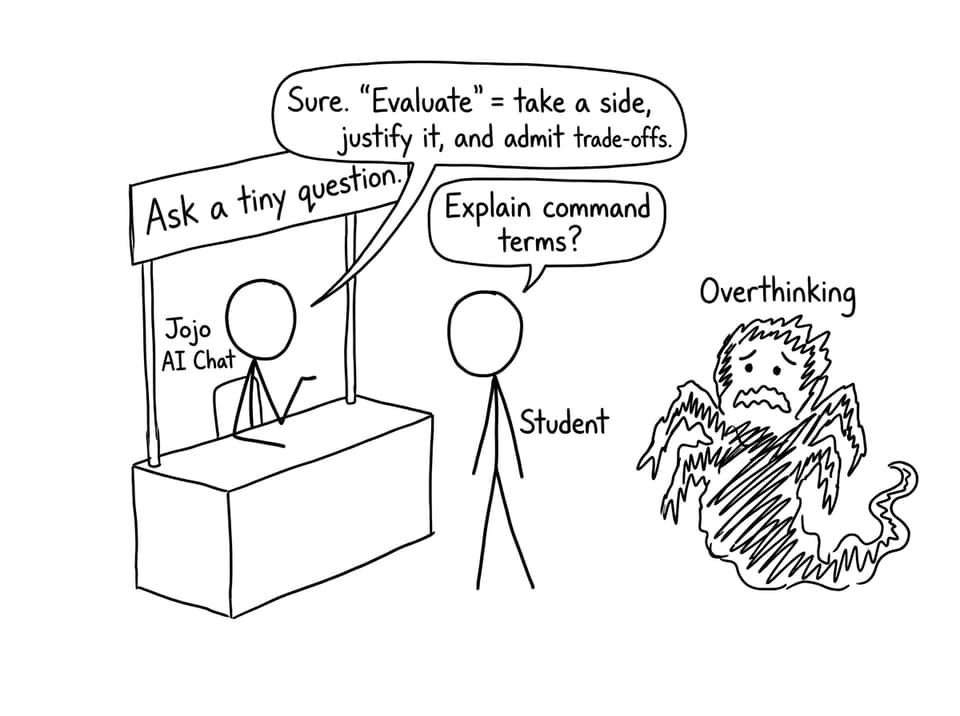
Get unstuck fast with Jojo AI Chat
-
Prove timing and technique with Mock Exams and Predicted Papers (inside the RevisionDojo app ecosystem)
-
Use Grading tools and the Coursework Library to reduce background stress and improve written work quality
-
If you need a human voice, use Tutors for diagnosis and planning
That’s the loop. It’s not glamorous. It’s how IB points are built.
Why IB results rise with systems, not motivation
The IB rewards students who can do three things repeatedly:
-
Choose the right thing to revise (not everything, not random)
-
Practise in exam style (not just read and hope)
-
Respond to feedback quickly (while the mistake is still fresh)
In real life, those three break down for predictable reasons. Resources are scattered. Feedback is slow. Students misread what exam questions are actually asking. And when pressure rises, revision becomes less strategic and more emotional.
RevisionDojo works because it puts structure around those failure points. It doesn’t just add content. It reduces friction.
To see the platform’s IB focus end-to-end, start with RevisionDojo for IB or the broader International Baccalaureate (IB) hub.
The role of RevisionDojo in enhancing IB results
The story of higher IB results is usually a story of fewer blind spots.
RevisionDojo creates that effect through a few compounding tools. Each one matters on its own, but the real gain comes from using them together.
IB practice becomes measurable with the Questionbank
An IB student can work hard and still plateau if practice is unfocused. RevisionDojo’s Questionbank solves the common problem: practice that doesn’t map cleanly to what exams demand.
Because questions are syllabus-aligned and exam-style, the time you spend practising is closer to the time you spend earning marks. You can filter by topic, drill weaknesses, and repeat the same skills until they stop breaking under pressure.
If you want a practical guide to using it well, read IB Question Bank | How to Use It Effectively and the deeper overview IB Question Bank: Thousands of Practice Questions.
IB understanding improves when notes are built for exam application
There’s a subtle trap in the IB: notes can feel productive while producing very little. Rewriting a textbook chapter looks like revision, but it often avoids the harder work of recall and application.
RevisionDojo’s Study Notes are designed to be used quickly, like a map. The point isn’t to admire the map. The point is to move.
A strong IB habit is:
-
Read a short note section to refresh understanding
-
Turn it into a question you could be asked
-
Immediately prove it with Questionbank practice
For strategies on using notes without wasting time, see IB Subject Note Collections: Comprehensive Study Materials.
IB memory holds longer with Flashcards and spaced repetition
The IB isn’t only hard because of complexity. It’s hard because of volume. Students forget what they once understood, and the forgetting feels like failure.
RevisionDojo’s Flashcards feature and the broader IB Flashcards with Spaced Repetition solve a simpler problem: daily retrieval.
When you do a small review session consistently, it compounds. Ten minutes doesn’t feel like much. But in the IB, those minutes reduce the panic later because you’re not rebuilding from zero.
If you want the method behind the tool, read IB Flashcard System: Active Recall for Better Memory.
IB exam technique improves when feedback arrives immediately
Most IB students don’t lose marks because they don’t know anything. They lose marks because they:
-
Misread the command term
-
Skip a required step
-
Don’t show working clearly
-
Under-explain evaluation
-
Run out of time
RevisionDojo’s value is that it tightens the feedback loop. In the RevisionDojo ecosystem (Questionbank, Exam-style practice, and grading support), you can see what went wrong while you still remember what you were thinking.
And that’s when improvement happens.
If you want to see the full platform workflow described in one place, read RevisionDojo App: The Smarter Way to Prep for IB Exams.
IB confidence grows when you can rehearse pressure
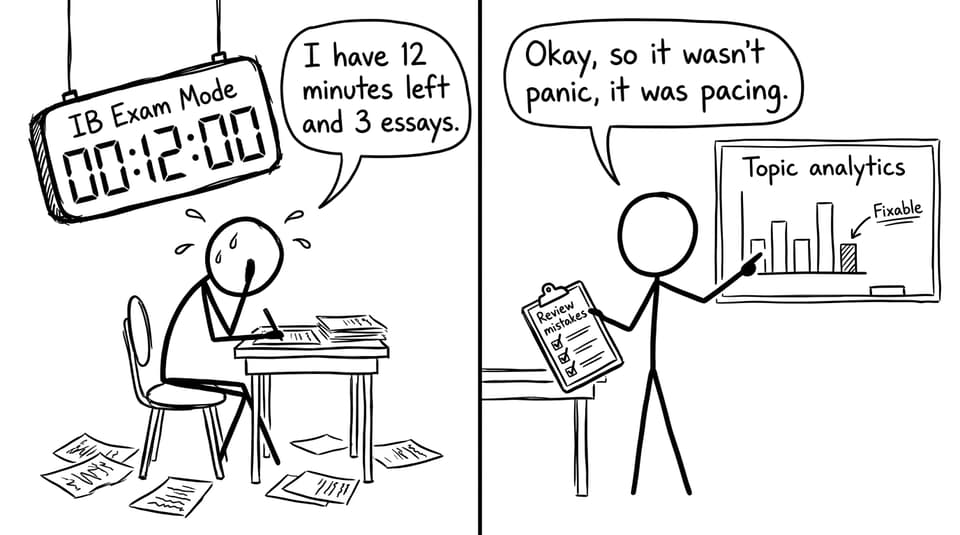
Pressure is part of the IB experience, but pressure becomes manageable when it’s familiar.
RevisionDojo supports realistic rehearsal through Mock Exams and Predicted Papers. The goal isn’t to comfort you. It’s to expose you to pacing, structure, and question patterns early enough that exam day feels like a repeat, not a first attempt.
To understand how to use predicted sets intelligently, read IB Predicted vs Specimen Papers: What They Mean.
And if you want a broader strategy for timed practice, this is useful: Online IB Mock Exams: Practice Anywhere, Anytime.
How RevisionDojo helps teachers and schools raise IB results
Even though this article is for IB students, your results don’t exist in isolation. When a whole cohort has clearer practice routines and faster feedback, the entire environment shifts.
RevisionDojo is built for that kind of consistency.
Teachers: less manual marking, more targeted support
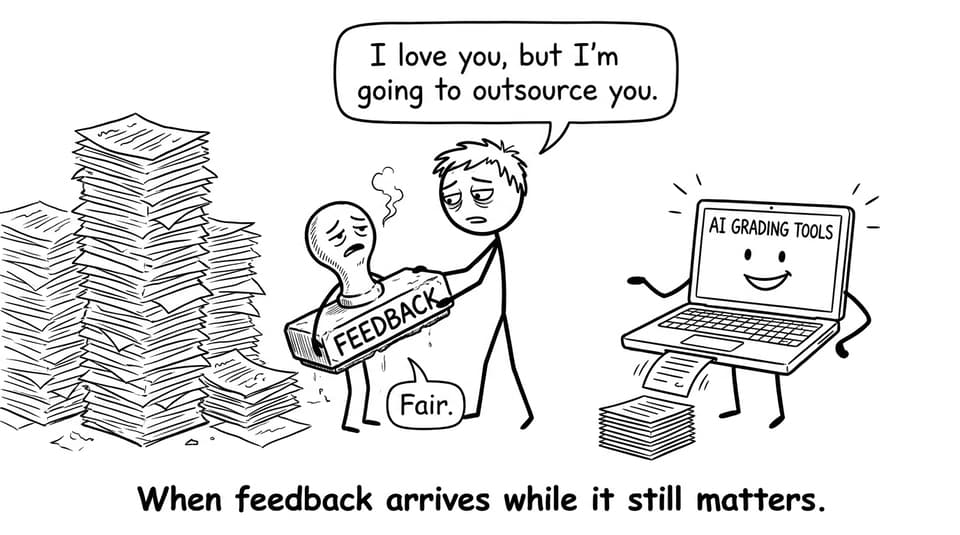
When feedback is delayed, students repeat the same mistake for weeks. RevisionDojo’s Grading tools and AI-supported feedback reduce that delay so teachers can focus on what humans do best: explaining, motivating, and intervening precisely.
That means class time becomes less about guessing and more about fixing the exact thing that blocks marks.
Coordinators: visibility across a cohort
For coordinators, the hard part of the IB is seeing patterns early enough to act. A few weeks lost to uncertainty can become a whole term.
With RevisionDojo for schools, departments can align on practice routines, share expectations, and spot trends before they become final outcomes.
If you’re curious how schools set it up at scale, visit RevisionDojo for Schools and read How IB Schools Can Use RevisionDojo to Streamline Exam Preparation.
A simple 7-day plan IB students can repeat
Use this weekly rhythm with RevisionDojo, then repeat it until exams:
-
Day 1: Study Notes for one topic + 15 Questionbank questions
-
Day 2: Flashcards (10 minutes) + fix yesterday’s mistakes
-
Day 3: Questionbank mixed practice (focus on command terms)
-
Day 4: Flashcards (10 minutes) + AI Chat for anything unclear
-
Day 5: Short timed section (Mock Exams/Predicted Papers)
-
Day 6: Review errors, tag weak areas, and reattempt
-
Day 7: Light Flashcards + rest
This is not a heroic schedule. It’s an IB schedule you can live with.
Conclusion: IB results improve when revision becomes predictable
The IB is demanding, but it’s not random. The students who score well aren’t always the ones who worked the hardest in a single week. They’re the ones who built a repeatable loop: practise, feedback, correction, and rehearsal.
RevisionDojo’s role in enhancing IB Diploma results is simple and powerful: it makes that loop easier to run. With Questionbank practice, Study Notes, Flashcards, Jojo AI Chat, Grading tools, Mock Exams, Predicted Papers, Coursework Library support, and Tutors, you’re not just revising more. You’re revising with less noise.
If you want to turn your next IB study session into something measurable, start at RevisionDojo for IB and build your loop today.


