If you want a perfect 45 in the IB, you probably imagine a superhuman who never procrastinates, never panics, and color-codes their life.
That isn’t what it feels like from the inside.
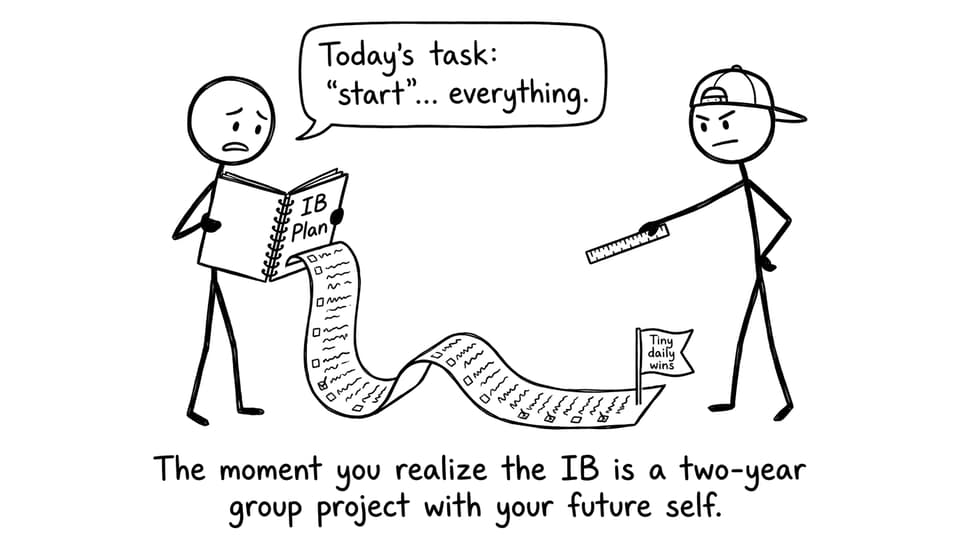
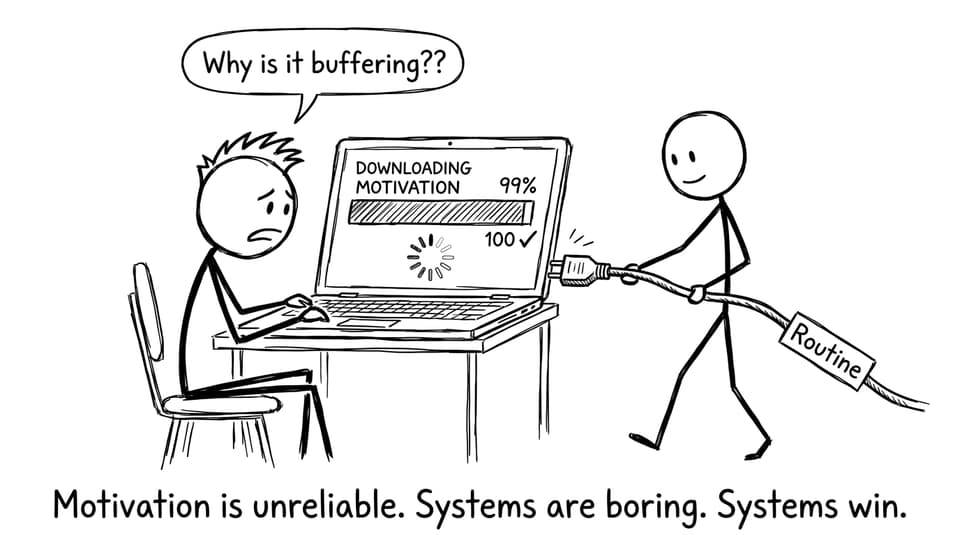
When I earned 45 in the IB, the “secret” wasn’t intensity. It was repeatability. A boring, consistent loop that kept working even on tired days. The IB rewards students who can do the right things when motivation disappears. So this guide is built for the real version of you: busy, human, and still capable of scoring incredibly high.
The IB 45 checklist (print this in your brain)
-
Build a weekly routine you can repeat
-
Study by outputs: recall, questions, timed sets, review
-
Use markschemes to learn what “good” looks like
-
Treat every subject like a point matters (because it does)
-
Protect the core: EE, TOK, CAS
-
Simulate exam pressure early and often
-
Ask for help before you’re drowning
If you want a structured home base for that loop, start at RevisionDojo for IB.
The IB routine that actually creates a 45
In the IB, “more hours” is a trap. The real lever is a system that compounds.
Here’s the weekly backbone I kept returning to:
-
Daily (15-30 min): Flashcards + quick mistake review
-
Most days (45-90 min): Targeted questions + markscheme analysis
-
Weekly (60-120 min): Timed exam practice + debrief
This matches what RevisionDojo is designed to support: Flashcards for spaced repetition, Study Notes when you need clarity, and a Questionbank to make practice measurable.
If burnout is already creeping in, keep your plan realistic with How to Study for IB Exams Without Burning Out.
Study like the IB marks, not like a textbook
Most IB students revise like readers. Top scorers revise like testers.
That means the center of your day is practice and feedback:
-
Do exam-style questions
-
Check the markscheme immediately
-
Write a one-line “rule” for the mistake
-
Retest the same weakness within 48 hours
This is why a Questionbank matters: it makes your weaknesses visible. For a concrete example of this approach, see How to Use the Questionbank for Targeted Math Revision.
And if you want the science behind why this works in the IB, read The Science Behind Effective IB Revision: How to Study Smarter, Not Harder.
Customize the IB by subject (but keep one engine)
Every IB subject has its own flavor, but the engine stays the same:
Understand, then Recall, then Apply, then Review
-
English: collect high-utility quotes, practice unseen analysis, refine structure using feedback
-
Sciences: learn definitions and processes with flashcards, then grind application with questions
-
Math: drill methods, then mix topics so your brain stops relying on context clues
-
Humans/Econs: command terms + case studies + essay plans under time pressure
When you get stuck, don’t lose an hour spiraling. Use RevisionDojo’s AI Chat to unblock confusion quickly, then return to questions.
For a broader menu of subject strategies, use The Ultimate IB Subject Guide: Specific Revision Tips for Every Course and Subject-Specific IB Revision Tips: From Math to History.
Don’t donate points in the IB core
The IB core is where perfect scores get protected.
Treat EE, TOK, and CAS like a slow investment. A little attention weekly beats panic later. When you draft, use feedback loops: RevisionDojo’s Grading tools and Coursework Library help you check your work against criteria, and Tutors help when you need human diagnosis and strategy.
Your environment is a grade multiplier
Your study space won’t earn you a 45, but it will decide how often you actually start.
Pick one place where studying feels automatic. Reduce friction. Make distraction inconvenient.
If you want a practical setup guide, use How to Create the Perfect Study Space for IB Revision or Creating the Perfect Revision Environment for IB Exams.
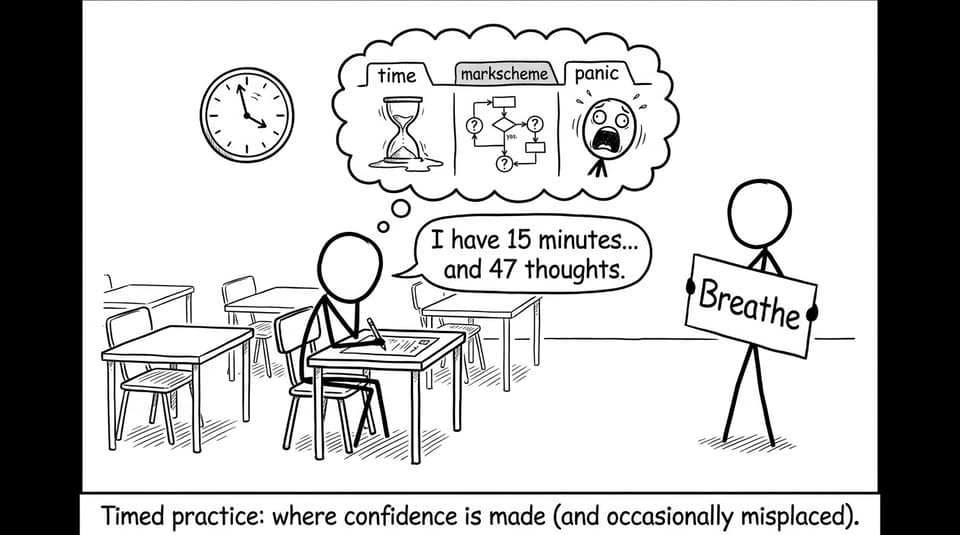
Time management: practice the clock, not just the content
In the IB, a student can “know everything” and still lose marks to pacing.
So train timing like it’s a topic:
-
Start with short timed sets
-
Upgrade to timed sections
-
Build toward full Mock Exams
Then review like an analyst. Not “I’m bad at this.” Instead: “I lost marks on command terms” or “I ran out of time on part (c).” RevisionDojo’s Mock Exams and Predicted Papers help you rehearse under realistic constraints.
If you’re unsure how to use predicted sets responsibly, read IB Predicted vs Specimen Papers: What They Mean.
The bottom line: a perfect 45 is a system, not a personality
A perfect 45 in the IB isn’t about never struggling. It’s about having a loop that still runs when you do.
If you want that loop in one place, RevisionDojo was built for the IB: Questionbank, Study Notes, Flashcards, AI Chat, Grading tools, Predicted Papers, Mock Exams, Coursework Library, and Tutors. Build the routine once. Then let it carry you to exam day.