
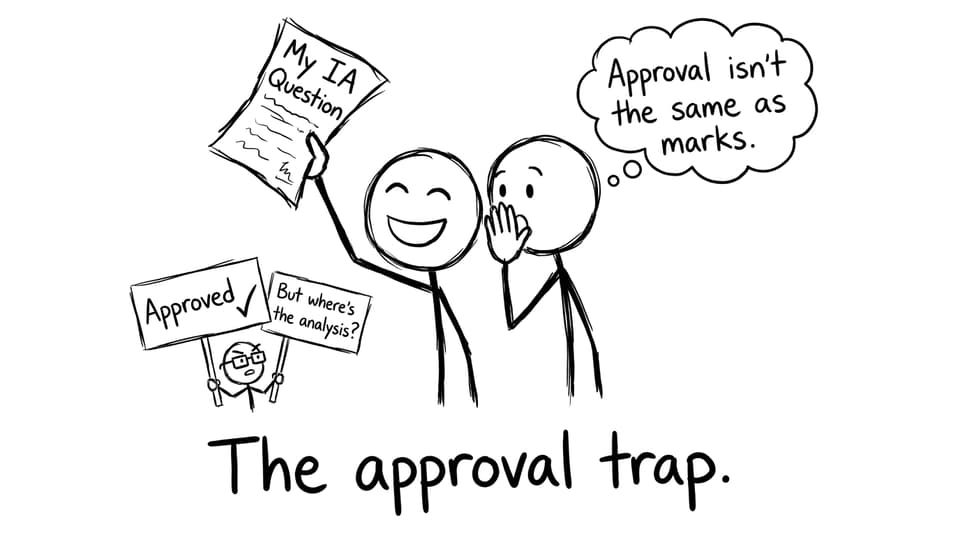
A teacher can approve your IA question in ten seconds.
An examiner can quietly cap your marks with it for the next ten minutes.
That gap is where most IB students get surprised. They pick an IA question that is clear, relevant, and sensible… and then discover that “sensible” is not the same thing as “high-scoring.” A high-scoring IA starts acting like a steering wheel: it forces analysis, controls scope, and creates evaluation you can actually prove.
The quick IA checklist: good or high-scoring?
Use this fast test before you write another paragraph of your IA.
-
Can you answer it with analysis, not just explanation?
-
Does it naturally create something to evaluate?
-
Is it narrow enough to go deep in the word limit?
-
Does it match your subject’s criteria language?
-
Can you realistically collect evidence for it?
If you want the broader rubric view first, start with IB IA Guides.
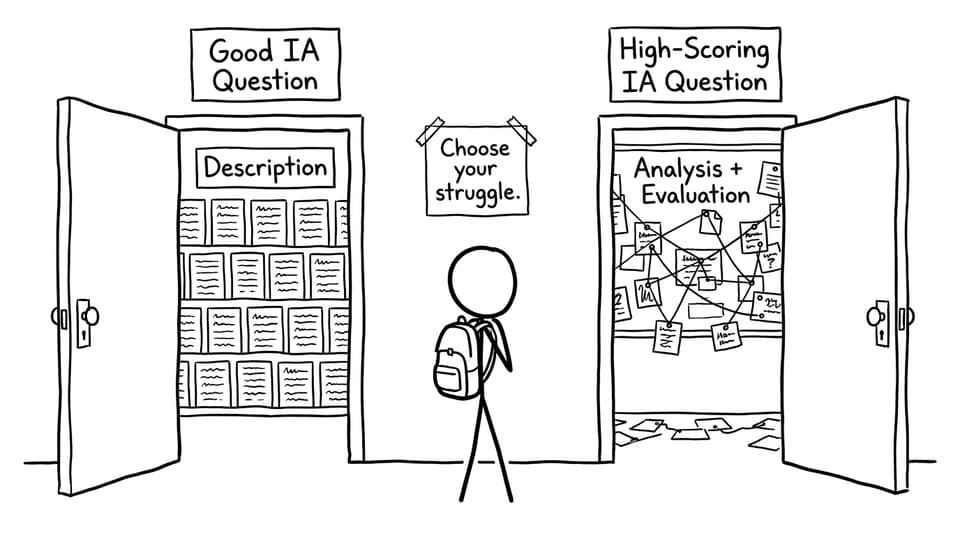
A good IA question is clear -- a high-scoring IA question is strategic
A good IA question usually has one big strength: it makes sense. It sounds academic. It fits the course. That’s why it gets approved.
But a high-scoring IA question is built backward from marks. It is designed to make the assessment criteria easy to reward. It invites relationships, patterns, trade-offs, or cause-and-effect, not just a tidy summary of what you found.
A useful calibration move is to look at real models: IB Coursework Examples: IA, EE and TOK Exemplars. Notice how “plain” many top IA questions sound. The power is not fancy wording. The power is control.
Why good IA questions drift into description
Many “good” IA questions quietly allow a descriptive answer. You can explain what happened, define key terms, and present results cleanly… and still never hit the higher bands.
Description feels safe because it’s measurable as effort: more pages, more sources, more graphs.
Examiners don’t grade effort. They grade evidence of thinking.
If your IA is starting to read like a textbook chapter, pause and run a pressure test: “What would I argue here? What would I judge?” If you can’t hear an argument forming, your IA question may be too open.
For common traps (and quick fixes), keep Common Pitfalls in Internal Assessments (IAs) and How to Avoid Them open while you plan.
High-scoring IA questions create evaluation without forcing it
Here’s the simplest difference.
With a merely good IA question, evaluation often gets bolted on at the end: generic limitations, vague improvements, a conclusion that repeats results.
With a high-scoring IA question, evaluation is unavoidable. The question itself creates comparison, uncertainty, or a decision point. You end up evaluating method choices, data quality, assumptions, and implications because they actually change your answer.
If you want a step-by-step way to tighten the question (without restarting), use Refine Your IA Research Question for Clarity and Focus.
Control beats flexibility: the hidden advantage of a narrow IA
Students often say, “I want my IA question to be flexible in case things go wrong.”
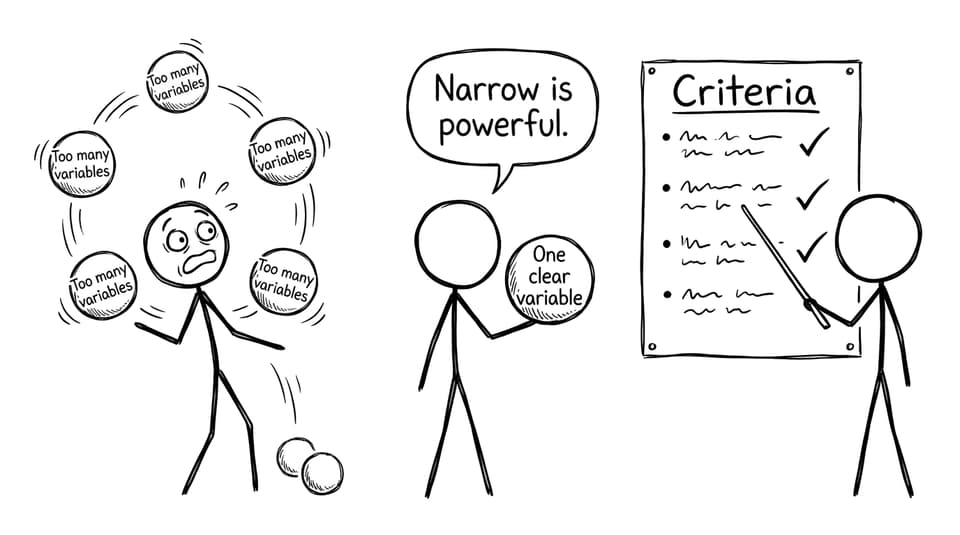
The intention is reasonable. The outcome is usually chaos: extra variables, extra angles, extra paragraphs that don’t earn marks.
A high-scoring IA question is narrower than you expect, because narrow creates depth. Narrow helps you select evidence quickly. Narrow makes your structure feel inevitable.
If you’re unsure where to invest time across subjects, this perspective helps: Which IA Is Worth the Most Marks? (IB Guide).
How RevisionDojo helps you build a high-scoring IA (and still revise for exams)
The stressful part of an IA is that you can work hard and still be “off-rubric.” RevisionDojo is built to reduce that guesswork.
-
Use the IB Coursework Grader to get criterion-level feedback instead of vague comments.
-
Use the IA hubs and structure guidance in IB Coursework Guides so your IA matches what examiners reward.
-
When deadlines collide with exam prep, keep your daily momentum with Questionbank, plus Study Notes and Flashcards to stop your IA from consuming your entire revision plan.
-
When you need fast clarity, AI Chat can help you rewrite one paragraph toward a specific criterion, and Tutors can give a human second set of eyes.
For more IA-specific support, browse All #IA Posts.
Closing: treat your IA question like a mark-making tool
A good IA question gets you started.
A high-scoring IA question quietly does the harder job: it makes analysis and evaluation almost inevitable, keeps your scope controlled, and helps an examiner award marks without hunting for them.
Before you write more, refine the IA question you already have. Then use RevisionDojo to run a feedback loop that actually compounds: IA Guides and exemplars for direction, Grading tools and AI Chat for fast fixes, and Questionbank + Flashcards to keep exam prep alive while your IA gets sharper.
