
The moment you consider IB, the question is rarely academic. It’s personal.
It sounds like: Will I still sleep? Will I fall behind? Will universities care? Will I become “that stressed person” in my friend group? The truth is that IB can be a brilliant two-year runway into university life, but only if you choose it for the right reasons and with the right support system.
This 2025 guide is written for students already thinking about IB exams (or quietly worried about them) and for parents who want clarity without hype.
What IB is (and what it asks of you)
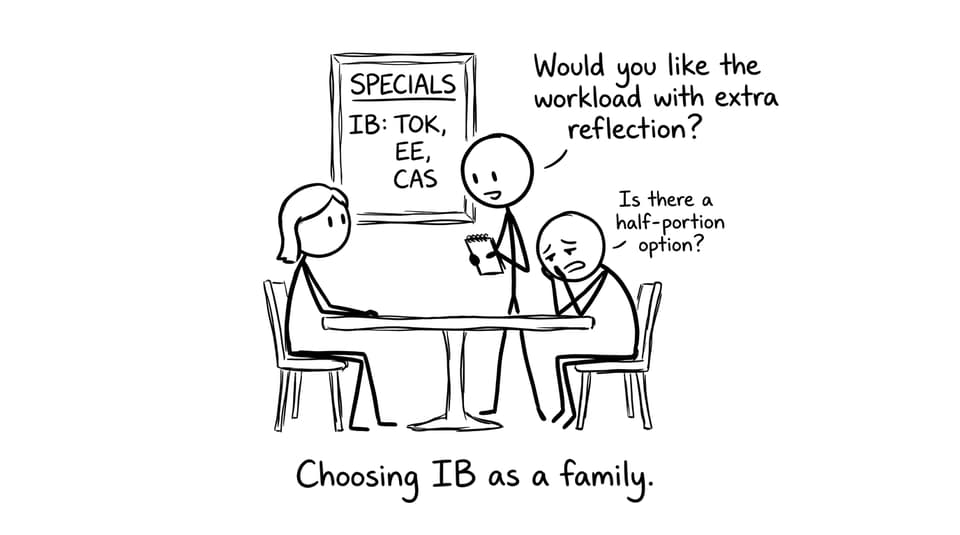
The International Baccalaureate (IB) Diploma Programme is a two-year program for students aged 16 to 19. You take six subjects across disciplines, and you also complete the core: TOK, the Extended Essay, and CAS.
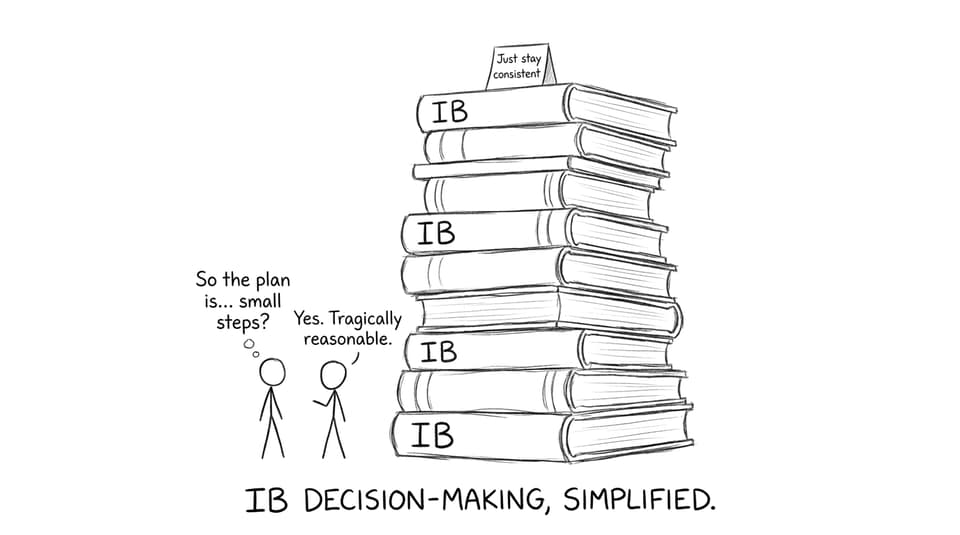
That structure is the point. IB isn’t designed for narrow specialization. It’s designed to train range: writing, problem-solving, research, reflection, and consistent performance under deadlines.
If you want a quick orientation before deciding, browse the International Baccalaureate (IB) hub and the RevisionDojo for IB overview.
A quick checklist: should you choose IB?
Use this as a fast self-audit. IB is usually a good fit if you can say “yes” to most of these:
-
You want a program that’s respected globally and keeps options open.
-
You can handle weekly deadlines (or you’re willing to build that skill).
-
You’re okay studying across sciences, humanities, language, and math.
-
You like improving through feedback, not just reading notes.
-
You want to feel genuinely prepared for writing-heavy university work.
If most answers are “no,” IB may still be possible, but the cost (stress, time, confidence) might be higher than the benefit.
Reasons IB is worth it in 2025
IB builds university-style thinking, not just school-style grades
A quiet advantage of IB is that it forces you to practice what universities reward: clear arguments, structured writing, and independent research.
The Extended Essay alone teaches you a rare skill: staying with one question long enough to produce something coherent. That’s why many IB students report that first-year university essays feel less intimidating.
To see what strong prep looks like in practice, keep a revision loop using the RevisionDojo app for IB exam prep.
IB is globally recognized
Universities across the US, UK, Canada, Europe, and Asia understand IB. For international applicants, that recognition matters because it reduces uncertainty. The diploma is a common language.
IB teaches consistency (which is the real superpower)
People think the hardest part of IB is intelligence. Usually it’s consistency.
If you can build a system that survives tired days, busy weeks, and motivation dips, you’re already doing what top scorers do. Tools help, but the habit is the engine.
A practical starting point is the 10 proven study techniques for IB students.
When IB might not be the right fit
The workload is real (and it compounds)
IB has multiple internal assessments, long-form writing, and the core requirements running in parallel with regular class content. If you already feel stretched, the program can become a constant catch-up cycle.
This doesn’t mean “don’t do IB.” It means you need an honest plan for time management and support.
IB is less flexible by design
If you want to specialize early (only STEM, only arts), IB might feel restrictive because it asks you to stay broad. Some students thrive in that structure; others feel trapped by it.
School support matters
Two students can do the same IB subjects and have completely different experiences based on teaching quality and guidance. Ask your school direct questions: Who supports TOK? Who gives EE feedback? How is CAS supervised? That practical support changes everything.
IB vs other pathways (AP, A-Levels, honors)
If your priority is depth in a few subjects, other pathways may suit you better. If your priority is global recognition plus an all-round academic profile, IB often wins.
But the best comparison is simpler: which pathway gives you the best chance of performing well without burning out? Because universities prefer strong results in a system you can sustain.
If you choose IB: how to prepare for IB exams without panic
Preparation for IB exams is not about finding more resources. It’s about reducing decision fatigue.
A strong routine looks like this:
-
Learn concepts fast using Study Notes
-
Lock memory with Flashcards
-
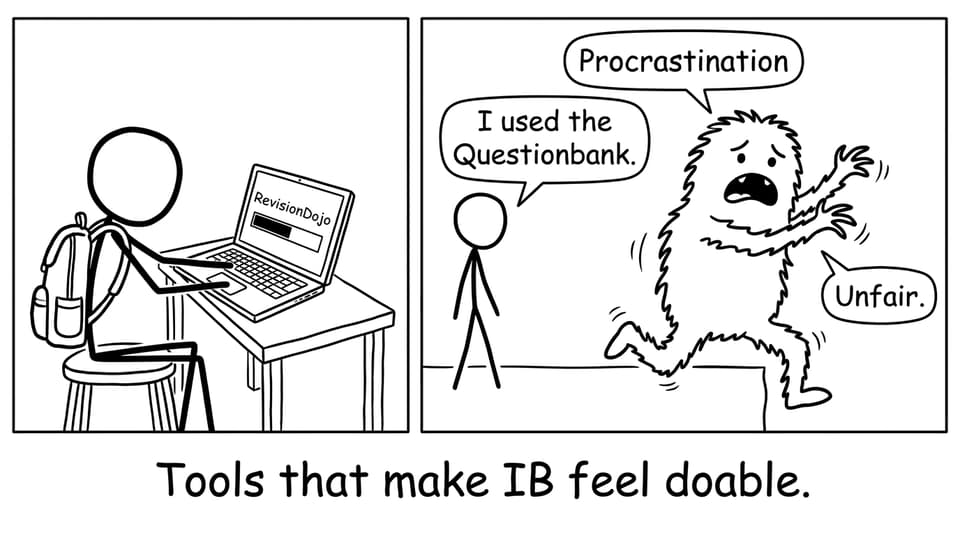
Convert knowledge into marks with the Questionbank and guides like how to use an IB question bank effectively
-
Rehearse pressure with IB Predicted Papers and reflect using IB mock exam tips
-
When coursework stress spikes, use RevisionDojo’s Grading tools and Coursework Library, and if you need a human diagnosis, add Tutors
That’s the RevisionDojo advantage: one home base for IB students where practice, feedback, and progress tracking connect.
Conclusion: the best reason to choose IB
Choose IB if you want a program that makes you broader, tougher, and more prepared for the kind of thinking universities actually demand. Don’t choose IB just because it sounds impressive. Choose it because you’re ready to build consistency.
And if you do choose IB, don’t leave your preparation to luck. Build a repeatable system with RevisionDojo: Questionbank, Study Notes, Flashcards, AI Chat, Grading tools, Predicted Papers, Mock Exams, Coursework Library, and Tutors, so your effort turns into marks, and your marks turn into options.
Start here: RevisionDojo for IB.