
If you have ever stared at your calendar and thought, “I’ll just revise everything,” you already know the trap. The real question in IB Computer Science isn’t whether you should work hard. It’s where your effort turns into marks.
Paper 1 and Paper 2 can feel like two different subjects: one rewards clean explanation and precise terminology; the other punishes hesitation in logic and pseudocode. And because they matter a lot (at HL, each paper contributes 40%), the smartest move in IB Computer Science is not choosing a favorite paper. It’s choosing a strategy.
Quick decision checklist (use this today)
-
If you lose marks because your answers are vague or missing command-term structure, prioritize Paper 1 work.
-
If you lose marks because your algorithms break, your tracing is messy, or your pseudocode is unclear, prioritize Paper 2 work.
-
If you are unsure, do a timed mini-set for both and follow the data.
-
Use one hub for your entire IB Computer Science setup: IB Computer Science Resources.
-
Build weekly mixed practice with IB Computer Science Predicted Papers (full exam simulation without guessing what to do next).
What Paper 1 really rewards in IB Computer Science
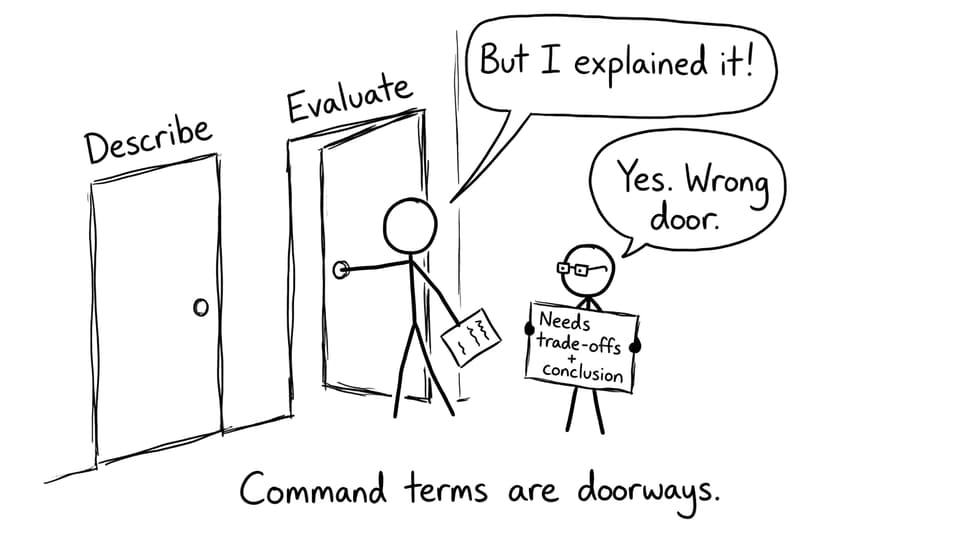
Paper 1 is where “I know this” often turns into “why did I get 3/6?” In IB Computer Science, Paper 1 marks usually disappear in three places: imprecise definitions, weak application to the scenario/case study, and answers that ignore the command term.
Your best Paper 1 revision looks like this:
-
Tight notes, then retrieval: refresh quickly, then close the page and reproduce the idea in your own words. If you want a method that actually sticks, use How to Make Effective IB Computer Science Study Notes.
-
Short, frequent question sets: turn knowledge into marks using the Questionbank from the IB Computer Science Resources page.
-
Case-study thinking: practice linking theory to context (networks, databases, ethics, system design) in examiner-style phrasing.
If Paper 1 feels broad, focus on recurring high-yield themes using The Most Important Topics to Revise for IB Computer Science Paper 1. It’s easier to build confidence when your revision list stops expanding.
What Paper 2 really rewards in IB Computer Science
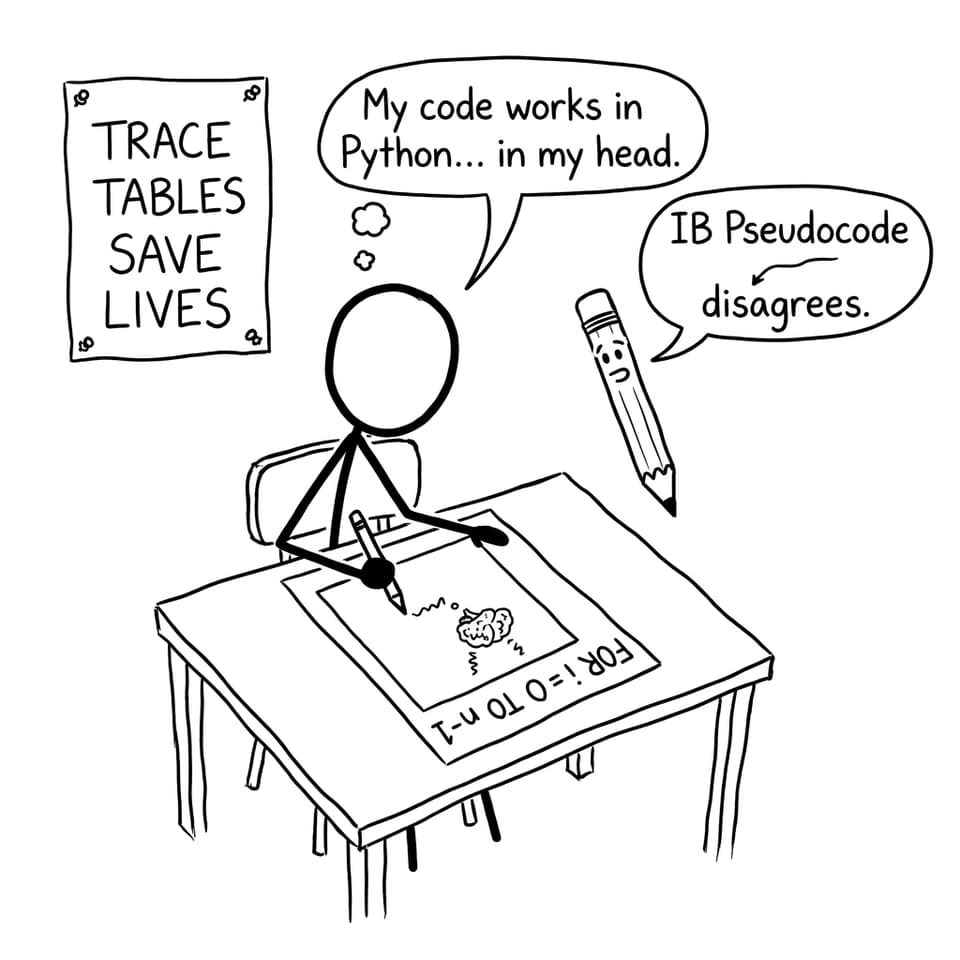
Paper 2 is less about “knowing” and more about fluency under time. Many students in IB Computer Science understand algorithms conceptually, then lose marks because their pseudocode is ambiguous, incomplete, or impossible to trace.
Your best Paper 2 revision looks like this:
-
Handwritten pseudocode daily: 10–20 minutes, no shortcuts. Speed comes from repetition.
-
Trace tables, not vibes: take small sample inputs and track variable changes line by line.
-
Algorithm recall from memory: rewrite core patterns (searching, sorting, recursion, data structures) without looking.
For a focused algorithm plan, use Most Important Algorithms for IB Computer Science and then drill them with exam-style items from the Computational thinking questionbank.
So… should you focus more on Paper 1 or Paper 2?
Here’s the calm truth: in IB Computer Science, you focus more on the paper that is currently leaking marks.
If you are strong at coding but weaker at theory
Shift more time to Paper 1 for two weeks. Your goal is not rereading. Your goal is writing examiner-friendly explanations that hit the command term and the scenario. Use RevisionDojo Study Notes for fast refresh, then the Questionbank for proof.
If you can memorize content but panic during problem-solving
Shift more time to Paper 2. Make pseudocode mechanical: standard loops, consistent variable naming, clear conditions, and traceable steps. Use RevisionDojo Flashcards for definitions and patterns, then practice timed sets and review your mistakes.
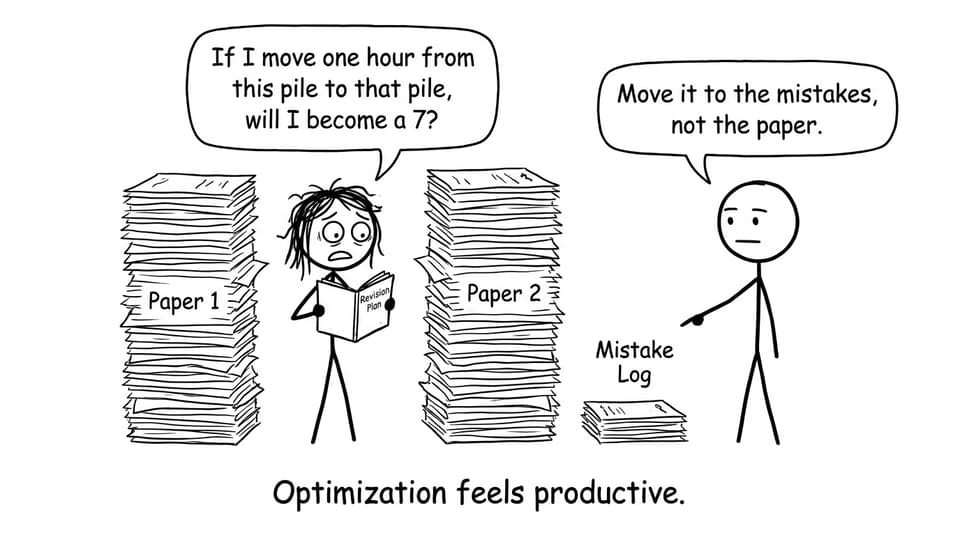
If you want a 7
Balance, but not evenly. Most 7s are built by fixing weaknesses, not polishing strengths. A good weekly rhythm is two mixed sessions (one Paper 1, one Paper 2) plus one full exam block using IB Computer Science Predicted Papers with AI grading tools and feedback.
Conclusion: pick the paper that fixes your score
The best revision plan for IB Computer Science is not “Paper 1 vs Paper 2.” It’s “Which paper will raise my mark fastest if I train it intelligently?”
Start at IB Computer Science Resources, use the Questionbank to diagnose weaknesses, lock in memory with Flashcards, and simulate pressure with Mock Exams and IB Computer Science Predicted Papers. If you get stuck, use AI Chat to test your explanations or ask a Tutor to break down your mistake patterns.
Make the next study session smaller, sharper, and more honest. That’s how IB Computer Science starts to feel predictable again.
