



Your first IB oral practice can feel oddly unfair. You speak for ten minutes, your heart races, and the feedback you get is a shrug dressed up as advice: “Be clearer.” “Add more analysis.”
But clarity isn’t a personality trait. In the IB, it’s a skill you can train, if the feedback is precise enough to tell you what to change.
University-level assessment quality means the comments aren’t about vibes. They’re about criteria, evidence, structure, and language, the same levers examiners use when they decide where your marks go.
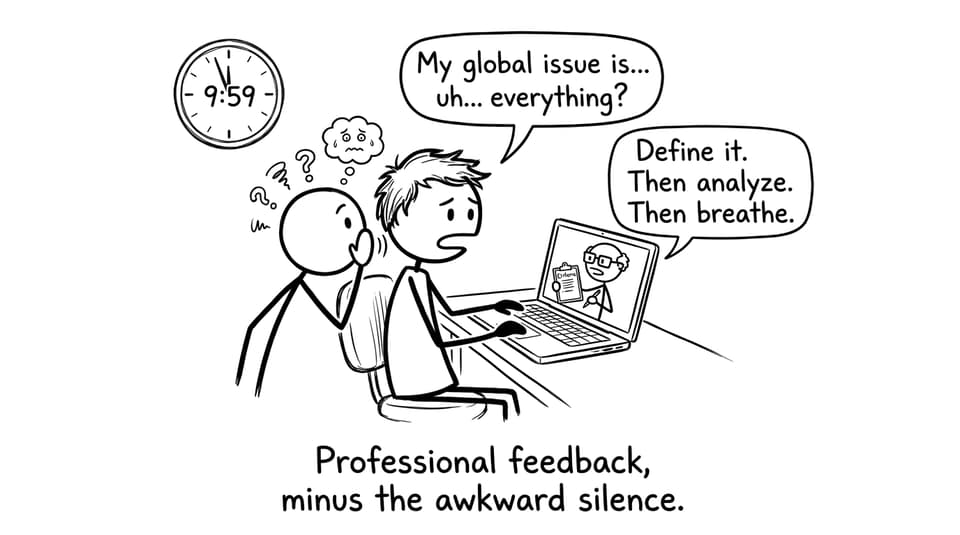
What “professional IB oral feedback” actually means
In IB Language A (and similar speaking components elsewhere), orals are internally assessed and externally moderated. That combination rewards students who prepare with feedback that mirrors the rubric.
Professional IB oral feedback is:
-
Criterion-referenced: it names the strand you’re winning or losing
-
Actionable: it tells you what to do next, not what went wrong
-
Comparable: it stays consistent across multiple attempts
-
Timed and realistic: it respects the 10-minute container and pacing
If you’re preparing for the Individual Oral, keep these tools open as your “standards documents”: the IB Language A: Individual Oral Grader and the Comprehensive IB Individual Oral guide.
A quick checklist for university-level IB oral prep
Use this before every recording. It’s simple on purpose, because simple things repeat.
-
Can I define my global issue in one sentence?
-
Do I have a clear line of inquiry (not just a theme)?
-
Did I analyze authorial choices (how meaning is made), not just meaning?
-
Is my structure obvious to a listener?
-
Is my language accurate, academic, and specific?
For help choosing and narrowing your GI, the Fields of Inquiry guide is a fast way to stop drifting into “everything.”
How RevisionDojo delivers IB-aligned oral feedback
When students say they want “examiner feedback,” they usually mean two things: a score that feels realistic, and comments that explain the score.
RevisionDojo’s ecosystem is built for that loop. You can practice orals with the Grading tools and AI Chat, then reinforce weak areas with Study Notes, Flashcards, and targeted Questionbank sets. When exams get close, Mock Exams and Predicted Papers help you rehearse timing and decision-making under pressure.
For Language A specifically, the IB Individual Oral Grader: AI Assessment for Language A explains how rubric-driven feedback is produced and how to use it without turning your oral into a memorized script.
The four places marks leak in an IB oral (and how feedback fixes them)
Most IB orals don’t collapse because a student “is bad at speaking.” They leak marks in predictable places.
Knowledge and interpretation
Strong feedback checks whether you understand both works beyond the extract, and whether your global issue actually fits. If you need a clean breakdown of what examiners look for, use What Are the Assessment Criteria for IB English A?.
Analysis and development
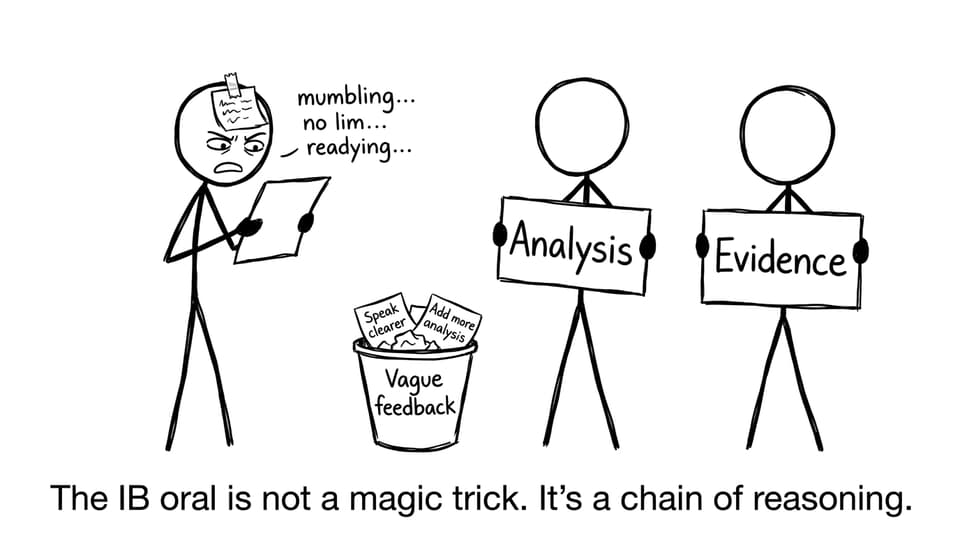
This is where vague advice hurts most. “Add more analysis” is meaningless unless it points to a technique, an effect, and a reason it matters for the global issue.
Focus and organization
University-level feedback is obsessed with structure because structure is what a nervous mind can follow. If your transitions are fuzzy, you’ll feel it in pacing and clarity.
Language
Fluency isn’t just smoothness. In the IB, it’s precision: terminology, register, and control. A small upgrade in phrasing can create a big upgrade in credibility.
Build the practice-feedback-improvement cycle (the part that compounds)
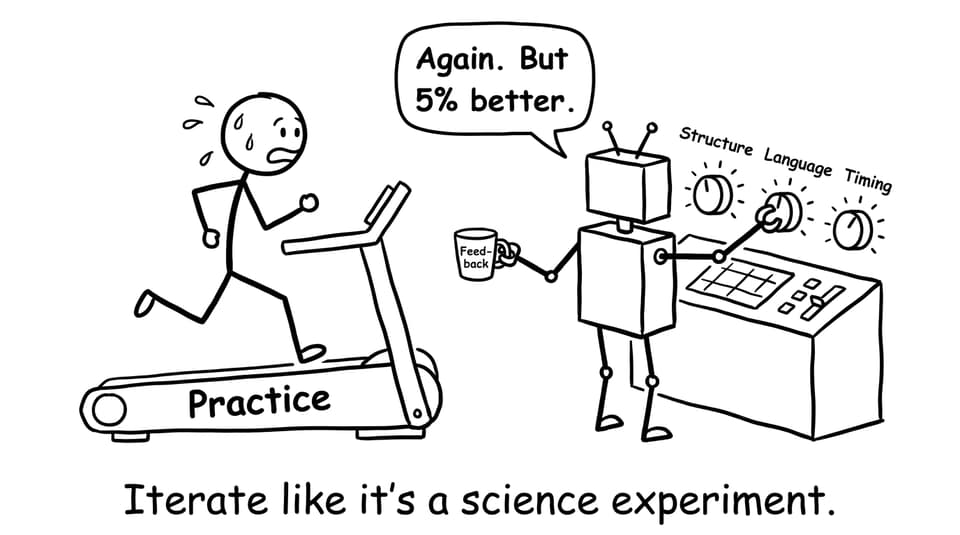
Here’s the habit that quietly separates high scorers: they don’t “practice”, they iterate.
-
Record a full timed oral
-
Get IB-aligned feedback
-
Pick one structural fix and one analysis fix
-
Re-record within 24 hours
If you want a step-by-step structure you can rehearse, keep IA Guide: IB English Individual Oral (IO) Step-by-Step nearby.
Closing: make IB feedback feel like a lab report
The IB oral isn’t won by confidence alone. It’s won by feedback that behaves like a lab report: specific, repeatable, and tied to criteria.
If you want professional, university-level assessment quality while you practice, use RevisionDojo’s Grading tools and AI Chat for oral feedback, then reinforce weak links with Study Notes, Flashcards, the Questionbank, Mock Exams, Predicted Papers, the Coursework Library, and Tutors. Your next recording doesn’t need to be perfect. It just needs to be 5% better, on purpose, in the places the IB actually marks.