
If you ask ten IB students which year is hardest, you’ll get ten different stories, but the same emotional plot.
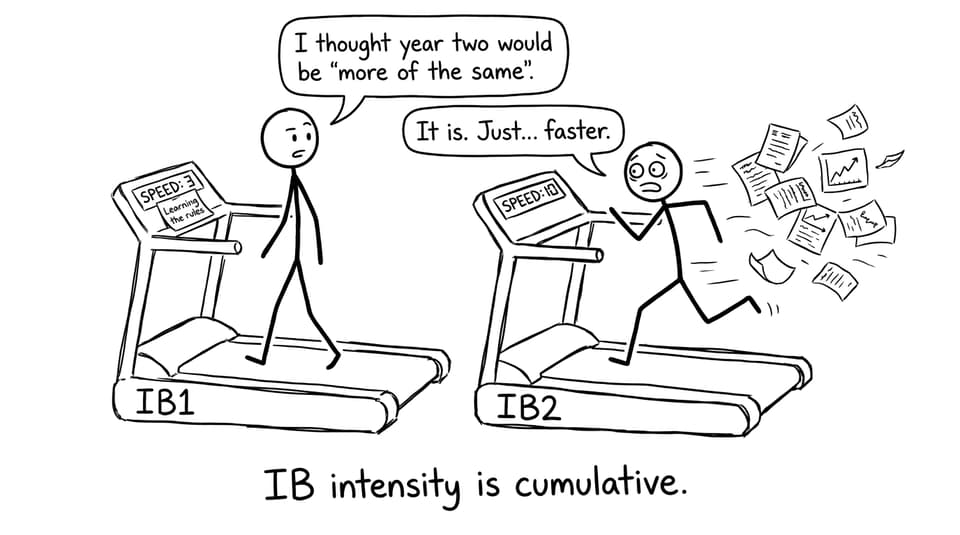
In IB1, you feel like you’ve stepped onto a moving walkway that’s already going too fast. In IB2, the walkway turns into a sprint, and the finish line suddenly has a date, a seat number, and a clock counting down.
So which time is the hardest in the IB Diploma Programme? For most students, IB2 wins on intensity. But IB1 is where difficulty is built, because it’s the year you either create leverage (skills, habits, drafts) or you quietly borrow stress from your future self.
The hardest part of IB, in one checklist
Use this quick scan to locate what’s actually making IB feel hard right now:
-
New standards (command terms, mark schemes, “explain” vs “evaluate”) hit in IB1
-
Volume + deadlines (IA/EE/TOK/CAS convergence) peak in IB2
-
Timing pressure ramps up when mocks and exam practice become weekly
-
Life pressure (university applications, recommendations, decisions) often overlaps with IB2
If you want a single hub that mirrors this reality, start with RevisionDojo for IB and build a routine around practice + feedback, not just “more notes.”
IB1: the year that feels hard because everything is new
IB1 is hardest when you’re learning the rules of the game while also playing it.
The IB learning curve is real
The most draining part of IB1 isn’t always difficulty of content. It’s adjustment: new formats, unfamiliar rubrics, and the quiet shock of realizing that “I studied a lot” doesn’t automatically translate into marks.
This is where students who do well start building a system: learn quickly, test quickly, fix quickly. A practical way to do that is pairing targeted reading with immediate questions. The RevisionDojo app workflow is basically built around that loop.
CAS is easy to ignore until it isn’t
In IB1, CAS can feel like background noise. That’s the trap. CAS becomes stressful later when reflections are missing and hours are vague. A small monthly habit in IB1 prevents a giant clean-up job in IB2.
IB1 coursework starts quietly
Internal Assessments and the Extended Essay often begin as “just brainstorming.” But in IB, early drafts are future oxygen. If you want structured guidance before the pressure hits, explore IB Internal Assessment guides and the IB Extended Essay guide hub.
IB2: the year that’s hardest because everything counts
IB2 is where the IB programme stops being theoretical. Deadlines become fixed points, and every subject starts asking for performance, not potential.
Deadlines stack, and they don’t care about your mood
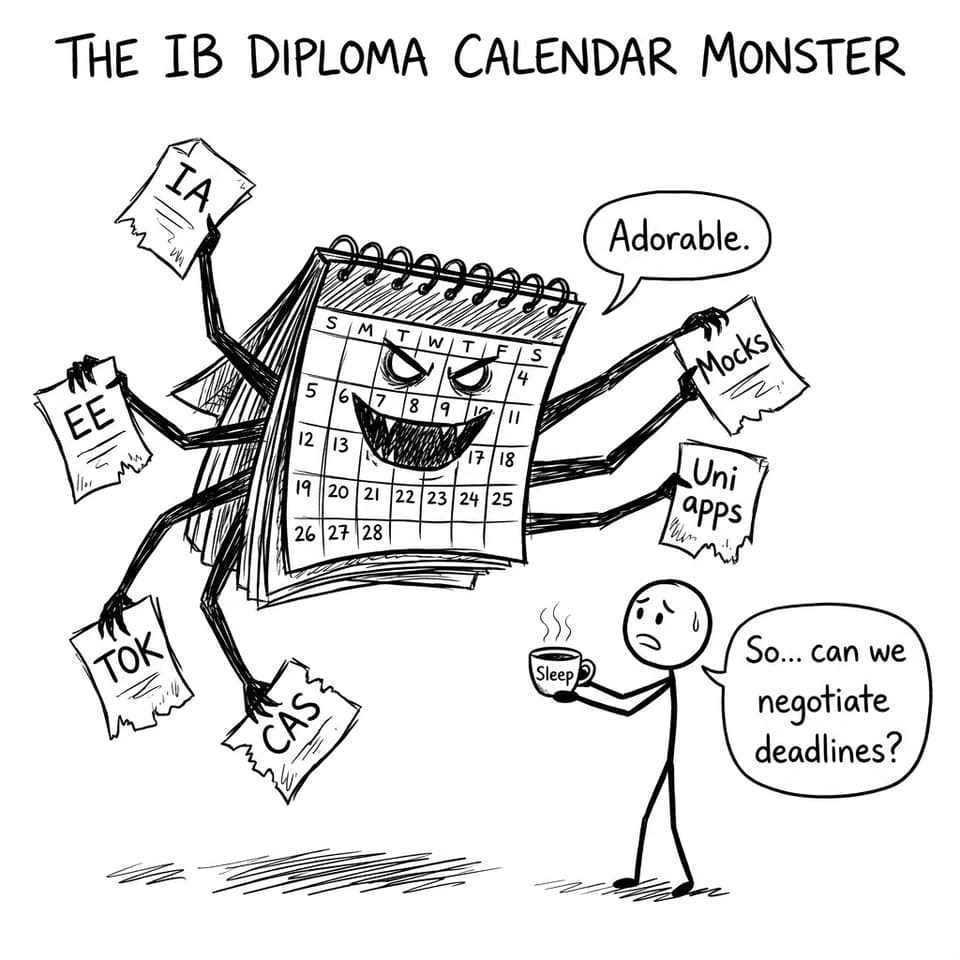
Most students feel IB2 pressure because major submissions converge: IAs are finalized, EE and TOK are polished, and mocks arrive right when you thought you could “finally focus.”
When coursework stress spikes, it helps to get rubric-aligned feedback fast. The IB Coursework Grader is designed for exactly that: clearer next steps, not just vague comments.
Exam preparation becomes a weekly reality
In IB2, revision stops being “I should revise” and becomes “I need to perform under time.” That means timed practice, analysis, and repeating weak areas until they’re boring.
A calm way to structure this is:
-
Use Study Notes only as a quick patch
-
Drill with a Questionbank until mistakes stop repeating
-
Add timed sets (Mock Exams and Predicted Papers) to build stamina
If you want a more detailed routine, read How 45-Point IB Students Prepare for Exams and the more lifestyle-friendly plan in IB Exams Without Pausing Your Life.
University applications add invisible weight
Even if you manage your IB schedule perfectly, IB2 often overlaps with applications, essays, interviews, and uncertainty. That stress doesn’t show up in your planner, but it shows up in your energy.
The smartest IB2 strategy is not “work more.” It’s “waste less effort.” That’s why tools like RevisionDojo’s Study Notes, Flashcards, Questionbank, AI Chat, Grading tools, Predicted Papers, Mock Exams, Coursework Library, and Tutors matter most in IB2: they remove friction when you have none to spare.
So…which IB year is hardest?
For most students:
-
IB1 is hardest mentally (new standards, identity shift, learning how IB marks work)
-
IB2 is hardest operationally (deadlines, timed performance, high stakes)
If you had to pick one, IB2 is usually the hardest year of IB because the workload becomes less flexible and the consequences feel more real.
A simple year-by-year IB plan (that reduces the hard parts)
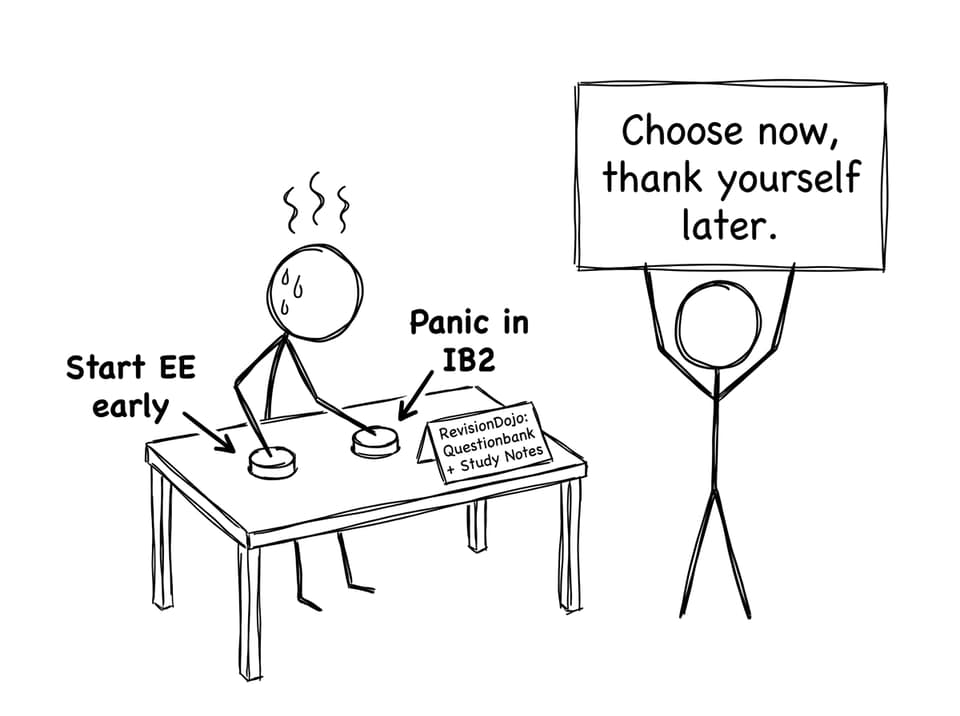
What to do in IB1 (so IB2 hurts less)
-
Start early drafts for at least one IA and your EE
-
Build weekly practice habits using questions and feedback
-
Keep CAS reflections lightly but consistently
A helpful mindset shift is in Do You Need to Study Every Topic for IB?. It explains how to avoid “coverage panic” and focus on what moves marks.
What to do in IB2 (so you peak at the right time)
-
Move toward timed practice and exam-style questions
-
Track weak topics and retest them on a schedule
-
Use feedback loops (AI Chat, Grader, Tutors) to shorten your improvement cycle
If you’re working with predicted grades and want to raise them, this is worth reading: IB Grade Predictions: Improve Them With Practice Papers.
Conclusion: The hardest year of IB becomes easier with a system
If you’re wondering which time in IB is hardest, you’re already thinking like someone who wants to prepare, not just survive.
IB1 is hardest because you’re learning the rules. IB2 is hardest because you’re judged by them. And the quiet secret is that the students who look “naturally calm” in IB2 usually built their calm in IB1.
If you want that advantage now, use RevisionDojo as your IB control panel: RevisionDojo for IB for structured revision, plus the Questionbank, Study Notes, Flashcards, AI Chat, Grading tools, Predicted Papers, Mock Exams, Coursework Library, and Tutors when the pressure peaks.