


You can feel it in the seconds before you start speaking: your brain suddenly becomes a translator, a planner, and a performer.
That’s why IB orals can feel unfair at first glance. If you’re doing your Individual Oral in English, Spanish, Chinese, Arabic, or French, it’s tempting to assume the assessment must be totally different.
But here’s the calmer truth: IB oral assessment is built on the same underlying habits across languages. Examiners reward clarity, analysis, structure, and control of language. The surface changes. The scoring logic stays surprisingly consistent.
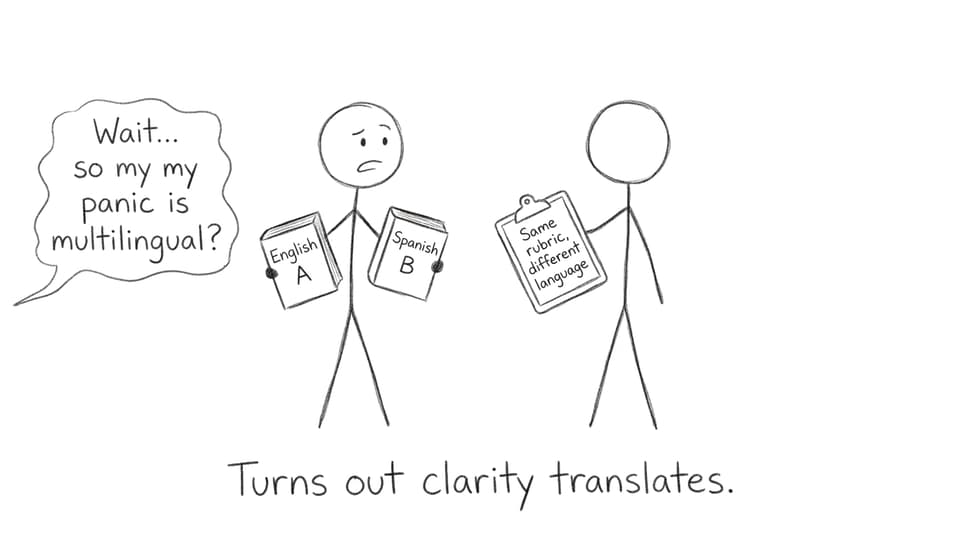
The core idea: IB oral criteria stay stable across languages
Across IB Language A and Language B orals, you’re not being graded on whether you “sound like a native speaker.” You’re being graded on whether your speaking shows control.
Different courses and components have different rubrics, but the same big four pillars show up again and again:
-
Understanding: Do you clearly grasp the text, extract, prompt, or stimulus?
-
Analysis: Do you explain how choices create meaning (not just what happens)?
-
Organization: Can the listener follow your line of inquiry without effort?
-
Language: Is your vocabulary, register, and accuracy appropriate for the task?
If you’re preparing for the Language A IO, keep a detailed rubric breakdown open while you practise, like this guide: Language A Individual Oral: How to Score Higher with AI Help.
A quick IB oral checklist (works in any language)
When students improve quickly, it’s usually because they stop “practising” and start running a repeatable system.
Use this IB checklist before every oral rehearsal:
-
Choose a specific global issue or focus (not a theme-sized cloud)
-
Pick extracts with obvious authorial choices you can analyze
-
Outline a 3-part structure: intro, analysis, synthesis
-
Use 2-3 “anchor phrases” to link back to your focus
-
Record yourself and review for clarity, not charisma
For a full overview of what the IO actually demands, this is a solid reference point: Comprehensive Guide to the IB Individual Oral (IO).
How IB examiners judge “analysis” in different languages
The fastest way to lose marks in an IB oral is to become descriptive. This happens in every language.
Description sounds like: “In this extract the author shows power.”
Analysis sounds like: “The author constructs power through contrast in tone, controlled pacing, and repeated imperatives, which makes the global issue feel unavoidable rather than optional.”
In Language B, “analysis” may lean more toward message, cultural context, and how language choices shape meaning. In Language A, it often expects more explicit literary or stylistic technique. But the examiner mindset is similar: show that you can justify what you’re saying.
If you want an examiner-style sense of what gets rewarded, read: Professional IB Oral Feedback: University-Level Assessment Quality.
Structure and timing: the universal IB advantage
A strong IB oral rarely feels fast. It feels guided.
Your structure is a hidden scoring tool because it protects you from panic. It also makes your analysis easier to mark.
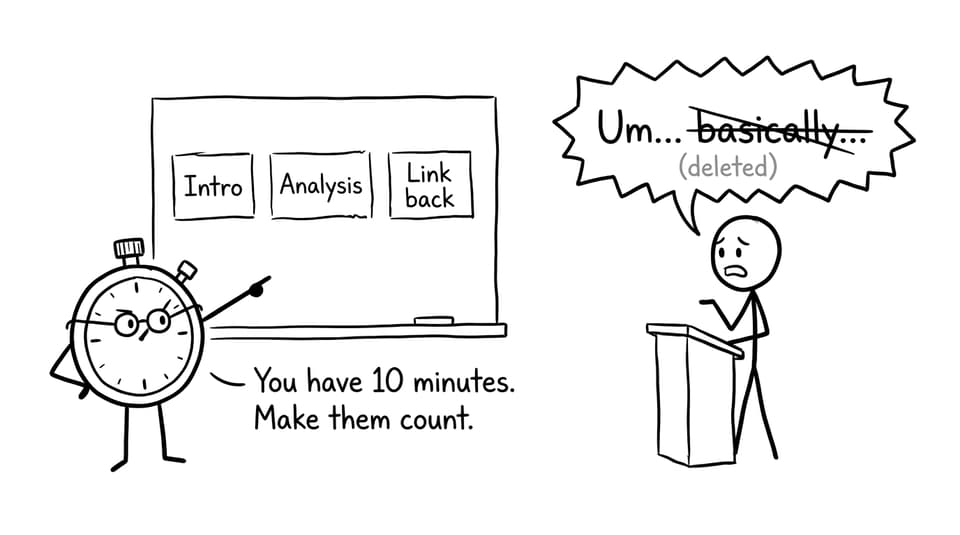
A reliable structure for many orals looks like this:
-
Introduction (about 1 minute): texts/stimulus + your focus
-
Development (6-8 minutes): 2-3 main claims with evidence and technique
-
Synthesis (about 1 minute): connect, compare, and return to the focus
Practise with a timer until the pacing becomes normal. Then practise again until it becomes boring. “Boring” is often where high marks live.
For pacing mistakes that cost marks across IB languages, use: Top Mistakes in IB Language Oral Exams (and How to Avoid Them).
Delivery and language: what “good speaking” actually means in IB
In IB terms, “good delivery” is not theatrical. It’s controlled.
Examiners listen for:
-
Precision over speed (fast can sound uncertain)
-
Academic register (without sounding memorized)
-
Clear signposting (“This shows…”, “This suggests…”, “Therefore…”)
-
Terminology appropriate to the subject and language level
If you want to rehearse in a way that produces measurable progress, RevisionDojo’s tools are designed for repetition: record, review, improve, repeat.
Start here: IB Oral Recording Platform: Professional Audio Analysis and IB Oral Transcript Generator: See Your Speech in Writing.
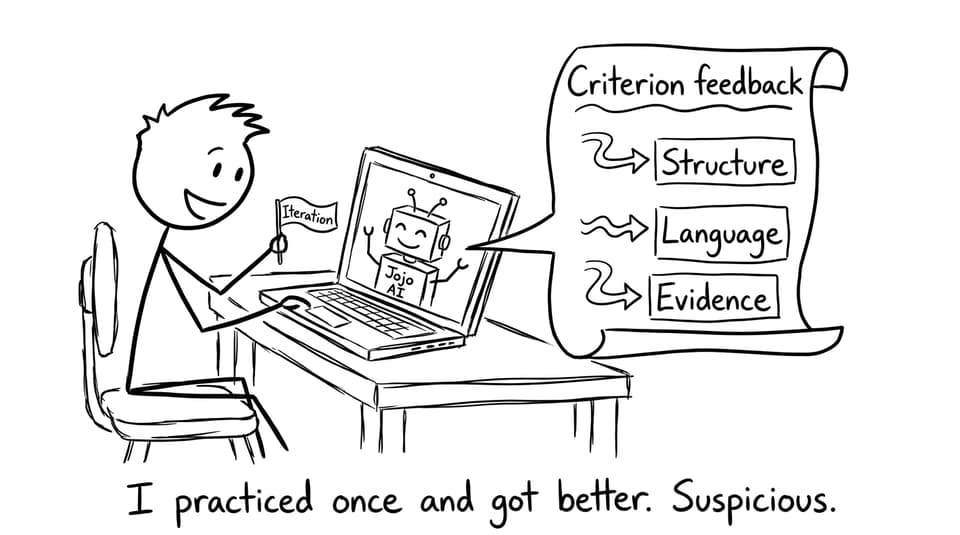
RevisionDojo also connects oral prep to the rest of your IB workflow: build understanding with Study Notes, lock in phrasing with Flashcards, strengthen evidence with the Questionbank, and troubleshoot confusion with AI Chat. When you’re ready, use Grading tools for rubric-aligned feedback, then tighten performance with Mock Exams, Predicted Papers, the Coursework Library, and Tutors.
If you want the bigger system, bookmark: RevisionDojo App: The Smarter Way to Prep for IB Exams, plus the core features Questionbank and Flashcards.
Closing: let the IB rubric do the talking
The most reassuring thing about IB orals is that the markscheme is not mysterious. It’s just demanding.
Across languages, the path is the same: choose a precise focus, build a structure that carries you, analyze authorial choices with evidence, and speak with controlled language. Then repeat until your confidence stops feeling like hope and starts feeling like familiarity.
If you want that repetition to be faster and clearer, practise inside RevisionDojo: use the oral recording tools, transcript feedback, AI Chat, Flashcards, Study Notes, Questionbank practice, and Grading tools to turn each rehearsal into a measurable improvement. Your next IB oral doesn’t need more pressure. It needs a better loop.