


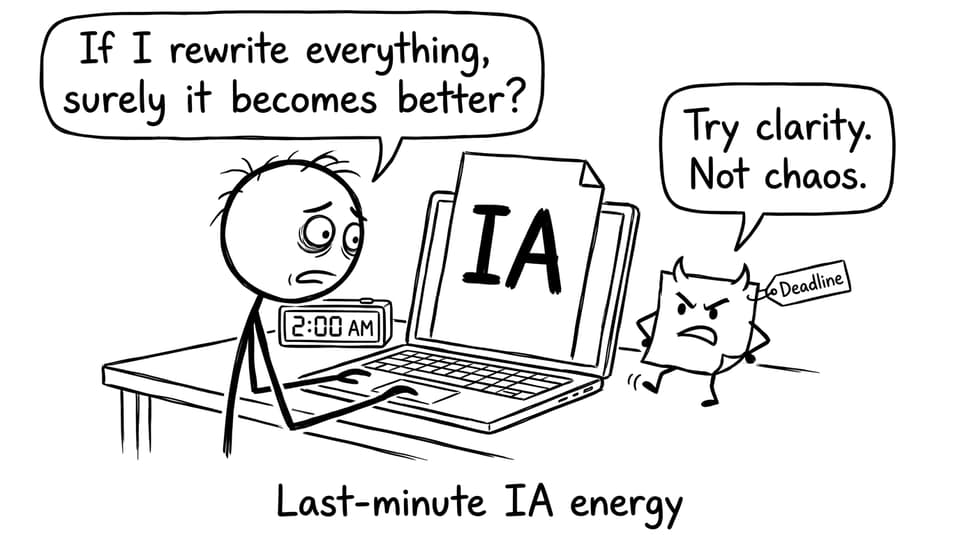
If your IA deadline is close, the panic usually whispers one idea: rewrite everything.
But the students who gain marks at the last minute don’t rebuild from scratch. They do something quieter. They make it easier for an examiner to see what’s already good.
A strong IA is rarely “saved” by a new section written at 1:30 a.m. It’s lifted by clarity, tighter analysis, and smarter trimming. Small changes, made deliberately, can shift how your work sits against the criteria.
The 10-minute IA triage checklist
Before you edit, do one fast pass and mark only these:
-
Research question: is it visible, specific, and repeated where needed?
-
Paragraph openers: does each one say what it’s doing?
-
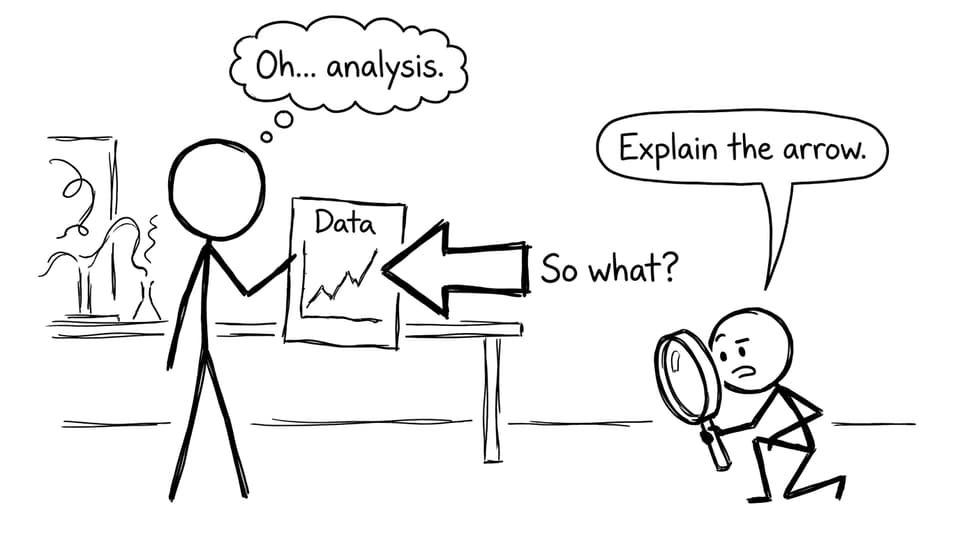
Analysis lines: after every key result/quote/table, do you explain “so what?”
-
Evaluation: are limitations and improvements specific to your method?
-
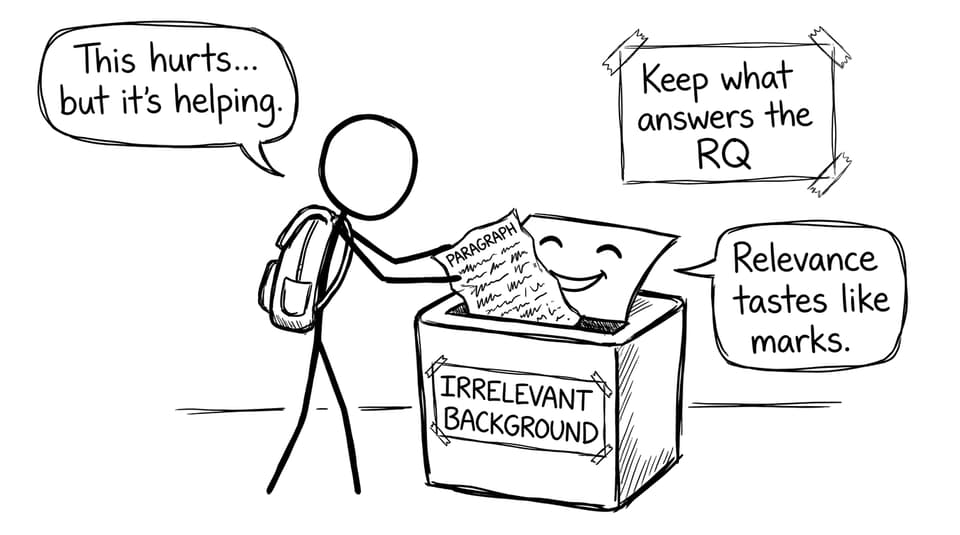
Relevance: can you delete any background that doesn’t answer the RQ?
If you need a structure refresher by subject, start with IB IA Guides and the broader IB Coursework Guides.
Make your IA easier to mark (clarity wins fast)
Clarity is the quickest upgrade because it reduces examiner effort. In an IA, effort is the enemy of high marks: if your thinking is buried, it can’t be rewarded.
Try this simple edit pattern:
-
Rewrite each topic sentence so it explicitly links to the research question.
-
Add a one-line “signpost” transition when you shift from method to results, or results to evaluation.
-
Rename vague headings (“Discussion”) into criteria-friendly headings (“Analysis of Results” or “Evaluation and Improvements”).
If your research question still feels fuzzy, use How to Write a Strong IA Research Question as a quick calibration.
Tighten analysis with micro-links (the “so what?” sentence)
Most IB students don’t lack evidence. They lack links. A table, a quote, or a graph isn’t analysis until you explain what it shows and why it matters.
Add a micro-link after key evidence:
-
What: What does the evidence show?
-
Why: Why is that pattern significant?
-
Therefore: How does it answer the research question?
This is also where RevisionDojo’s AI Chat can help: paste one paragraph and ask, “What is the missing analytical link here?” Then rewrite it in your own voice.
For science students, the fastest analysis upgrade is often clearer stats interpretation. See Using Statistical Analysis Effectively in an IB Science IA.
Cut what doesn’t earn marks (yes, even if it’s pretty)
Last-minute trimming is underrated. When you remove irrelevant background, your best reasoning becomes more visible and your IA reads more controlled.
Delete:
-
long textbook definitions (keep only what your analysis uses)
-
repeated method descriptions
-
extra screenshots/figures that don’t get explained
A helpful rule: if a sentence doesn’t help answer the research question or justify a choice, it’s on probation.
Upgrade evaluation and conclusion (specific beats dramatic)
These sections often read generic because they’re written when you’re tired. But they’re also where marks move quickly.
Make your IA evaluation concrete:
-
Name 2-3 real limitations and explain their impact on validity/reliability.
-
Propose improvements that are feasible (not “get better equipment,” but what and how).
-
In the conclusion, answer the RQ directly, then qualify it with evidence-based caution.
Want exemplars to compare against? Browse IB Coursework Exemplars: IA, EE and TOK and look for evaluation phrasing that’s specific.
Use RevisionDojo tools for a fast, focused polish
When time is short, feedback loops matter more than motivation. RevisionDojo is built for those loops:
-
Coursework Grader for criterion-based annotations: IB Coursework Grader
-
Coursework Library via exemplars to benchmark quality: Coursework Exemplars
-
Study Notes and Flashcards to protect exam prep time while you finish coursework: Study Notes and Flashcards
-
Questionbank, Mock Exams, and Predicted Papers to keep exam momentum after the IA sprint: Questionbank and Predicted Papers
A calm final push
A last-minute IA doesn’t need heroic reinvention. It needs a few strategic choices: make your thinking easy to find, add the “so what?” line after evidence, cut what doesn’t earn marks, and make evaluation specific.
Then close the document, and get back to exam prep. Use RevisionDojo’s Study Notes, Flashcards, Questionbank, Mock Exams, and Predicted Papers to keep the momentum you just built, because the best IA improvement is finishing it without sacrificing your finals.