



A few days before an IB Individual Oral, most students do the same thing: they reread their notes, promise themselves they’ll “sound more confident,” and hope their timing magically lands at ten minutes.
Then they do one full run-through, hear their own voice, panic a little, and decide they’ll just improvise on the day.
The problem isn’t effort. It’s feedback. In the IB Language A Individual Oral, you can’t improve what you can’t clearly see: pacing, structure, clarity, and whether your global issue stays in focus when you’re under pressure. That’s why practising with AI help can raise your mark faster than another hour of highlighting.
If you’re aiming to score higher, this guide shows how to use AI the right way: as a rehearsal partner, not a shortcut.
The IO scoring checklist (keep it simple)
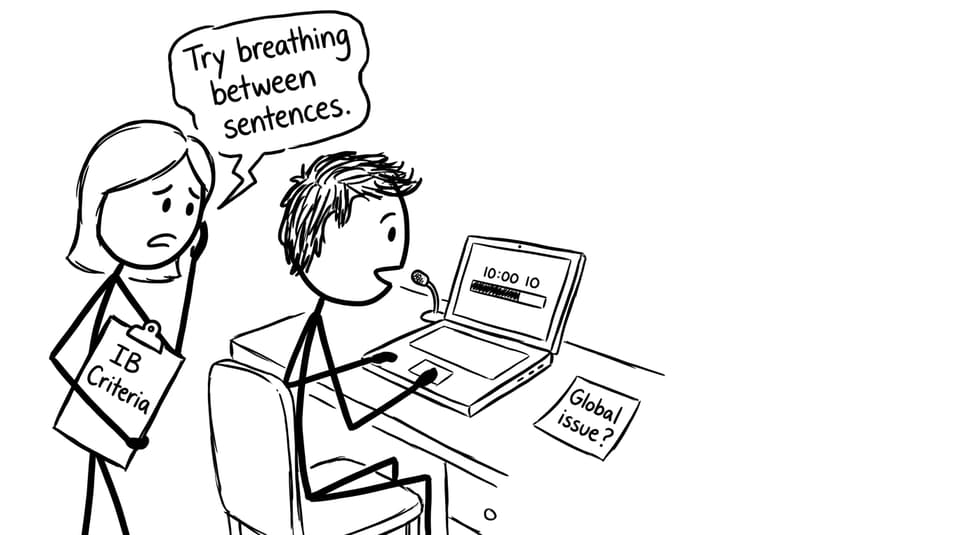
Before you record anything, run this mini checklist. It keeps your IB practice focused on what the rubric actually rewards.
-
A global issue you can define in one sentence (not a theme, not a topic)
-
Two extracts that clearly show the global issue through choices (not just plot)
-
A 10-point bullet outline (enough structure, not a memorised script)
-
A plan for timing: intro, comparative analysis, conclusion
-
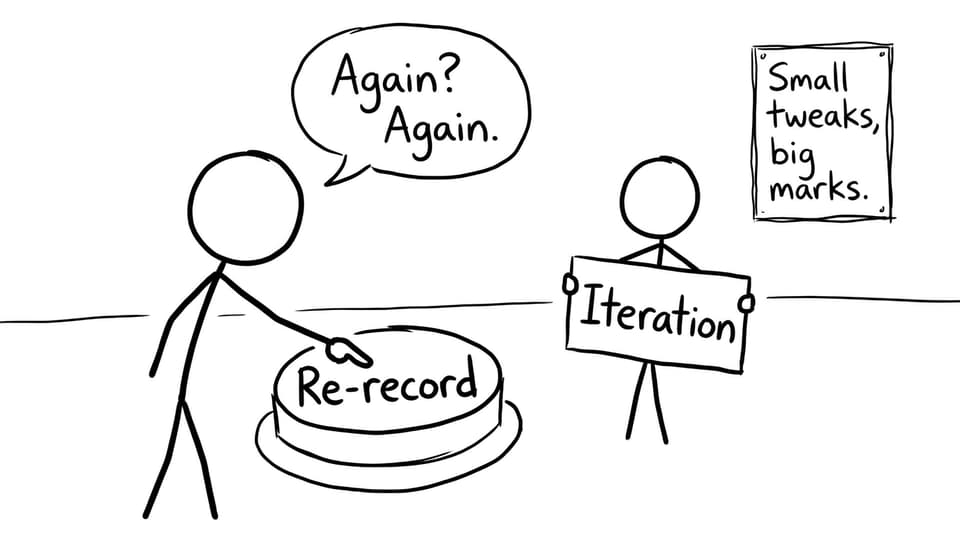
A feedback loop you can repeat: record, review, revise, re-record
If you need a fast refresher on what the assessment is and how it works, use What is an IB Individual Oral (IO)? and the Comprehensive Guide to the IB Individual Oral (IO).
How AI helps you score higher in the IB Individual Oral
The best thing AI gives IB students isn’t “better ideas.” It’s a mirror.
When you practise with an AI grader, you get the kind of unglamorous truth that raises marks:
-
Where you rush (and lose control of emphasis)
-
Where your structure gets fuzzy (and the argument starts wandering)
-
Where your phrasing is repetitive or informal (and language marks leak)
-
Where your global issue disappears behind summary
RevisionDojo’s free AI-powered practice tool is built for this exact moment: rehearsing the IO under realistic conditions and getting structured, rubric-aligned feedback immediately. For the official rubric framing, see the IB Language A: Individual Oral Grader.
Using RevisionDojo’s AI IO Grader (a repeatable workflow)
A good IB workflow is one you can repeat without needing motivation to be perfect.
Record in exam conditions
Open Language A Individual Oral: How to Score Higher with AI Help and set up like it’s the real thing: one uninterrupted recording, the full ten minutes, using only the notes you’ll be allowed.
The goal is not your best performance. The goal is an honest baseline.
Get transcript + pacing + structure feedback
Once you submit, the tool produces a transcript and delivery analysis. This is where most IB students get immediate gains: they finally see their habits on paper.
Common surprises:
-
Your intro is 2 minutes when you thought it was 45 seconds
-
You repeat the global issue but don’t develop it
-
You summarise the extract instead of analysing authorial choices
Turn feedback into one targeted upgrade
Don’t try to fix everything. Pick one criterion to upgrade per attempt.
If you’re unsure what “good” looks like, compare your plan to the guidance in How to Approach the IB English Individual Oral (IO) Presentation.
Aiming for top bands: what to change (by criterion)
The IB rubric is not mysterious. It’s repetitive. That’s good news.
Understanding and interpretation
Top responses prove you understand the work, not just the extract. Your AI transcript helps here because it reveals where you rely on plot recap.
Upgrade move: add one sentence per text that links extract choices to the wider work.
Analysis and evaluation
High marks come from explaining how choices create meaning. Not naming techniques. Not listing them.
Upgrade move: for each key quotation, say “This choice suggests… which shapes the global issue by…”
Focus and organisation
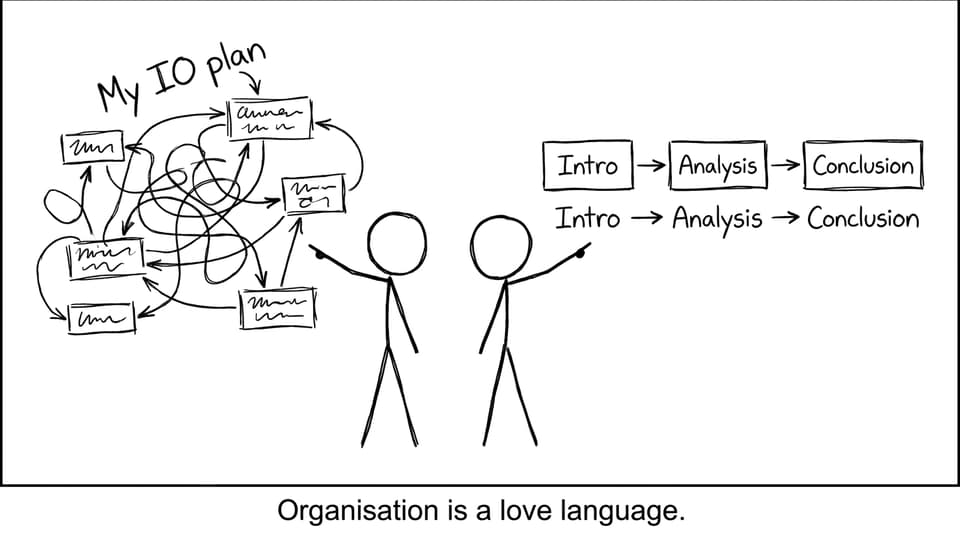
Organisation is where AI feedback often feels most accurate: transitions, clarity, and whether your line of inquiry stays stable.
Upgrade move: add signposts (“Now turning to…”, “In contrast…”, “This matters because…”) and rehearse them until they sound natural.
Language
In the IB IO, language is more than grammar. It’s register. Precision. Control.
Upgrade move: replace vague words (“really,” “a lot,” “shows”) with analytical verbs (“implies,” “undermines,” “foregrounds”).
If you want more study technique guidance that actually matches assessment reality, read Effective Study Techniques for IB English A.
Build the “AI + human” loop (the safest way)
AI is best at pattern-spotting. Teachers are best at judgement calls: whether your global issue is genuinely defensible, whether your interpretation is sophisticated, whether your selection of evidence is appropriate.
A strong IB loop looks like this:
-
Draft outline (10 bullets)
-
Record with the AI tool
-
Fix one criterion based on feedback
-
Ask your teacher one focused question (not “Is this good?”)
-
Re-record and compare
RevisionDojo supports the whole system beyond the IO: Study Notes for quick clarity, Flashcards for quote-technique recall, AI Chat for rapid “why is this analysis weak?” coaching, Grading tools for coursework feedback, a Coursework Library for exemplars, and Tutors when you want a human to sharpen the argument. When exams get closer, Predicted Papers and Mock Exams help you practise performance under time.
Conclusion: practise like it’s real, improve like it’s measurable
The IB Language A Individual Oral is one of those assessments where confidence is usually the result of preparation, not the ingredient you start with. When you practise with AI help, you stop guessing. You see your pacing, your structure, and your language as they actually are.
Use RevisionDojo’s IO tools to build a calm loop: record, get rubric-aligned feedback, fix one thing, and re-record. Then bring your refined version to a teacher or tutor for the deeper judgement calls. That’s how IB students score higher: not by working harder in the abstract, but by making improvement visible and repeatable inside RevisionDojo.