



Most IB students picture success as something delivered: a teacher explains it, a class discusses it, a timetable holds it together.
Then life happens.
A teacher changes. A course moves too fast. You miss a unit. Or you simply realise that your strongest learning happens alone, late at night, when the world is quiet and you can hear your own thinking.
So the question becomes practical, not philosophical: is it possible to self-study an IB subject?
Yes. But the IB doesn’t reward casual independence. It rewards deliberate practice: clear targets, constant testing, and feedback loops that keep you honest. If you build those loops, self-study can feel less like “studying alone” and more like building a personal classroom you can trust.
A quick IB self-study checklist (save this)
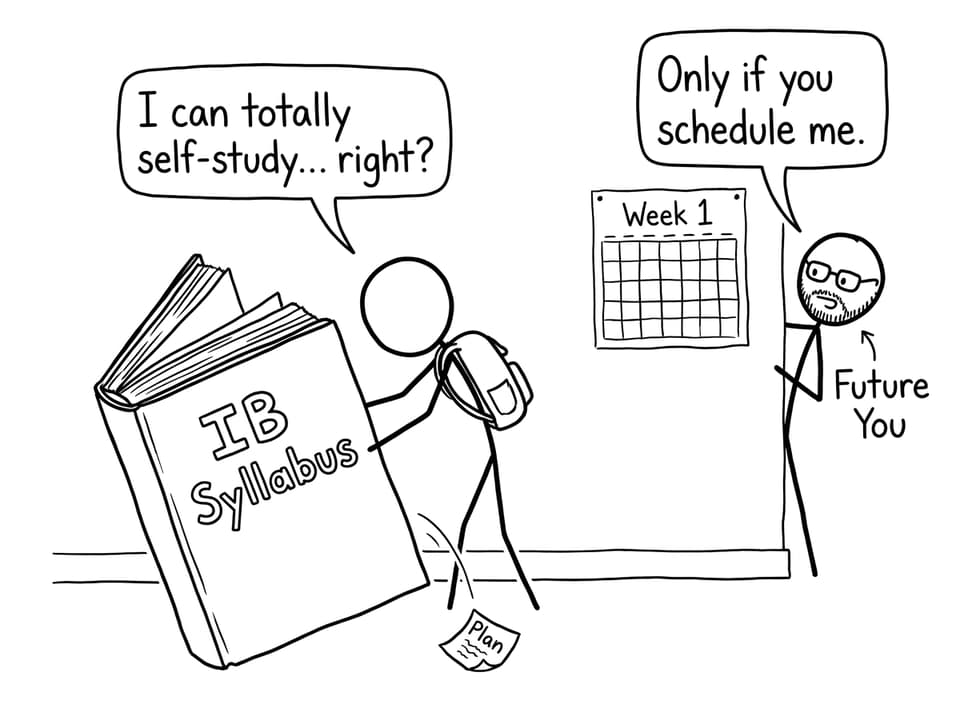
If you want the short version before we go deeper, use this IB checklist for self-study:
-
Choose one IB subject (or one paper/unit) to self-study first
-
Break the syllabus into weekly targets you can actually finish
-
Study in a loop: Notes -> Recall -> Questions -> Review
-
Do exam-style questions every week, timed whenever possible
-
Keep a mistake log and retest errors within 48 hours
-
Add support strategically (AI, tutors, peers) when you stall
RevisionDojo is designed around this exact loop: Study Notes, Flashcards, Questionbank, AI Chat, Grading tools, Predicted Papers, Mock Exams, Coursework Library, and Tutors.
Can you really self-study an IB subject?
You can self-study an IB subject, but you can’t self-study it the way people “self-study” by reading and hoping.
The IB assesses two things at once:
-
Knowledge (definitions, processes, concepts)
-
Performance (can you apply it under time pressure, using the right command terms?)
A classroom gives you built-in structure: lessons arrive whether you’re ready or not. Self-study removes that scaffolding, which is both the danger and the advantage.
Students who self-study IB subjects successfully usually do three unglamorous things:
They choose discipline over motivation
Motivation is a spark. IB revision is a long winter. If your plan only works on high-energy days, it’s not a plan.
They make progress measurable
“Read Chapter 7” is not measurable. “Answer 25 topic questions and review mistakes” is.
They build feedback into the week
Without feedback, self-study becomes storytelling: you feel like you understand, right up until the exam says otherwise.
A good starting point is the RevisionDojo ecosystem, because it keeps your work connected: notes lead into flashcards, flashcards reveal weak topics, and questions expose gaps you can fix next.
For a full platform workflow, see RevisionDojo App: The Smarter Way to Prep for IB Exams.
Which IB subjects are easiest to self-study (and which are tougher)?
Not every IB subject is equally friendly to independent learners. Self-study is easiest when:
-
the syllabus is clear and tightly defined
-
marking is more objective
-
practice questions are abundant
-
you can get fast feedback
IB subjects that tend to self-study well
In general, many students find these more manageable for self-study (especially at SL):
-
Mathematics (depending on level and confidence)
-
Business-style content where structure is predictable
-
Language acquisition at ab initio/SL with daily repetition
-
Content-heavy, concept-clear subjects with lots of question practice
The deciding factor is not the label of the subject, but the feedback speed. If you can practice, mark, and improve quickly, self-study becomes sustainable.
A strong way to do that is to anchor practice in an exam-aligned system like Questionbank | RevisionDojo, where you can train by topic and build consistency.
IB subjects that are harder to self-study
Some IB subjects become tougher when you’re fully independent:
-
lab-heavy sciences (practical skills and methodology)
-
very high-level maths (cumulative difficulty and proof-style thinking)
-
essay-heavy literature analysis without calibrated feedback
Harder doesn’t mean impossible. It means you may need a hybrid approach: self-study for coverage, plus occasional outside feedback to prevent drift.
If exam pressure is part of the challenge, read IB Exam Panic: What to Do If You Don’t Understand.
The IB self-study system that actually works
Self-study fails when it becomes passive. The fix is a repeatable system that forces active recall, application, and review.
Map the IB syllabus into weekly units
Start by turning the syllabus into a calendar. Not a perfect calendar. A usable one.
Each week should include:
-
1-2 topics to understand
-
daily micro-sessions to remember
-
2-4 sessions to apply
-
one review block to repair mistakes
If you need a broader plan, use How to Study for IB Exams: Step-by-Step Guide.
Use Study Notes to learn fast (then stop reading)
Notes are for clarity, not comfort. Read one slice, then close it and try to explain it from memory.
RevisionDojo’s notes workflow is built for this kind of “learn then immediately use it” approach. Pair your reading with practice so it becomes exam skill, not just information.
Build memory with Flashcards (daily, small, non-negotiable)
IB self-study becomes dramatically easier when memory maintenance is automatic.
Use Flashcards for:
-
definitions and key terms
-
processes and cycles
-
formulas and conditions
-
command-term language (compare, evaluate, outline)
A good reference is IB Flashcards with Spaced Repetition (SRS) and the strategy breakdown in IB Flashcard System: Active Recall for Better Memory.
Practice with a Questionbank (the honest mirror)
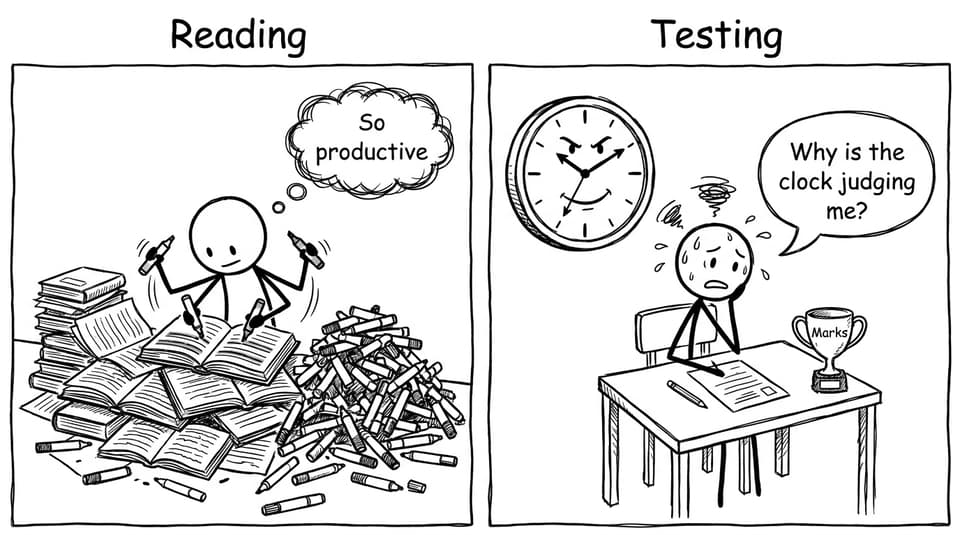
Reading creates familiarity. A Questionbank creates proof.
Your weekly target should include:
-
topic-specific sets (to stop bleeding marks)
-
mixed sets (to mimic real exam switching)
-
review sessions where you redo missed questions
Start here: IB Question Bank: Thousands of Practice Questions and follow-up tactics in IB Question Bank | How to Use It Effectively.
Train realism with Predicted Papers and Mock Exams
Self-study can accidentally become “safe.” Safe study avoids timing, pressure, and decision-making.
That’s why realistic rehearsal matters. RevisionDojo gives you:
-
subject-specific sets like Biology Predicted Papers (Free)
If you’re unsure how to interpret predicted papers correctly, see IB Predicted vs Specimen Papers: What They Mean.
Know when to add support (and why it’s not “cheating”)
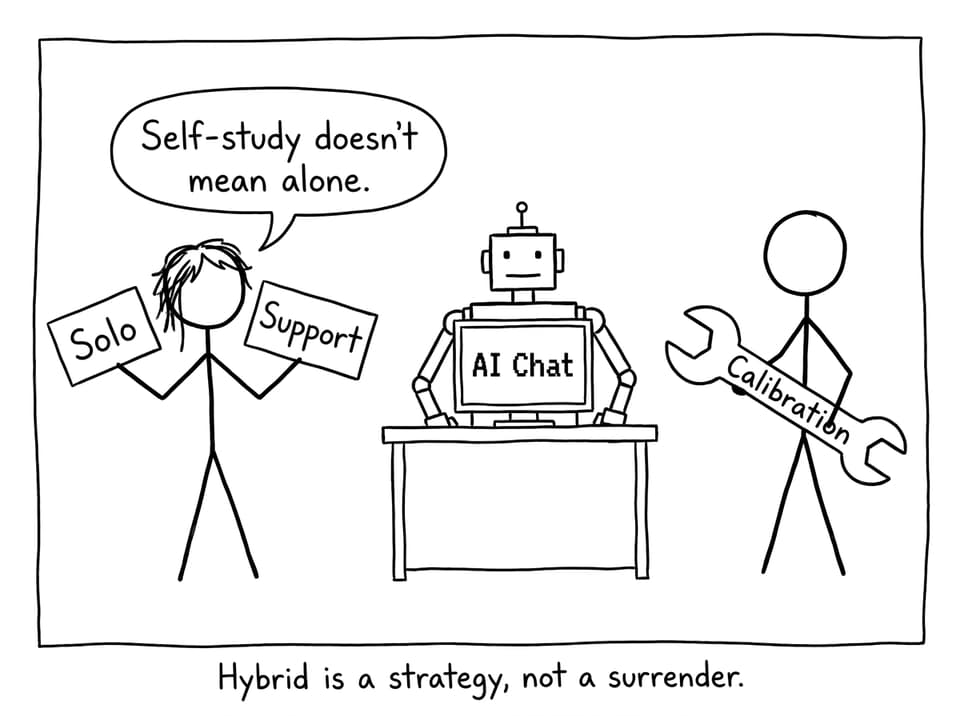
Self-study doesn’t mean isolation. It means ownership.
Use AI Chat when you need a second explanation in the moment. Use Grading tools when you need marking logic. Use the Coursework Library to see what “good” looks like. Use Tutors when a gap won’t close after repeated practice.
A helpful mindset: support is calibration. You’re not handing over responsibility. You’re checking your compass.
Closing: IB self-study isn’t a shortcut, it’s a skill
It is possible to self-study an IB subject. Many students do it, not because they’re unusually talented, but because they build a structure that replaces what a classroom normally provides: pacing, practice, and feedback.
If you want self-study to work, keep it simple and repeatable: Study Notes for clarity, Flashcards for memory, Questionbank for proof, and timed practice with Predicted Papers and Mock Exams for realism. Add AI Chat, Grading tools, the Coursework Library, and Tutors when you need calibration rather than guesswork.
When you’re ready, start with one small IB topic today inside RevisionDojo, run one loop, and let consistency do what motivation can’t.