
If you’re an IB student in exam season, you know the feeling: you sit down to study, open your notes, and your brain quietly refuses to move. Not “I’m lazy” refusal. More like “I’m overloaded” refusal.
In that moment, a mental health day can feel like cheating. But sometimes it’s the opposite. Sometimes it’s the most honest way to protect your attention, your sleep, and your ability to do the work tomorrow.
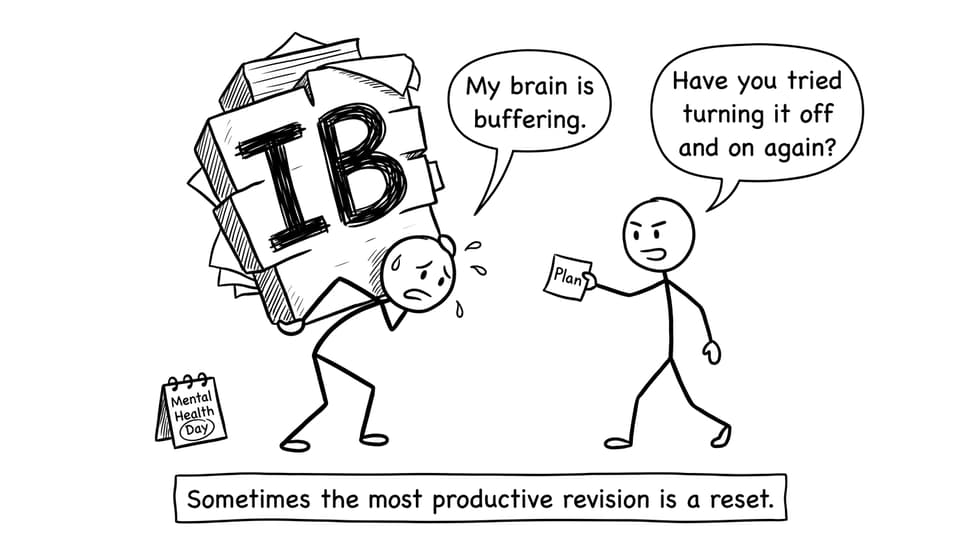
Is it okay to take a mental health day in the IB?
Yes, it can be okay for IB students to take a mental health day off from school, as long as it’s a decision that reduces harm, not a decision that hides it. The IB Diploma workload can be relentless: six subjects, plus TOK, CAS, and big writing deadlines. Your mind isn’t separate from your grades; it’s the engine that produces them.
A well-timed mental health day can:
-
lower stress before it becomes burnout
-
restore sleep and concentration
-
help you return with a plan instead of panic
If you want a deeper view of what stress looks like in the programme, read Mental Health During the IB Diploma Programme.
A quick checklist: do you need a mental health day?
You don’t need to wait until you “break.” Many IB students benefit from catching the early signs.
Signs it’s time to pause
-
You’re exhausted even after sleeping
-
You can’t focus on simple tasks (and it’s been days)
-
You’re unusually irritable, teary, or numb
-
You’re getting headaches, stomach aches, or stress symptoms
-
You’re working longer but learning less
If this sounds familiar, also see How Stressful Is IB? Managing Stress in the IB Program.
How to take an IB mental health day responsibly
A mental health day works best when it has one job: reset your system. Not vanish from your life.
Communicate early (and calmly)
Tell your parent/guardian and school what’s happening. Keep it simple: you’re not skipping; you’re recovering. If you’re worried about deadlines, this guide helps: Do IB Deadlines Get Extended for Mental Health Reasons?.
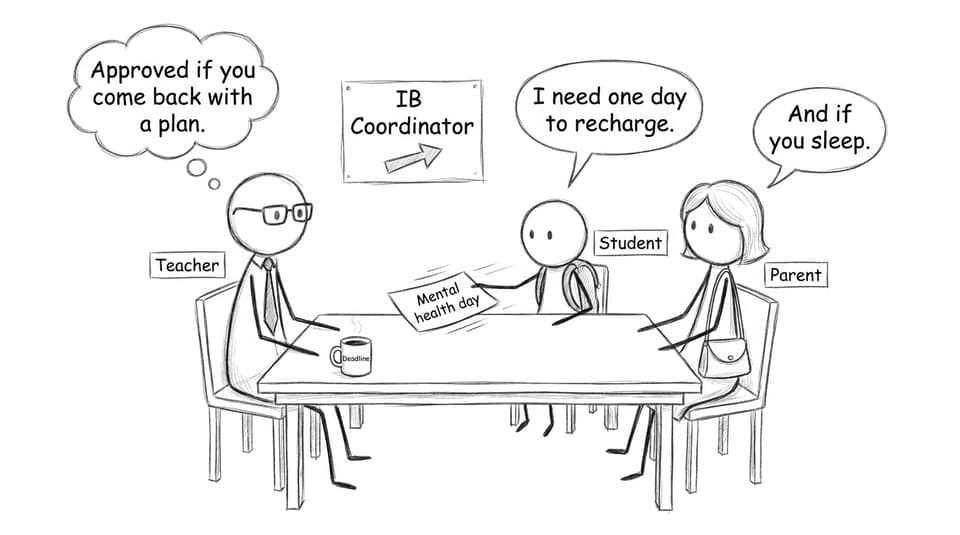
Choose a “minimum viable day” plan
Pick one of these structures:
-
Rest-first: sleep, eat, walk, no heavy studying
-
Light reset: 20 minutes of planning + 30 minutes of easy recall
-
Catch-up without intensity: one small task that reduces anxiety (like organizing your week)
If planning is the thing that overwhelms you, borrow a template from The Ultimate Daily IB Study Schedule or How to Create a Balanced IB Study Schedule.
Do activities that actually replenish you
This isn’t about “being productive.” It’s about being restored.
-
Move your body a little (walk, stretch, sport)
-
Get outside for 10 minutes
-
Journal for five minutes (messy is fine)
A practical starting point: Can Journaling Help Me Cope With IB Stress?.
How to come back without spiraling
The day after matters. Returning is where many IB students waste energy: they try to “repay” the day off with an 8-hour grind. That’s how burnout restarts.
Use a gentle ramp-up
Start with a small, measurable loop:
-
Study Notes: one weak subtopic only
-
Flashcards: 7-10 minutes of recall
-
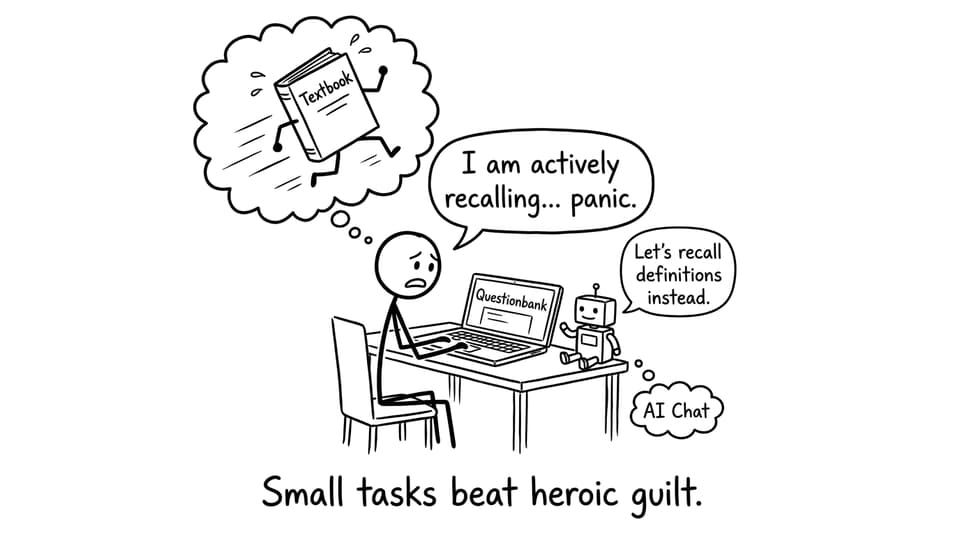
Questionbank: a short set for confidence
-
AI Chat: ask one targeted question you’ve been avoiding
Then, when you have energy again, add Mock Exams and Predicted Papers to rehearse exam pressure in controlled doses, and use Grading tools to make feedback less emotional. If coursework is part of the stress, the Coursework Library and Tutors can reduce the “I don’t know if this is good enough” panic.
For exam anxiety specifically, keep these bookmarked: Strategies for Dealing with IB Exam Anxiety and How to Beat IB Exam Anxiety (Without Burning Out).
Conclusion: a mental health day can be an IB strategy, not a surrender
In the IB, the most dangerous mindset is “I can’t stop.” A mental health day, used intentionally, isn’t running away from school; it’s choosing to keep your system working for the long run.
When you’re ready to return, use RevisionDojo as your calm home base: Questionbank for quick wins, Study Notes for clarity, Flashcards for daily recall, AI Chat and Grading tools for feedback, plus Predicted Papers, Mock Exams, the Coursework Library, and Tutors for the heavy weeks. Your goal isn’t to study endlessly. It’s to study in a way you can repeat.