
The first time you cry in the IB, it can feel like evidence.
Evidence that you’re behind. Evidence that everyone else is coping better. Evidence that you’re not “built for this.”
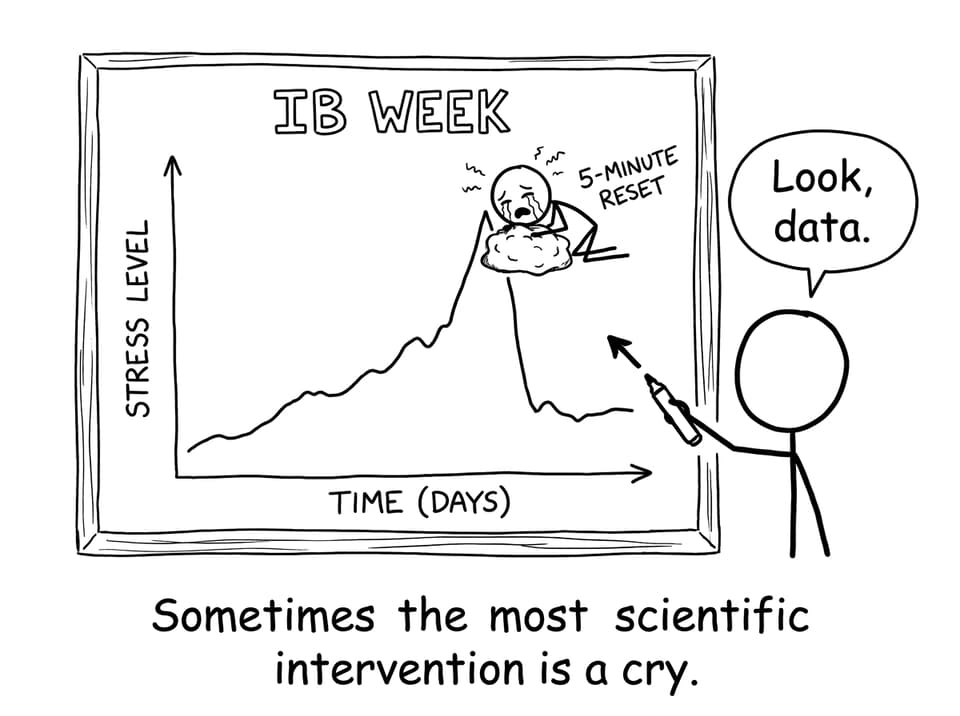
But the truth is simpler, and strangely comforting: crying during the IB is often your body doing maintenance. Like a pressure valve. Like a reset button you didn’t know you had.
If you’re an IB student preparing for exams, you don’t need to add “never feel overwhelmed” to your to-do list. You need a plan that makes the pressure smaller, and a mindset that doesn’t punish you for being human.
Why crying happens so often in the IB
The IB is not just difficult. It’s sustained.
Six subjects. Timed writing. Markscheme logic. Internal deadlines. The background hum of TOK and the Extended Essay. Even when you’re “off,” your brain keeps running the tab.
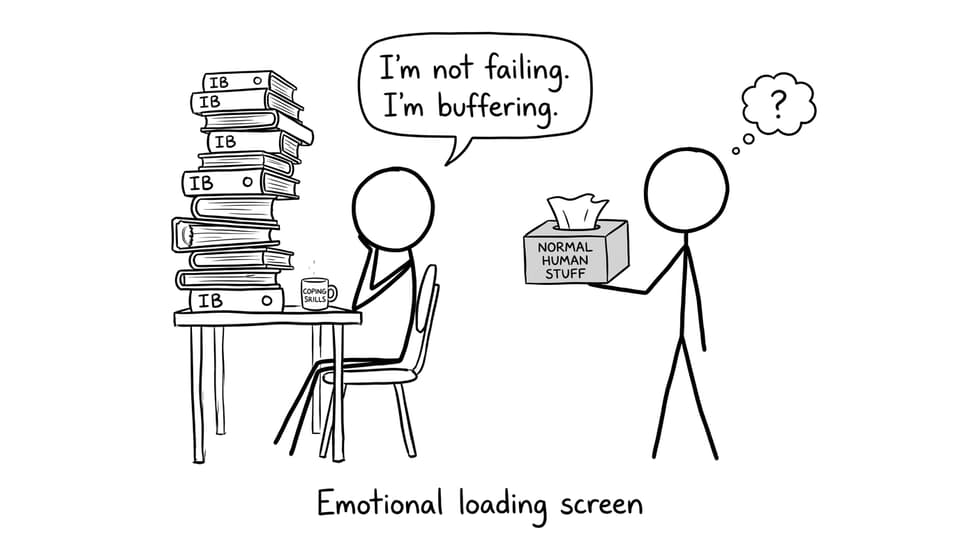
Crying is one of the ways your nervous system releases that buildup. It can show up after a disappointing grade, after you sit down to revise and feel blank, or even after something goes well and your body finally unclenches.
A useful reframe for IB season: tears don’t always mean something is wrong. They often mean something has been heavy for a long time.
A quick “IB meltdown” checklist (save this)
When you feel yourself tipping over, try this sequence before you judge yourself:
-
Name it: “This is IB stress, not danger.”
-
Do a tiny physical reset: water, walk, wash your face.
-
Shrink the next task: one topic, one skill, one question set.
-
Switch to proof-based study: active recall, not rereading.
-
Get feedback fast: don’t sit alone with uncertainty.
If you want a structured guide for the anxiety part of IB exams, keep this open: How to Beat IB Exam Anxiety (Without Burning Out).
Why crying can be healthy during the IB
There’s a quiet trap in the IB: you start believing emotions are inefficiency.
But crying can be functional. It can lower the internal noise so you can think again. It can move you from “I’m spiralling” to “I’m here, and I need a smaller next step.”
The unhealthy part is not crying. The unhealthy part is pretending you’re fine while your sleep collapses, your revision becomes frantic, and you stop trusting your own progress.
A lot of IB students don’t burn out from one hard week. They burn out from months of unprocessed pressure.
What to do after you cry (the “gentle restart”)
Crying can be the release. The restart is what protects you.
Here’s a simple post-cry plan that works in the middle of IB revision:
Return to structure, not intensity
Your goal is not to “make up for lost time.” Your goal is to re-enter with something doable.
A strong IB restart block looks like:
-
10 minutes: Study Notes on one micro-topic
-
15 minutes: a short set in the Questionbank
-
5 minutes: write one mistake rule (what to do next time)
That loop is calm because it creates evidence. And evidence is the antidote to vague fear.
If you need a full structure for exam prep, use: How to Study for IB Exams: Step-by-Step Guide.
Use tools that reduce uncertainty
A big reason the IB makes people cry is the feeling of not knowing what “good” looks like.
That’s why RevisionDojo’s ecosystem matters during IB season:
-
Flashcards for daily recall (small sessions that compound): IB Flashcards
-
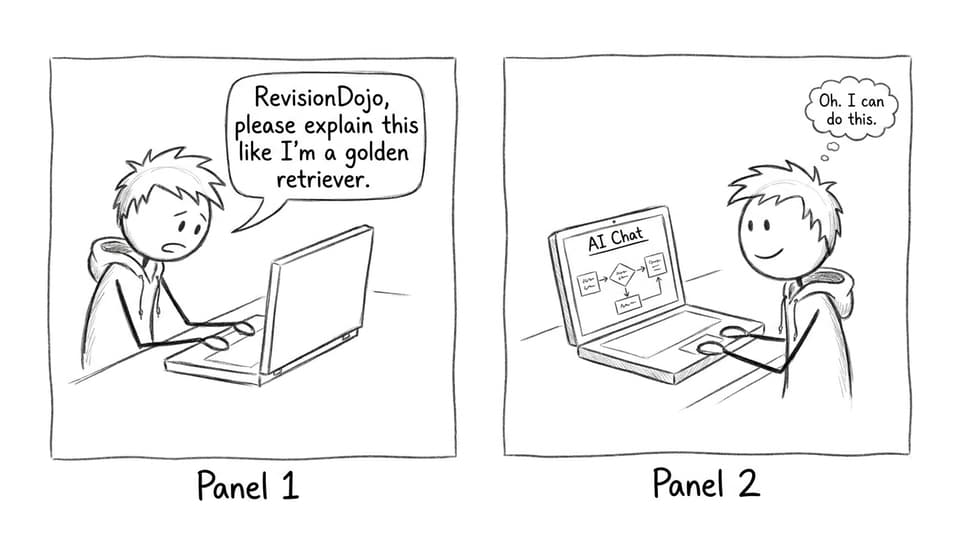
AI Chat when your brain is tired and you need clarity fast
-
Grading tools to turn “I think this is okay?” into actionable feedback
-
Mock Exams to make pressure familiar, not mysterious
-
Predicted Papers to guide focus when everything feels equally urgent
-
Coursework Library to lower background stress from IAs
-
Tutors when you need a human to diagnose the pattern behind repeated mistakes
To see how these pieces fit together, start here: RevisionDojo App: The Smarter Way to Prep for IB Exams and RevisionDojo for IB.
IB pressure triggers that make crying more likely
Most IB breakdowns aren’t caused by one thing. They’re caused by stacking.
Common stacks look like:
-
Trying to revise six subjects while also “fixing your life”
-
Holding yourself to perfect standards in every paper
-
Losing sleep, then needing more time because you’re slower
-
Studying without feedback (so you never feel finished)
If any of that feels familiar, read: IB Stress: How to Stay Motivated Without Burning Out and Exam Stress Management Tips for IB Candidates.
Closing: you’re allowed to be human in the IB
Crying during the IB isn’t proof you’re failing. It’s proof you’re under load, and your system is trying to rebalance.
The goal for IB exams isn’t to feel nothing. It’s to feel the stress, release it, and come back to a plan that creates proof.
If you want that plan in one place, RevisionDojo is built for IB students who need clarity and momentum: Study Notes for quick understanding, Flashcards for daily recall, Questionbank for exam-style practice, AI Chat and Grading tools for fast feedback, plus Mock Exams, Predicted Papers, Coursework Library support, and Tutors when you need extra guidance. Start at RevisionDojo and make your next step small enough to actually happen.