



The first time most students call the IB “impossible,” it’s not after a terrible grade.
It’s after opening their calendar.
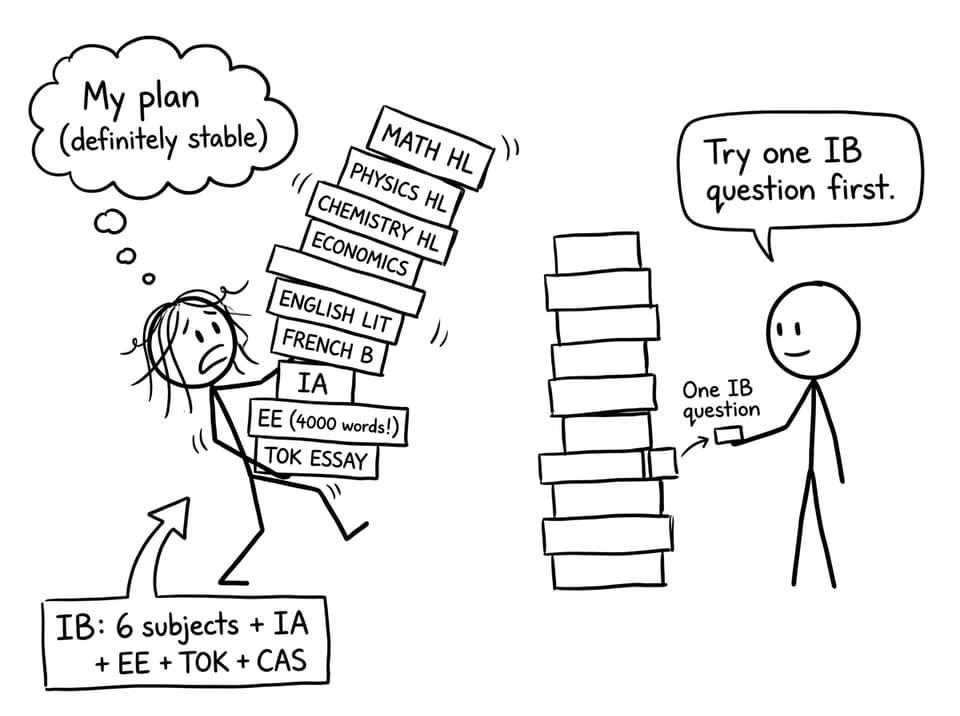
Six subjects. Deadlines that overlap like waves. A to-do list that grows while you sleep. And a quiet fear that everyone else has a secret system you somehow missed.
The truth is simpler: the IB is hard because it tests more than knowledge. It tests how you manage pressure, time, and uncertainty. The good news is that those are skills you can train. And with the right tools, “cracking the IB exam” stops sounding like a myth and starts looking like a process.
Why the IB feels so hard (even for strong students)
The IB isn’t difficult because every topic is advanced. It’s difficult because the programme asks you to do many demanding things at the same time.
Here’s what usually makes the IB feel heavy:
-
Breadth and depth across six subjects, simultaneously
-
Coursework pressure (IAs, EE, TOK) running in the background of normal learning
-
Marking that rewards application and clear method, not just memorisation
-
High stakes: university conditions, predicted grades, self-expectations
If you want a reminder of what the programme covers and why it’s structured this way, RevisionDojo’s International Baccalaureate (IB) overview is a helpful anchor.
A quick “crack the IB” checklist (save this)
When students improve fast in IB, it’s usually because they stop trying to “do everything” and start running a loop.
Use this simple weekly loop:
-
Learn one concept with Study Notes (fast clarity)
-
Recall it with IB Flashcards with Spaced Repetition (memory that sticks)
-
Convert it into marks with the Questionbank (exam-style practice)
-
Get feedback with AI Chat and grading support (fix what actually loses marks)
-
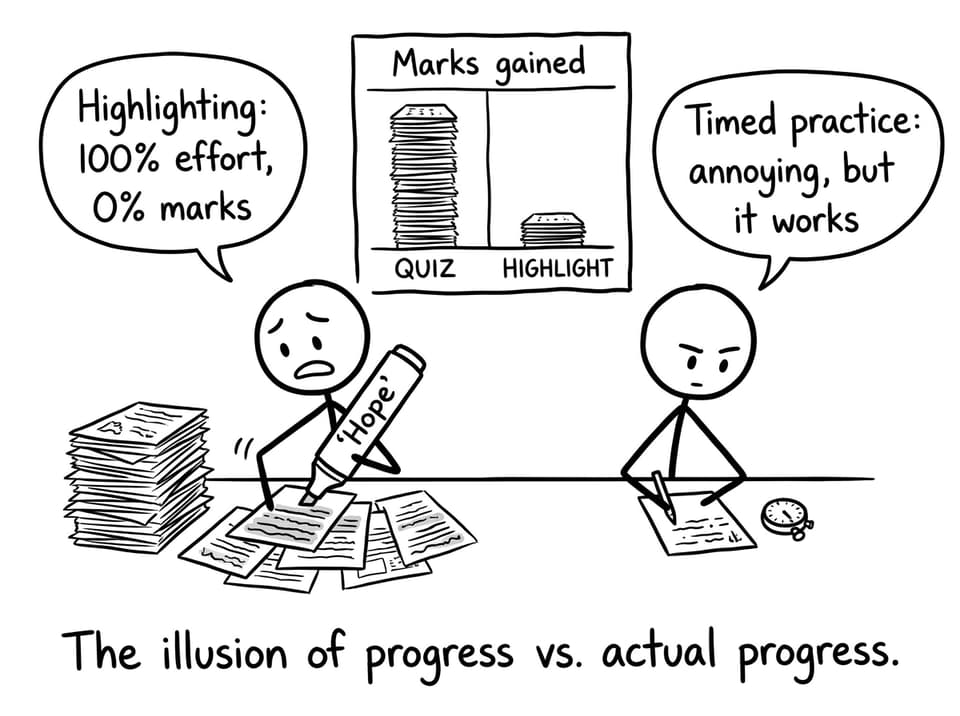
Reattempt your weak spots within 48 hours (no “false progress”)
That loop is why RevisionDojo works as an all-in-one IB hub: it reduces the time you spend searching and increases the time you spend improving.
What “cracking the IB exam” really means
Most students think cracking the IB means “knowing everything.” But top scorers usually do something less dramatic and more repeatable.
Cracking the IB tends to mean:
-
You can produce marks under time pressure, not just recognise content
-
You understand what command terms require (explain vs evaluate vs discuss)
-
Your coursework doesn’t quietly sabotage your final score
-
You avoid burnout by studying consistently, not heroically
In other words: technique + consistency beats panic + intelligence.
How RevisionDojo makes IB revision easier (in practical ways)
RevisionDojo doesn’t just give you more content. It helps you build the habits that the IB quietly rewards.
Practice that feels like the real IB
The fastest way to get better at IB exams is to practise the way you’ll be assessed.
RevisionDojo’s Questionbank gives you exam-style questions and a place to track what you’ve done, what you’ve missed, and what needs a reattempt. Pair it with the strategy in IB Question Bank: Thousands of Practice Questions to make your practice sessions more targeted.
Flashcards that don’t waste your time
Flashcards work best in the IB when they’re built for retrieval and spaced repetition, not decoration.
Use IB Flashcards with Spaced Repetition, then steal the tactics from IB Flashcard System: Active Recall for Better Memory so your “quick review” actually becomes long-term memory.
Exam rehearsal when you need confidence
There’s a point in IB prep where you don’t need another explanation. You need a rehearsal.
That’s where IB Predicted Papers by IB Examiners and Collaborative IB Mock Exams: Study with Friends Online help. They train pacing, stamina, and decision-making under realistic conditions.
Coursework support that reduces stress (and protects marks)
Coursework is where many IB students lose marks quietly, not because they’re incapable, but because the criteria are easy to misunderstand.
RevisionDojo’s IB Coursework Examples: IA, EE and TOK Exemplars gives you high-quality models so you can see what “good” looks like before you submit.
The bottom line: IB is hard, but it’s not a mystery
The IB feels brutal when it becomes one giant, unnamed problem. It becomes manageable when you break it into small skills you can train: recall, application, timing, and coursework discipline.
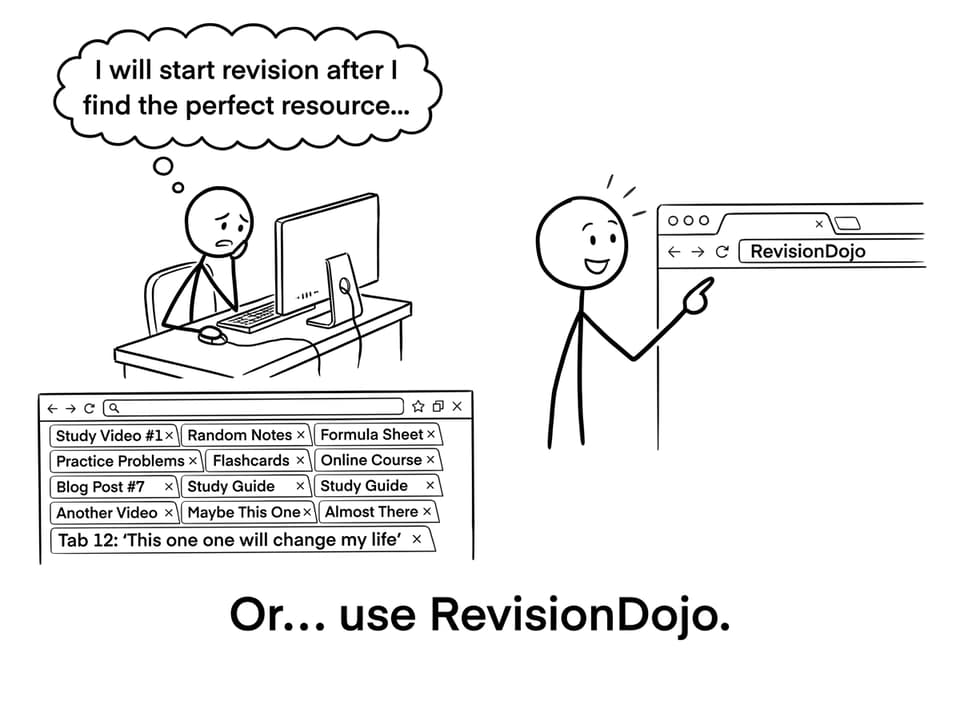
If you want the simplest way to make the IB easier, stop hunting for more resources and start running a tighter loop inside RevisionDojo: Questionbank, Flashcards, Study Notes, AI Chat, grading tools, Predicted Papers, Mock Exams, the Coursework Library, and Tutors when you want a human second set of eyes.
The goal isn’t to “beat” the IB. It’s to become the kind of student the IB rewards: calm, consistent, and exam-ready.