

Getting a 45 in the IB sounds like the academic version of spotting a comet: you’ve heard it happens, you know it’s real, but it feels like it belongs to someone else.
Then you meet a student who did it. They’re not glowing. They’re not a genius in a movie montage. They’re usually just… calm. Not because they never struggled, but because they understood what the IB rewards: consistent execution across many small components, not one dramatic “perfect exam day.”
So, is it actually possible to get a 45 on the IB exam? Yes. But the useful question is: what does a 45 really represent, and what do 45-scorers do that everyone else can copy?
What a 45 in the IB actually means
A 45 is the maximum diploma score in the IB. To reach it, you need:
-
42 points from six subjects (six grades, each out of 7)
-
3 bonus points from TOK + Extended Essay (EE) combined
That’s the whole ceiling. No hidden extra credit. No “close enough.” The structure is simple, which is exactly why it’s hard: every paper, every criterion, every deadline becomes part of the same final total.
If you want a quick sense of how the system fits together, RevisionDojo’s overview of RevisionDojo for IB shows the full workflow students use to build marks rather than just “study.”
How rare is a 45/45 in the IB?
A perfect 45 is achieved by well under 2% of IB candidates globally in most sessions. Put differently: in a cohort of hundreds of thousands, only a small slice lands the top score.
But rarity isn’t proof of impossibility. It’s proof that the score demands a specific kind of reliability.
And reliability is trainable.
The 45 mindset: reliability beats intensity
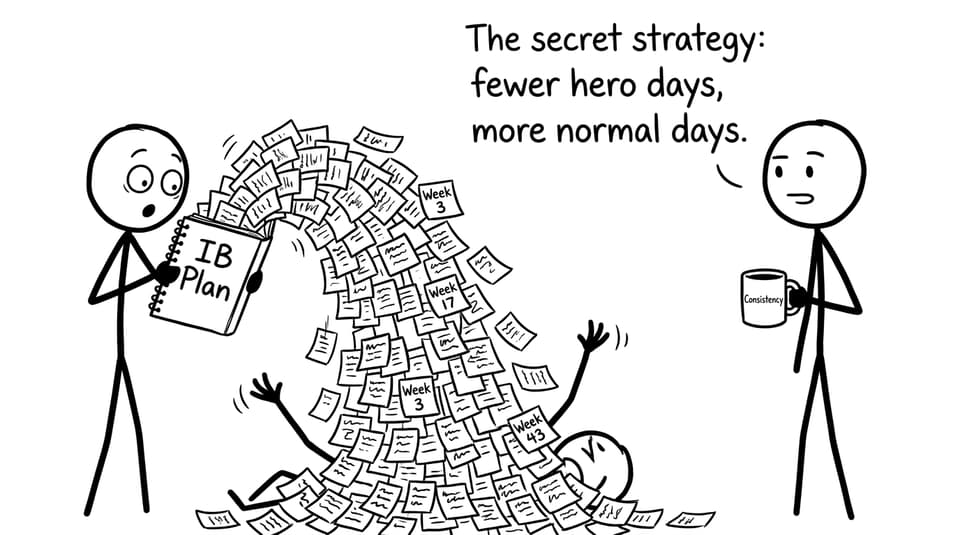
The biggest misconception about the IB is that top scores come from “big days” of motivation. The reality is more boring and more hopeful: 45-scorers stack ordinary days.
They build a loop:
-
Learn a small concept
-
Test it in exam-style questions
-
Mark honestly
-
Fix the pattern
-
Repeat before forgetting
If your revision currently feels like reading and re-reading, it’s worth using the approach in IB: I Study All Day but Remember Nothing to shift from time-spent to marks-earned.
Patterns most 45-scoring IB students share
They treat coursework like score insurance
In the IB, coursework is not “extra.” It’s points. Strong Internal Assessments protect you from a slightly off exam day.
This is where having clear models matters. If you want exemplars and benchmarks, the Coursework Exemplars Library helps you see what “top band” work looks like across IA/EE/TOK.
And when you need fast criterion-aligned feedback loops, RevisionDojo’s Grading tools are designed for exactly that: improving drafts based on markband language, not vibes.
They practice like the IB marks, not like a textbook teaches
The IB doesn’t just test what you know. It tests whether you can:
-
interpret command terms
-
show working clearly
-
structure explanations efficiently
-
choose relevant evidence fast
That’s why volume of targeted exam-style practice matters. RevisionDojo’s Questionbank is built for topic filtering and feedback so you can drill weaknesses without wasting revision time.
They simulate pressure before the real pressure arrives
A 45 isn’t built only from accuracy. It’s built from accuracy under time. Students who score at the very top often start timed practice earlier than feels comfortable.
Use:
-
IB Predicted Papers to rehearse full-paper pacing
-
IB Predicted vs Specimen Papers: What They Mean to choose the right practice at the right time
-
Mock Exams to make stamina normal rather than scary
If you’re in the final stretch, the rhythm in IB: The Last 2 Weeks Before Exams (What Matters) is the calmest version of “serious” preparation.
Common myths about getting a 45 in the IB
“Only geniuses get 45s”
The IB rewards decision-making more than brilliance. Many high scorers describe themselves as “average but methodical.” They weren’t smarter every day. They were more consistent most days.
“You have to sacrifice sleep”
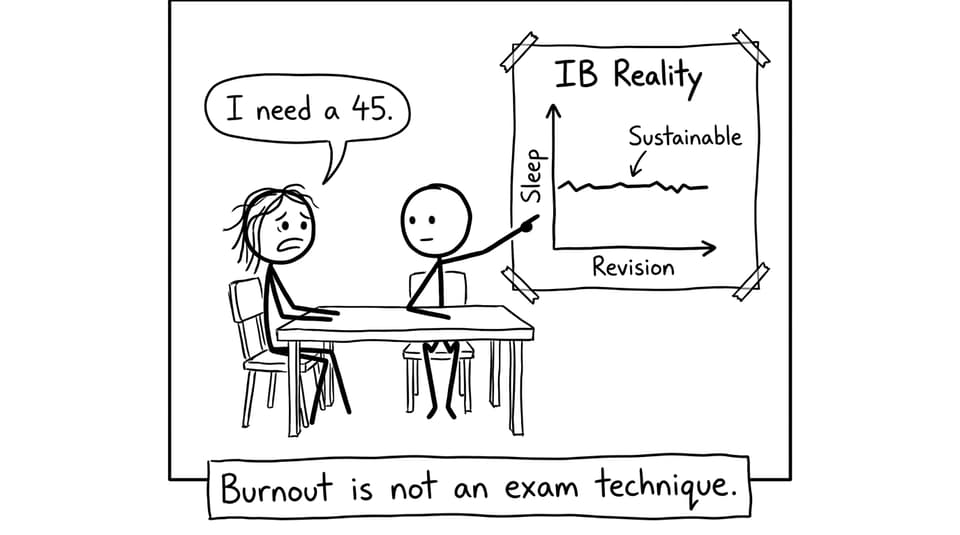
Sleep isn’t a luxury in the IB. It’s memory consolidation and emotional regulation. Burnout makes you careless with command terms, structure, and timing.
“It’s mostly luck”
Luck exists, but it’s smaller than students think. If you’ve done enough exam-style practice, very little on exam day is truly new.

A realistic 45-chasing IB checklist
Keep this simple. A 45 attempt fails when the plan is too big to repeat.
-
Daily: 10--15 minutes of Flashcards (definitions, processes, quotes, formulas)
-
4--5 days/week: one targeted Questionbank set + honest review
-
1 day/week: a timed section via Mock Exams or Predicted Papers
-
Every week: one feedback upgrade for coursework (IA/EE/TOK)
-
When stuck: ask one precise question in AI Chat, then immediately do a question to prove it
If your notes are messy or scattered, building a clean base using Digital IB Study Notes: Access Anywhere, Anytime helps you stop rewriting and start applying.
And if you need a full platform loop in one place (Notes, Flashcards, Questionbank, AI Chat, Grading tools, Predicted Papers, Mock Exams, Coursework Library, Tutors), the RevisionDojo app guide explains how students actually run it week to week.
The honest ending: yes, a 45 is possible in the IB
A 45 in the IB is rare, but it’s not magic. It’s the outcome of many small, repeatable decisions: practice that matches markschemes, coursework treated like points, feedback used early, and timed rehearsal done often enough that exam day feels familiar.
If you want a system that makes those decisions easier to repeat, RevisionDojo is built for exactly that loop: Study Notes to get clear, Flashcards to retain, Questionbank to apply, AI Chat to unblock confusion fast, Grading tools and a Coursework Library for IA/EE/TOK confidence, plus Predicted Papers, Mock Exams, and Tutors to turn ambition into a plan.