
There’s a particular kind of confidence that shows up halfway through IB.
It sounds like this: “I can order food, ask for directions, and write an email in German. I’m basically ready for university in Germany, right?”
That confidence isn’t foolish. It’s earned. IB German Ab Initio takes you from zero to functional communication, and for many students it’s the first time a new language stops being a subject and becomes a tool.
But university programs that require German are not asking whether you can survive a train station. They’re asking whether you can survive a lecture hall.
This article answers the core question clearly, and then gives you Studying Tips to turn Ab Initio into a genuine launchpad for your next step.
Quick checklist: what you need to know before you apply
Use this as your fast reality check:
-
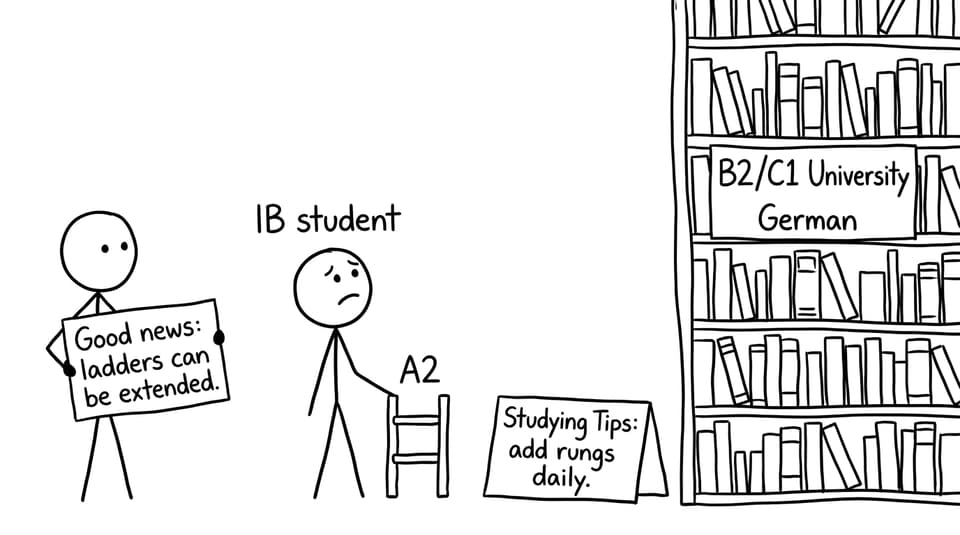
IB German Ab Initio typically takes students to CEFR A2 (upper beginner).
-
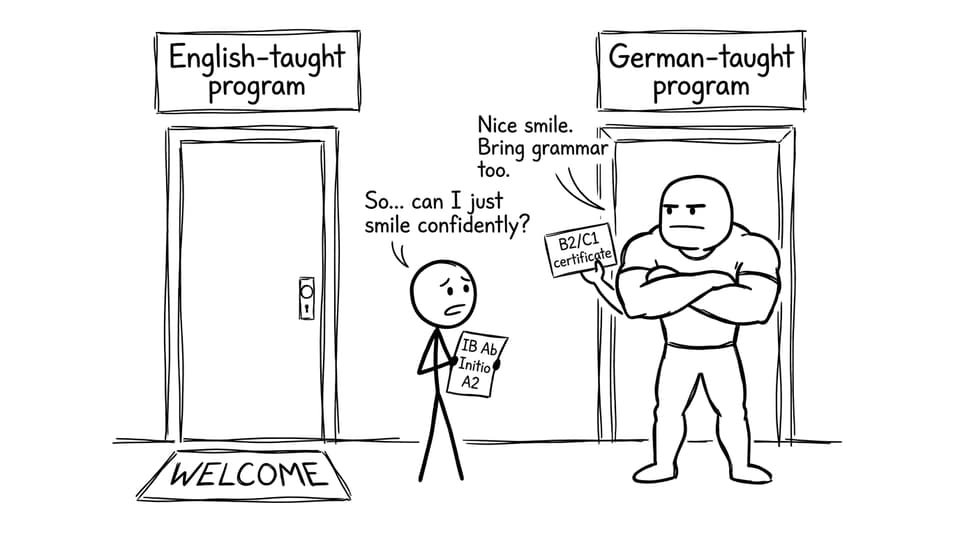
German-taught university programs usually require CEFR B2 or C1.
-
If your degree is English-taught, Ab Initio is still helpful for daily life, but not always a formal requirement.
-
Your best path forward is a plan: certificates, immersion, and targeted practice.
-
Strong Studying Tips matter more than motivation, because languages reward consistency.
If you want a clear breakdown of what the course is and how it works, start with What Is IB German Ab Initio? Complete 2025 Guide.
What level does IB German Ab Initio actually reach?
IB German Ab Initio is designed for beginners. Across two years, many students end up around A2 on the CEFR scale.
At A2, you can usually:
-
Handle familiar topics like school, routines, travel, food, hobbies
-
Write short texts (emails, diary entries, simple blog posts)
-
Understand the main idea of slow, clear audio and straightforward reading passages
-
Use core grammar reliably (present tense, perfect tense basics, modal verbs, simple subordinate clauses)
That’s a real achievement. It’s also not the level universities mean when they say “German required.”
A helpful way to think about it: A2 means you can communicate. B2/C1 means you can study.
For exam alignment and what skills Ab Initio assesses, see IB German Ab Initio Exam Format (2025 Guide).
What do German-taught university programs usually require?
Most German-taught degree programs in Germany, Austria, and parts of Switzerland require B2 or C1.
Why so high?
Because university life is language-heavy in ways IB rarely forces you to experience:
-
Lecture speed and academic vocabulary
-
Reading dense articles or textbooks
-
Writing structured arguments with precise grammar
-
Participating in seminars where you can’t pause to translate
Universities typically want proof through recognized exams (requirements vary by institution), often including options like TestDaF, DSH, or Goethe-Zertifikat at B2/C1.
So, is Ab Initio sufficient on its own? Usually, no.
But here’s the more hopeful truth: students who finish Ab Initio with strong habits often progress faster than students who “know more” but practiced less.
That’s where Studying Tips become your unfair advantage.
If your university program is taught in English
If you apply to an English-taught program, Ab Initio may not be required at all.
Still, it can be the difference between:
-
Living in Germany
-
And belonging in Germany
Daily life is a constant small exam: housing contracts, phone plans, public offices, doctors, group chats, roommates.
Even A2 German can reduce friction. It doesn’t make you fluent, but it makes you less dependent.
If you’re trying to balance German with everything else in your schedule, How Can I Balance IB German Ab Initio with My Other IB Subjects? (2025 Guide) is a practical companion.
Studying Tips to bridge the gap from Ab Initio to B2/C1
If Ab Initio is your foundation, the next step is building a second floor. Not with cramming, but with a routine that compounds.
Studying Tips that work because they’re boring (and that’s the point)
Make German daily, not heroic.
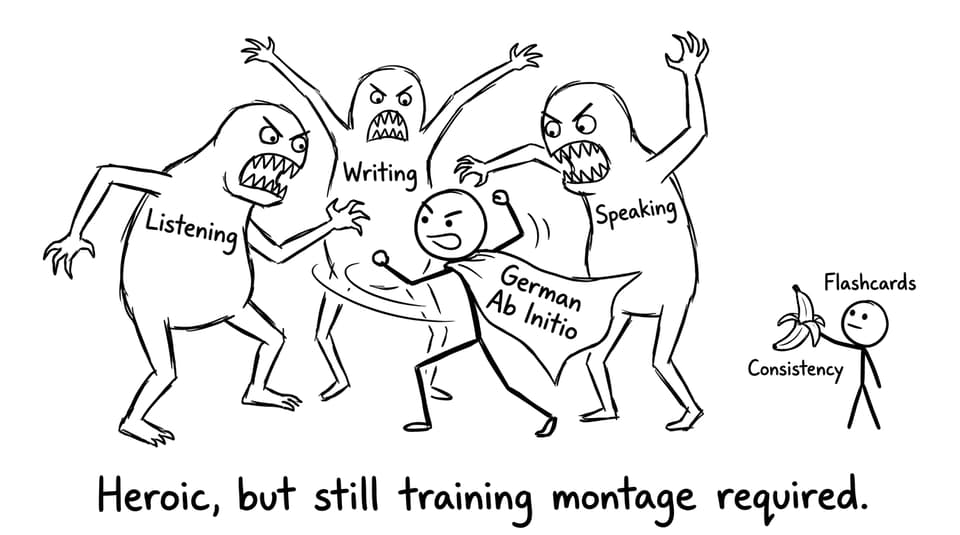
Fifteen minutes a day beats two hours on Sunday. Language is a memory sport, and memory needs repetition.
Practice output earlier than you want to.
Speaking and writing feel uncomfortable because they reveal gaps. That’s useful information. Treat mistakes like feedback, not failure.
Upgrade your grammar one rule at a time.
For example, German word order is a silent grade boost.
-
Use the Verb-Second Rule notes to stop losing easy marks.
-
Add clause control using Subordinating conjunctions (weil, dass, wenn).
Learn in chunks, not single words.
Memorize sentence frames you can reuse in speaking and writing.
Pair that with time sequencing tools like Extended time expressions and sequencing.
Studying Tips for exam performance (and for real German)
Ab Initio exams reward clear communication. So do language certificates later.
-
For writing structure and accuracy, use How Can I Prepare for IB German Ab Initio Paper 1? (2025 Guide).
-
For oral confidence, follow How to Succeed in the IB German Ab Initio Oral Exam (2025 Edition).
And if you want a full beginner strategy stack, What Strategies Help Beginners Learn German Quickly in Ab Initio is one of the most directly useful reads.
How RevisionDojo helps you turn Ab Initio into a pathway
Most students don’t struggle because they lack talent. They struggle because their effort is scattered.
RevisionDojo is built to make your language practice feel organized:
-
Study Notes for grammar and theme knowledge you can trust
-
Flashcards for spaced repetition that actually sticks
-
A Questionbank for exam-style practice across skills
-
AI Chat to practice phrasing, rework sentences, and get explanations without waiting
-
Grading tools to understand what examiners reward
-
Mock Exams to train timing and reduce panic
-
Predicted Papers to focus revision on likely formats and skills (without guesswork)
-
Tutors when you want human feedback and accountability
-
A Coursework Library to keep your language tasks structured and consistent
If you’re still deciding how hard this subject really is, Is IB German Ab Initio Hard? (Complete 2025 Guide) gives an honest picture.
Conclusion: Ab Initio isn’t the finish line, it’s the first proof
So, is IB German Ab Initio sufficient for university programs that require German?
In most cases, not on its own. The course usually positions you around A2, while German-taught degrees expect B2 or C1.
But Ab Initio is still powerful. It shows you can start from nothing and build competence. And that’s the same skill university will demand again and again.
If you want to keep going, don’t chase motivation. Collect Studying Tips that are repeatable, and build your next level with practice that compounds.
When you’re ready to make your German revision feel calm, structured, and exam-relevant, RevisionDojo brings everything into one place: Questionbank, Study Notes, Flashcards, AI Chat, Grading tools, Predicted Papers, Mock Exams, Coursework Library, and Tutors.