
The night before your first big deadline, the IB can feel like a crowded room where everyone is speaking at once.
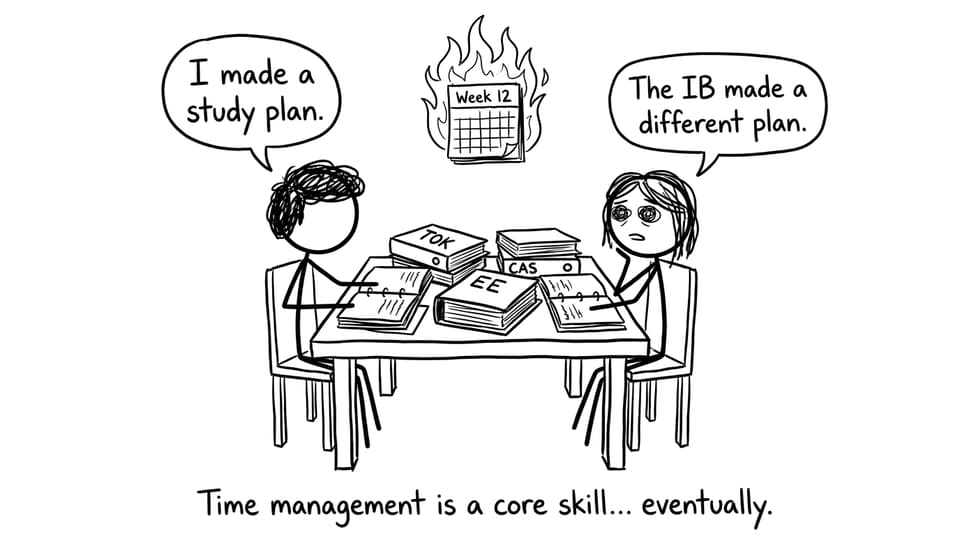
TOK wants you to question the nature of truth. Your Extended Essay wants 4,000 well-cited words. CAS wants proof you have a life beyond your desk. And your six subjects keep assigning homework as if they never met each other.
So the question isn’t just “Is IB worth it?” It’s: Is the version of you who has to live through IB going to be glad you did? This post gives an honest answer--with the good parts, the hard parts, and the kind of real student feedback you hear when teachers leave the room.
What IB actually includes (quick, no fluff)
The IB Diploma Programme is a two-year course designed for students aged 16--19. You take six subjects across different groups, plus three core components:
-
Theory of Knowledge (TOK): critical thinking about how knowledge is built and justified.
-
Extended Essay (EE): a 4,000-word independent research paper.
-
Creativity, Activity, Service (CAS): sustained experiences outside pure academics.
If you want a clean overview of the ecosystem of IB prep resources, start here: RevisionDojo for IB. It’s a useful reference point because it mirrors what students actually need: content, practice, feedback, and structure.
A simple “worth it” checklist
Before you decide whether IB is worth it for you, check these boxes:
-
You can tolerate long deadlines (EE, IAs, TOK) without panicking.
-
You’re willing to trade some flexibility for a broad education.
-
You want universities to see evidence of rigor across multiple areas.
-
You’re ready to learn study systems, not just study harder.
That last point matters most. IB rewards students who build repeatable loops: learn a concept, practise it, get feedback, fix it, repeat.
The honest pros: why IB can be worth it
The benefits of IB don’t usually show up on a random Tuesday. They show up later, quietly, when you realize you can do things other students are still learning how to do.
IB is recognized (and often respected) by universities
Universities worldwide understand what IB demands. Many admissions teams view the diploma as a strong signal of readiness because it combines breadth (six subjects) with depth (HL courses) and long-form writing (EE and TOK).
Some institutions also award credit for strong Higher Level scores, depending on country and policy. The exact details vary, but the general pattern is consistent: IB is rarely “ignored.”
IB builds college-style skills earlier than most programs
A lot of students describe this in the same way: IB was exhausting, but it made the first year of university feel familiar.
These are the skills that transfer:
-
Writing with citations and structure
-
Research and source evaluation
-
Managing overlapping deadlines
-
Arguing clearly under time pressure
If you’ve ever used exam questions to learn how marks are awarded, you already know the difference between “I understand it” and “I can score on it.” Tools like RevisionDojo’s Questionbank make that gap visible quickly: you practise, you get feedback, and you learn the marking logic instead of guessing.
IB can change how you think (TOK is weirdly useful)
TOK is the part of IB many students complain about while they’re doing it--and miss once it’s gone.
It forces you to slow down and ask:
-
What counts as evidence here?
-
Who benefits from this definition?
-
What would change my mind?
That habit shows up later in essays, interviews, and even casual conversations where you notice you can explain your reasoning instead of just your opinion.
The honest cons: what makes IB feel not worth it
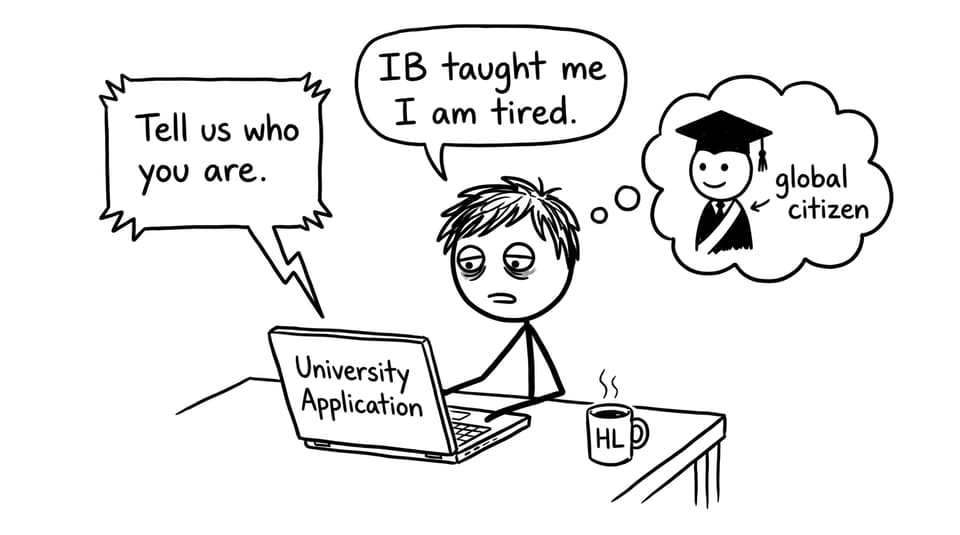
The downside of IB is not that it’s hard. The downside is that it can be hard in a messy way--six subjects plus core, with deadlines that don’t politely take turns.
The workload is real, and it clusters
Most students don’t struggle because one task is impossible. They struggle because three tasks land in the same week.
A typical Year 2 moment:
-
An Internal Assessment draft is due
-
TOK wants a commentary or essay work
-
EE supervisor wants revisions
-
Two subjects decide it’s “test week”
This is where study systems matter more than raw motivation. If your revision process is just rereading notes, IB will outpace you. If your revision process is active (practice questions, spaced repetition, timed sets), you gain control.
Using Study Notes for fast understanding and then immediately converting into practice is one of the cleanest ways to keep pace. For example, RevisionDojo’s notes approach is designed to be syllabus-aligned and exam-focused: see IB Subject Note Collections.
Stress and burnout are common if you study reactively
Reactive studying looks like this: you wait until you feel scared, then you try to “catch up” in a single weekend.
IB punishes that approach because the course is cumulative. A better model is short daily recall plus targeted practice. That’s why students who use spaced repetition tend to feel calmer even when their workload is high.
If you want a structured daily recall tool, RevisionDojo’s IB Flashcards are built around spaced repetition. There’s also a helpful breakdown of how to use them strategically here: IB Flashcard System: Active Recall for Better Memory.
Less flexibility than AP or A-Levels
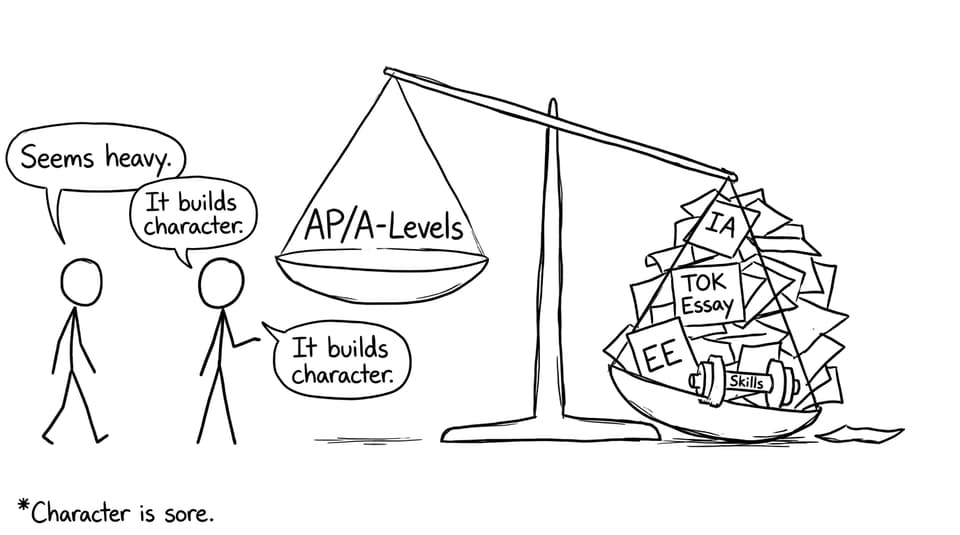
Compared with AP (pick individual subjects) or A-Levels (fewer subjects, deeper focus), IB is broad by design.
That breadth is a feature if you like learning across disciplines. It’s a cost if you already know you want to specialize heavily and you prefer fewer parallel commitments.
Real student feedback patterns (what people actually say)
When you collect enough honest stories about IB, they start repeating.
What students are glad about
-
“The EE made university research papers feel normal.”
-
“I learned how to write under pressure.”
-
“HL subjects gave me real confidence.”
-
“I didn’t know I could work like that until I had to.”
What students wish they’d done differently
-
Start practice earlier (not just content review)
-
Build a weekly schedule that assumes deadlines will collide
-
Ask for feedback sooner, especially on writing-heavy subjects
This is where IB becomes less about “talent” and more about loops. RevisionDojo is designed around that loop: Questionbank practice, AI Chat support when you’re stuck, Grading tools to understand mark allocation, and then realistic full-paper rehearsal.
For exam rehearsal, RevisionDojo offers IB Predicted Papers and a deeper explanation of how to use them responsibly here: IB Predicted vs Specimen Papers: What They Mean. When you’re ready to simulate full conditions, pair them with Mock Exams and structured review. A practical guide: IB Test Templates: Pre-Made Exams for Quick Practice and Collaborative IB Mock Exams: Study with Friends Online.
A practical “make IB worth it” exam prep plan
If you’re already in IB, the decision is partly made. The better question becomes: How do I make this worth it by exam day?
The 4-step loop (repeat all year)
-
Understand: Use concise syllabus-based notes (RevisionDojo Study Notes).
-
Recall: Lock key definitions and processes with spaced repetition (RevisionDojo Flashcards feature).
-
Apply: Do exam-style questions under light time pressure (RevisionDojo Questionbank).
-
Simulate: Run full timed papers with review and error tracking (RevisionDojo IB Predicted Papers).
When you get stuck, use AI Chat to ask the “embarrassing” question quickly, then return to practice. When writing is the issue, use Grading tools to see what the mark scheme rewards. If you’re overwhelmed by coursework uncertainty, the Coursework Library reduces the background noise. And if you need a human diagnosis of your patterns, Tutors help you stop repeating the same mistakes.
Conclusion: so, is IB worth it?
For many students, IB is worth it in the same way a difficult hike is worth it: not because every step is enjoyable, but because you become the kind of person who can finish it.
The honest verdict is this: IB is worth it when you pair the program with a system. Without a system, it can feel like constant pressure. With a system, it becomes a sequence of small wins that add up.
If you want that system in one place, RevisionDojo is built for the full IB journey: Questionbank, Study Notes, Flashcards, AI Chat, Grading tools, Predicted Papers, Mock Exams, Coursework Library, and Tutors. Start with one subject, one week, one loop--and make IB worth it on purpose.
