




If you have ever stared at your calendar and thought, “This is not a schedule, it’s a weather system,” you are already living inside the IB.
The IB can feel like a constant negotiation with time: six subjects, deadlines that multiply, and big core pieces that refuse to stay in their lane. In the middle of that pressure, the question becomes painfully practical: is the IB worth it when you are tired, behind, and still expected to produce university-level work?
For many students, the answer shows up later, almost quietly. Not as a single reward, but as compound interest: better study habits, clearer thinking, stronger writing, calmer exam nerves, and options that open across countries. Here are 15 powerful reasons the IB pays off long-term, plus a simple way to make the next few weeks feel more controllable.
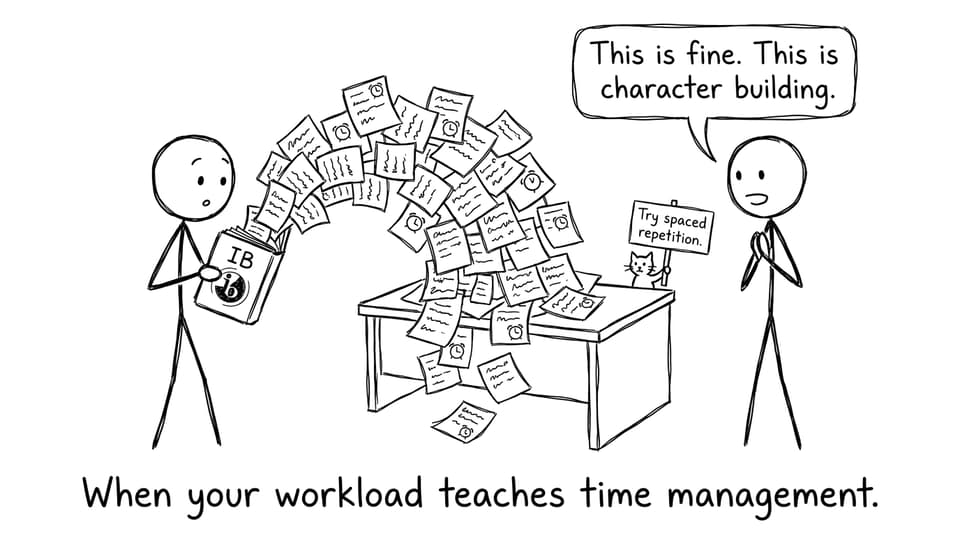
Quick checklist: how to make the IB “worth it” in exam season
Before the reasons, a short reality check. The IB becomes “worth it” faster when you study in a way that converts effort into marks.
-
Use study notes to learn a topic once, clearly
-
Lock recall with flashcards (spaced repetition, daily)
-
Convert knowledge into exam performance with a questionbank
-
Practice timing with mock exams and predicted papers
-
Get unstuck quickly using AI Chat and grading tools
A clean starting point is RevisionDojo’s guide: How to Study for IB Exams: Step-by-Step Guide.
15 powerful reasons the IB pays off long-term
It trains you to think, not just remember
The IB rewards explanation, analysis, evaluation. That is a different muscle than memorising. Once you get used to building arguments and showing reasoning, many university tasks stop feeling “mysterious” and start feeling like a familiar format.
It makes writing feel less scary
Between essays, reflections, and structured responses, the IB forces you to write even when you do not feel ready. Later, when university assignments pile up, you are not learning writing from zero. You are refining.
It gives you a global academic “passport”
The IB is recognised across a huge range of countries and admissions systems. If your life changes, family relocation, new goals, new universities, the IB tends to travel well.
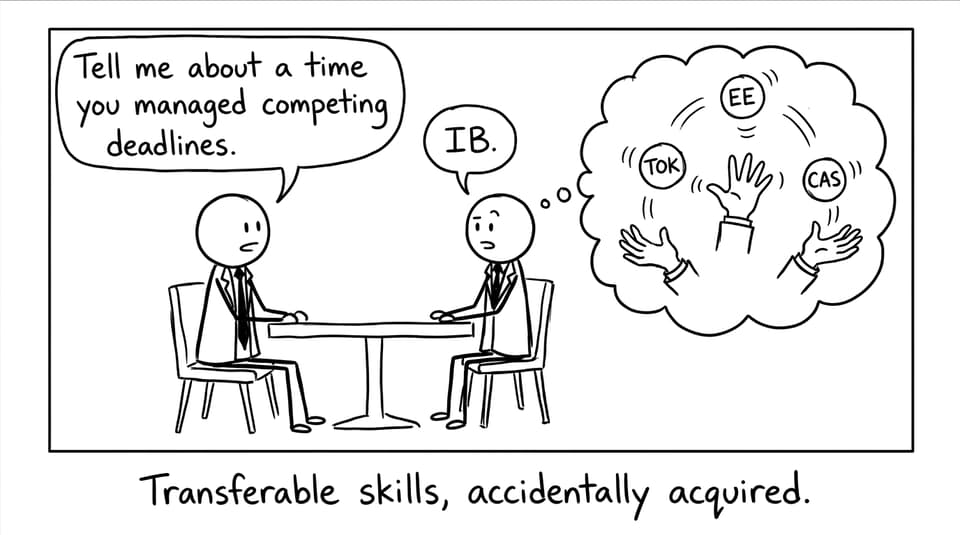
It teaches deadline management the hard way
Nobody chooses the lesson “how to plan when everything is due at once.” The IB teaches it anyway. Students who survive the IB often leave with a reliable internal system: break tasks down, start earlier than feels necessary, and keep moving.
It builds real research skills (and confidence)
The Extended Essay is tough, but it gives you a rare high school experience: choosing a question, hunting evidence, and defending your thinking. Even if it is messy, it teaches academic independence.
It develops your ability to learn under pressure
IB exams reward calm retrieval. That means your study approach matters. When you practice like the exam, pressure becomes less personal and more procedural.
You can train this with the RevisionDojo Questionbank, which turns practice into a feedback loop rather than a guessing game.
It can translate into university credit or advanced standing
Depending on the country and institution, strong IB results may earn credit or allow you to skip introductory courses. That can save time, tuition, or both.
It signals academic rigor to universities
Admissions teams know the IB is demanding. The combination of breadth (six subjects) and depth (HL content plus core) shows you can handle workload and complexity.
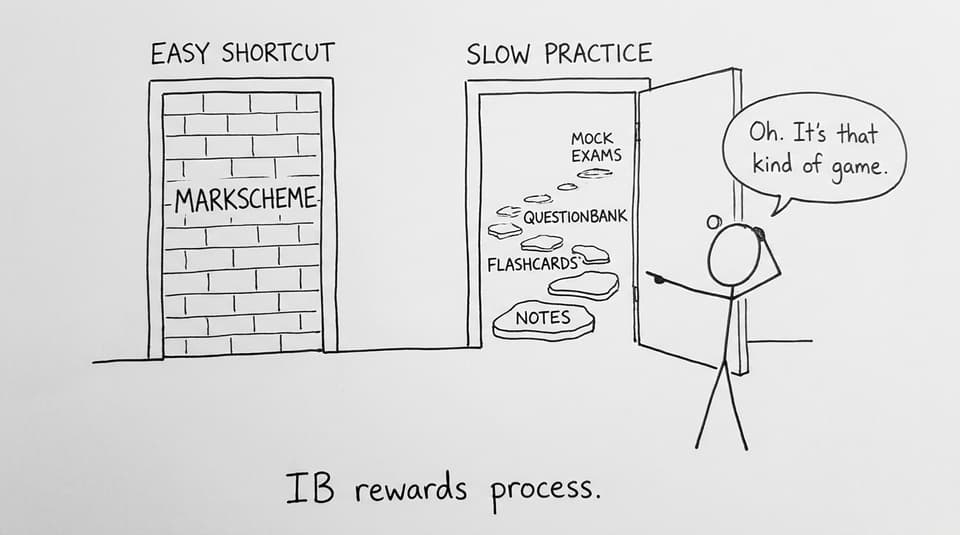
It improves your “markscheme literacy”
The IB is not only about knowing content; it is about knowing what earns marks. Students who practice with markscheme-aligned feedback tend to improve faster.
RevisionDojo’s workflow is designed around that idea: do questions, get feedback, and fix patterns. Pair this with The Ultimate Guide to Revision for IB Students when you need a full plan.
It strengthens critical thinking through TOK
Theory of Knowledge can feel abstract until you notice what it does: it trains you to ask “How do we know?” and “What counts as evidence here?” Those are adult questions that help in essays, presentations, and interviews.
It builds a portfolio of stories (CAS)
CAS is not just an extra. Done well, it becomes proof you can commit, lead, reflect, and contribute. Later, scholarship forms and job interviews love specific stories like this.
It forces balanced breadth
The IB prevents you from hiding in your favourite subject only. That can be frustrating now, but useful later: many degrees and careers demand communication, numeracy, and perspective at the same time.
It makes you more employable than you realise
Employers do not hire your grade boundaries. They hire skills: prioritisation, communication, problem-solving, resilience. The IB quietly produces those traits.
It gives you a structured way to improve
The IB is hard, but it is not random. You can diagnose weaknesses (topic gaps, command terms, timing) and fix them deliberately.
If you want practical tactics, keep these open:
It makes you comfortable being uncomfortable
This might be the biggest long-term payoff. The IB repeatedly puts you in situations where you are not fully ready. You learn to start anyway. That becomes a life advantage.
It becomes “worth it” when you have the right support system
The IB is not designed to be done alone. The students who get the most from the IB usually have tools, feedback, and people.
RevisionDojo supports that whole loop with Study Notes, Flashcards, AI Chat, Grading tools, Predicted Papers, Mock Exams, a Coursework Library, and Tutors. If you are building your exam plan right now, start by browsing IB Flashcards with Spaced Repetition (SRS) and then add timed practice with IB Predicted Papers.
A realistic way to “cash in” the IB benefits before exams
The biggest mistake in IB exam season is treating revision as one giant project. Make it smaller.
-
Choose one paper for one subject.
-
Study one subtopic with notes.
-
Do 15-30 targeted questions.
-
Log mistakes.
-
Reattempt within 48 hours.
That loop is why a good IB platform matters. RevisionDojo connects the pieces so you are not constantly switching tabs and losing momentum.
Conclusion: the IB is hard, but it’s not pointless
The IB feels expensive in the currency of time and energy. But it often pays back in a different currency: options, confidence, and the ability to handle complexity without panicking.
If you want the IB to be worth it now, butnot someday, somake your next week simple: notes, flashcards, questionbank practice, timed papers, fast feedback. Build that loop inside RevisionDojo, lean on AI Chat and grading tools when you get stuck, and let your progress compound one session at a time.