




If you’re staring at an application form that says Pre-IB, it can feel oddly permanent. Like you’re choosing the kind of student you’ll be for the next two years. And in a way, you are.
The truth is that the IB isn’t just “hard classes.” It’s a particular rhythm: deadlines that overlap, feedback that matters, and exams that reward precision more than effort. A Pre-IB track can help you learn that rhythm early. Or, depending on your school and your situation, it can be an extra lap you didn’t need.
This guide breaks down what a Pre-IB programme actually is, what it changes (and what it doesn’t), and how to decide if it’s worth it before you apply.
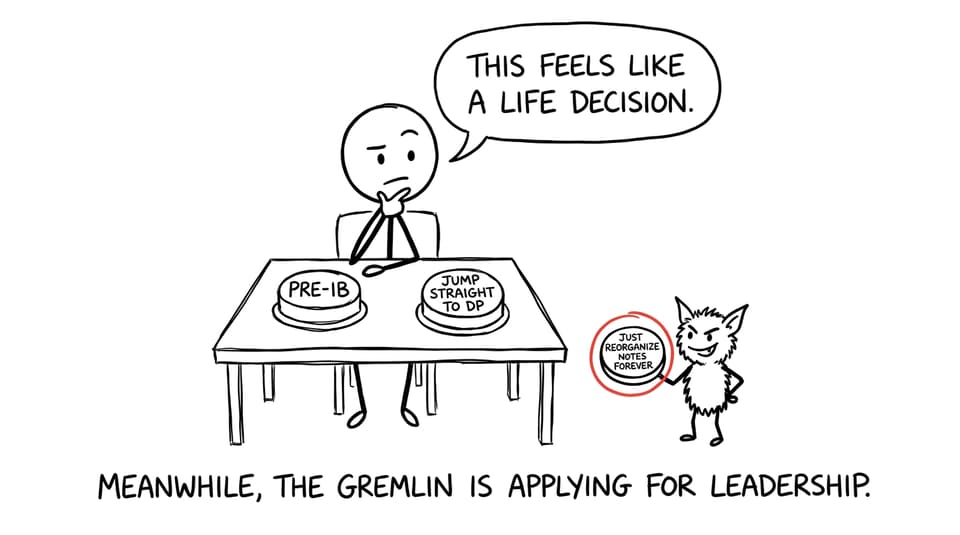
What a Pre-IB programme is (and isn’t)
A Pre-IB programme is a school-designed preparatory pathway, usually taken in Grade 9 or 10, meant to get you ready for the IB Diploma Programme (DP) in Grades 11 and 12. It’s important to know what that implies:
-
It’s not an official IB qualification. Your school runs it, not the IBO.
-
It’s usually more rigorous than a standard track, but still a step below full DP expectations.
-
It often mirrors IB-style thinking: inquiry, argument writing, lab habits, source evaluation, and time management.
If you want a quick overview of the full IB ecosystem and how the Diploma works, this primer helps: International Baccalaureate (IB).
Quick checklist: how to tell if Pre-IB is worth it for you
Before we go deep, use this simple self-check. Pre-IB is usually worth it if most of these are true:
-
You plan to do the full IB Diploma Programme and want a smoother start.
-
You benefit from structured habits (deadlines, feedback cycles, practice routines).
-
Your school’s Pre-IB has clear support systems (teacher help, study guidance, transparent criteria).
-
You want early training in writing, lab reports, languages, and independent learning.
Pre-IB might not be worth it if most of these are true:
-
You’re unsure about committing to the full IB.
-
Your school’s Pre-IB is mostly “more homework” without better teaching or guidance.
-
You already thrive academically and can build the skills independently.
-
You need flexibility for electives, sports, or other priorities and Pre-IB limits that.
The real benefit: learning the IB style before the pressure hits
The biggest shock in the IB isn’t the content. It’s the constant switching between modes: memorize, analyze, evaluate, write, and perform under time pressure.
Pre-IB helps because it quietly teaches you the hidden curriculum:
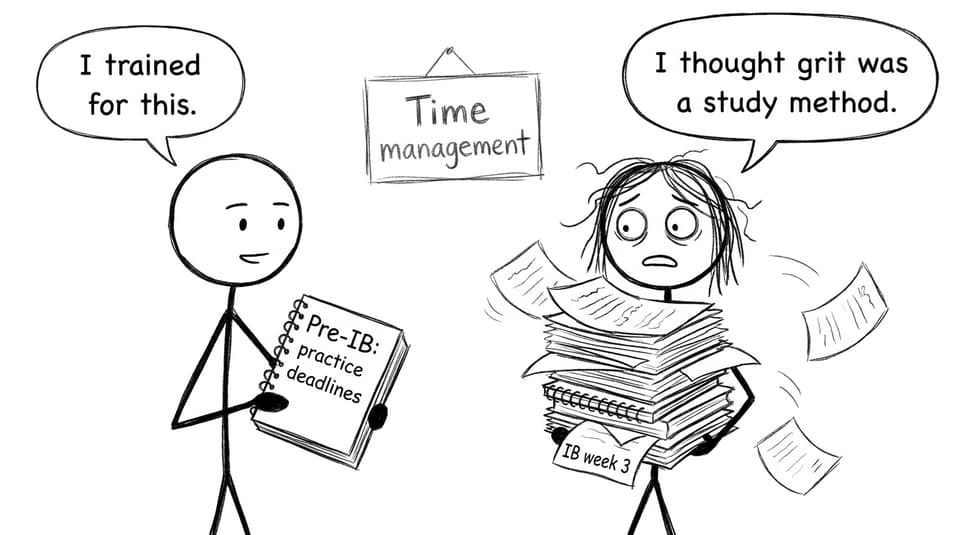
You practice deadlines like they’re part of the subject
In DP, deadlines aren’t just admin. They shape your week. Pre-IB often introduces “stacked” due dates so you learn to plan instead of sprint.
If you want a calm, exam-focused system once you’re in full IB mode, the workflow in RevisionDojo App: The Smarter Way to Prep for IB Exams is a good model for building consistency early.
You build writing stamina (without realizing it)
Many students enter IB thinking writing is about sounding smart. Exams reward something simpler: clear claims, direct evidence, and answers that match the command term.
A good Pre-IB track nudges you into:
-
structured paragraphs
-
argument-based essays
-
better citation habits
-
reading with purpose, not just highlighting
You learn how “practice” becomes marks
The most efficient IB students don’t just study more. They run tight loops: learn a concept, test it, get feedback, fix one mistake pattern, repeat.
That’s also how RevisionDojo is designed: Study Notes for clarity, Flashcards for daily recall, and a Questionbank to turn understanding into exam performance. Start here if you want the platform overview: RevisionDojo for IB.
What you’ll usually study in Pre-IB
Every school’s version differs, but most Pre-IB tracks keep your foundation broad so the DP choices don’t feel like a trap.
Core subjects and academic foundations
You’ll typically take a version of:
-
Mathematics
-
English / Language & Literature
-
Sciences
-
Humanities
-
a second language
Pre-IB often assumes your IB teachers won’t reteach fundamentals later. This article captures that feeling well: What IB Textbooks Expect You to Know Before Starting the IB Program.
Skills that matter more than people admit
The practical skills are where Pre-IB earns its reputation:
-
time management under real deadlines
-
basic research and source evaluation
-
participating in discussion without freezing
-
learning to revise based on feedback
If you want to strengthen your notes early (without rewriting them forever), these are useful reads: Digital IB Study Notes: Access Anywhere, Anytime and Study Notes.
How hard is it to get into Pre-IB?
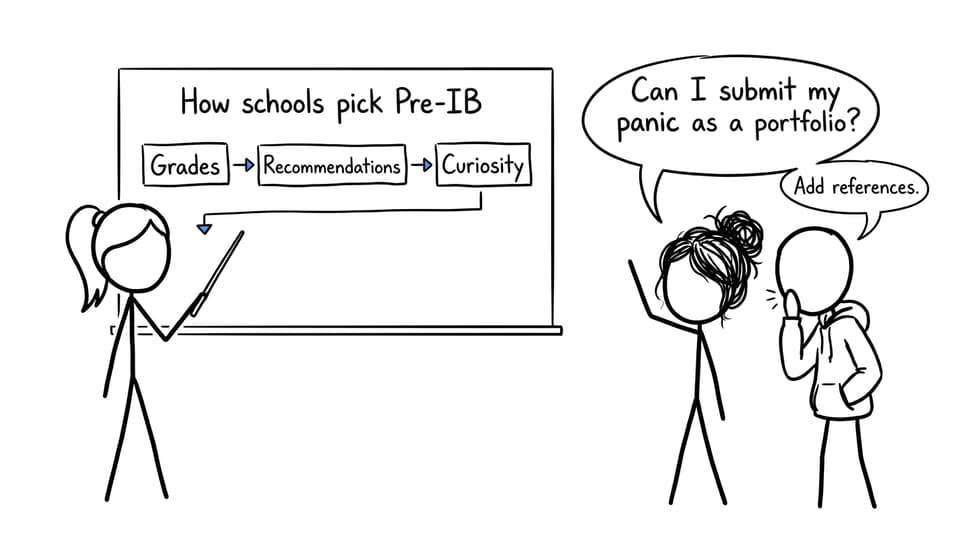
This depends entirely on your school, but most admissions processes are built around one question: will this student handle the IB pace without burning out?
Common requirements include:
-
solid grades in core subjects (often around a B average)
-
consistent attendance and behavior
-
teacher recommendations
-
sometimes a short statement or interview
The best way to stand out is to look like someone who learns from feedback. Not perfect. Adaptable.
Pros and cons of Pre-IB (the honest version)
Pros for IB students
-
A softer landing into DP expectations
-
Earlier skill-building in writing, labs, and languages
-
Better self-awareness: you find out whether the IB style fits you
Cons (and why they matter)
-
Workload can feel heavy without the “official” payoff
-
Some programmes reduce elective freedom
-
If it’s poorly designed, it becomes extra stress instead of smart preparation
One way to reduce the “extra stress” problem is to keep your study system simple and exam-aligned. For targeted practice, RevisionDojo’s Questionbank is built to make practice sessions feel like training, not guessing.
How to prepare for the IB whether you do Pre-IB or not
If you do Pre-IB, aim to build habits that will survive DP. If you skip it, you can still build the same habits on purpose.
Here’s a practical routine:
-
Learn one topic using focused notes (not a whole chapter).
-
Recall it with short Flashcards sessions.
-
Apply it with exam-style questions, then review mistakes.
-
Simulate pressure with timed practice occasionally.
For a structured approach that many students use during exam season, read: Countdown to IB Exams: Use IB Resources That Work.
When you’re closer to exams, you can also rehearse full-paper performance using IB Test Templates: Pre-Made Exams for Quick Practice and RevisionDojo’s IB Predicted Papers (a realistic way to train timing and coverage).
Conclusion: so, is a Pre-IB diploma worth it?
A Pre-IB programme is worth it when it buys you something precious: a calmer start to the IB, stronger habits, and fewer preventable mistakes once DP begins. It’s not worth it when it’s simply “more work” without clearer teaching, better feedback, or real skill-building.
If you’re applying, ask one practical question: Will this programme help me practice the IB skills that earn marks? If the answer is yes, it’s a smart step.
When you’re ready to turn that preparation into results, RevisionDojo gives you the full IB toolkit in one place: Questionbank, Study Notes, Flashcards, AI Chat, Grading tools, Predicted Papers, Mock Exams, a Coursework Library, and Tutors. Start with RevisionDojo and build a study loop you’ll still trust on exam week.