

If you’ve ever watched older students walk out of an IB exam looking like they just ran a marathon in formalwear, you’ve probably had the same thought: Maybe I should start earlier. That’s the promise of a pre-IB pathway: a head start before the real IB Diploma Programme begins.
But the question isn’t just whether pre-IB is “good.” It’s whether it’s worth it for you, and how hard it is to get into the kind of program that schools sometimes label as pre-IB. If you’re an IB student preparing for exams (or preparing to become one), this guide lays out the reality: what pre-IB usually is, who benefits most, how admissions typically work, and what to do if you don’t get in.
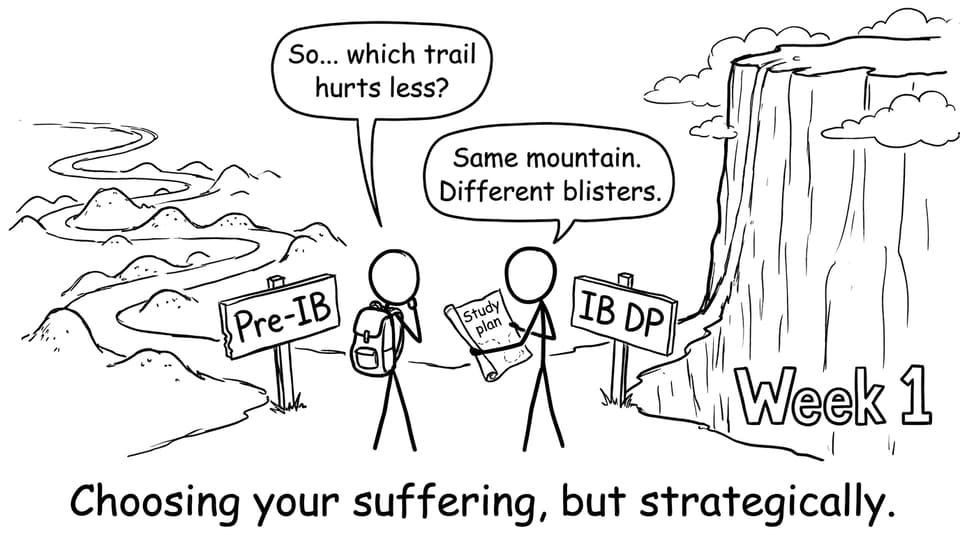
What “pre-IB” actually means (and what it doesn’t)
Pre-IB is usually a one- or two-year school program designed to bridge the gap between middle school and the IB Diploma Programme (DP), which typically starts in Grade 11. It often borrows the vibe of IB: harder reading, more writing, more discussion, and more “show your thinking.”
Here’s the important detail: pre-IB is not the same thing as an official IB program. Some schools run the IB Middle Years Programme (MYP), which is part of IB. Many other schools run their own pre-IB track that isn’t standardized globally. Either way, students often use the phrase “pre-IB” to mean: I’m in the advanced lane leading to IB.
If you want a clean overview of IB as a whole (and where DP sits), start here: International Baccalaureate (IB).
Quick checklist: is pre-IB worth it for you?
Before you chase the label, chase the outcome. Use this checklist:
-
You want a smoother transition into IB workload and assessment style.
-
You’re ready for more writing, more feedback, and fewer “easy wins.”
-
You want to build habits now (especially consistency) so IB exams feel less brutal later.
-
You can handle pressure without letting it eat your sleep.
-
You’re willing to practice skills, not just “study content.”
If you nodded at most of these, pre-IB can be worth it. If you felt your stomach drop at the sleep line, you might still thrive in IB, but you’ll want a calmer plan.
Why pre-IB can make the IB Diploma feel more survivable
The biggest benefit of pre-IB isn’t “being smart.” It’s reducing surprise. The IB is demanding partly because it asks you to do new things while the clock is already ticking.
Pre-IB trains the skills IB actually rewards
IB success is built on skills that don’t show up in a single cram session:
-
Writing under constraints (structure, command terms, clarity)
-
Research habits (finding evidence, evaluating sources, citing)
-
Time management (not heroic, just consistent)
-
Self-correction (learning from markscheme logic)
Pre-IB often exposes you to those skills earlier. When DP starts, you’re not learning how to write and learning the content at the same time.
Pre-IB reduces the “first term shock”
A lot of IB stress is front-loaded. Students underestimate how quickly deadlines stack: tests, projects, early coursework drafts, and new expectations.
A pre-IB track can make that first term feel less like a cliff and more like a steep hill you’ve trained for.
If you want a practical system for staying steady once IB pressure ramps up, this is useful: RevisionDojo App: The Smarter Way to Prep for IB Exams.
Is a pre-IB diploma worth it long-term?
For most students, the honest answer is: it depends on the school and on you.
Who benefits most
Pre-IB tends to pay off most for students who:
-
Struggle with sudden workload jumps
-
Need time to develop writing and analytical habits
-
Want to aim high in the IB but prefer structured preparation
-
Want practice with rubrics and feedback, not just content delivery
When it’s not worth the stress
Pre-IB may be less worth it if:
-
It’s mostly extra homework without better teaching or feedback
-
It crowds out sleep and mental health early
-
It gives a false sense of security (“I’m pre-IB so I’ll be fine”) without building real habits
A label won’t carry you through IB exams. A system will.
How hard is it to get into pre-IB?
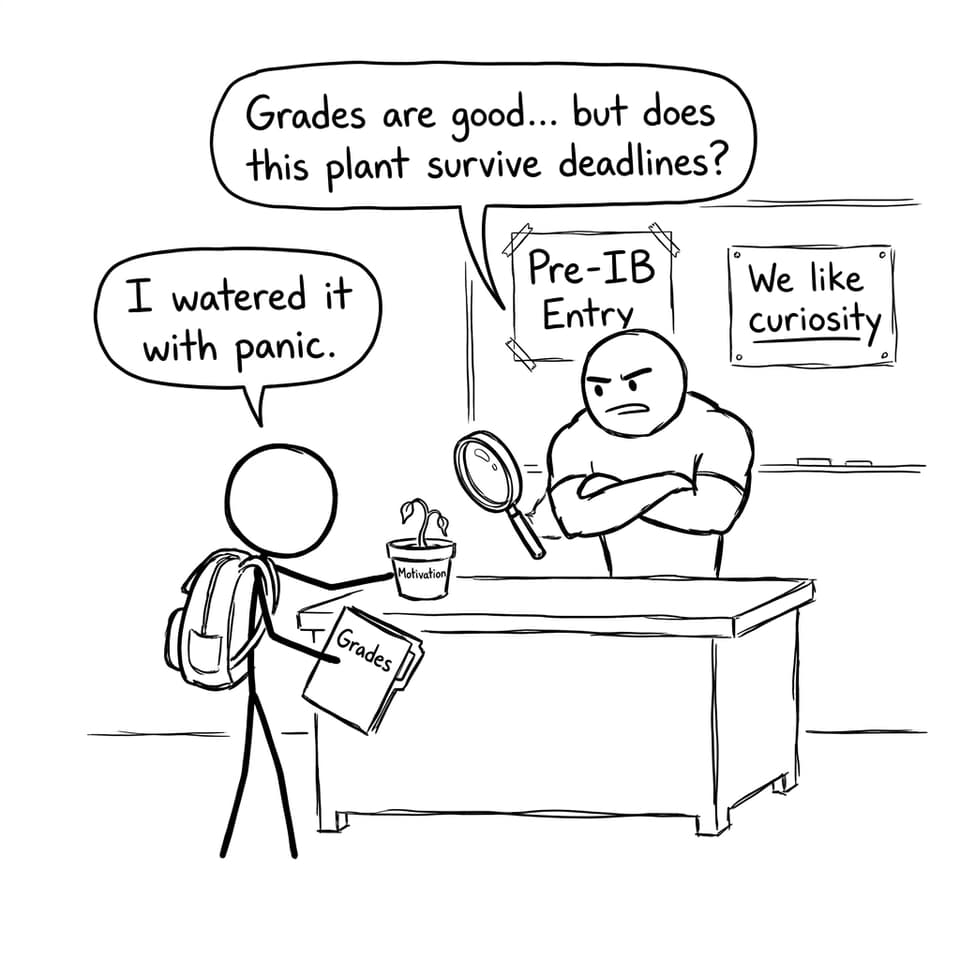
Admissions difficulty varies wildly because pre-IB isn’t globally standardized. But most schools select using some mix of academics and “readiness.”
Common requirements
-
Strong grades, often A/B range, especially in Math and English
-
Teacher recommendations
-
Evidence of good work habits (meeting deadlines, participating)
-
Sometimes an entrance test, writing task, or interview
What schools are really filtering for
Here’s the quiet truth: schools don’t just want students who can do hard work. They want students who can do hard work repeatedly.
That’s why a student with slightly lower grades but excellent consistency sometimes beats a student with top grades and chaotic habits.
How to increase your chances (without turning into a robot)
If you’re applying to a pre-IB track, focus on signals that matter.
Build a simple academic story
-
Keep core-subject grades steady.
-
Show improvement over time (schools love momentum).
-
Practice writing explanations, not just answers.
Add “proof of curiosity”
Curiosity sounds abstract, but you can make it concrete:
-
Join a club that matches your interests
-
Take a small leadership role
-
Volunteer consistently (one hour weekly beats a random weekend)
Practice the kind of work IB expects
You don’t need to wait for DP to study like an IB student preparing for exams.
On RevisionDojo, you can start building your system early:
-
Use the Questionbank to practice exam-style thinking.
-
Use Digital IB Study Notes: Access Anywhere, Anytime to learn content in a syllabus-aligned way.
-
Build recall using RevisionDojo for IB resources like Flashcards and targeted practice.
If you don’t do pre-IB: you can still thrive in IB
Many students enter IB DP directly and do extremely well. The difference is that they intentionally build the missing “bridge” themselves.
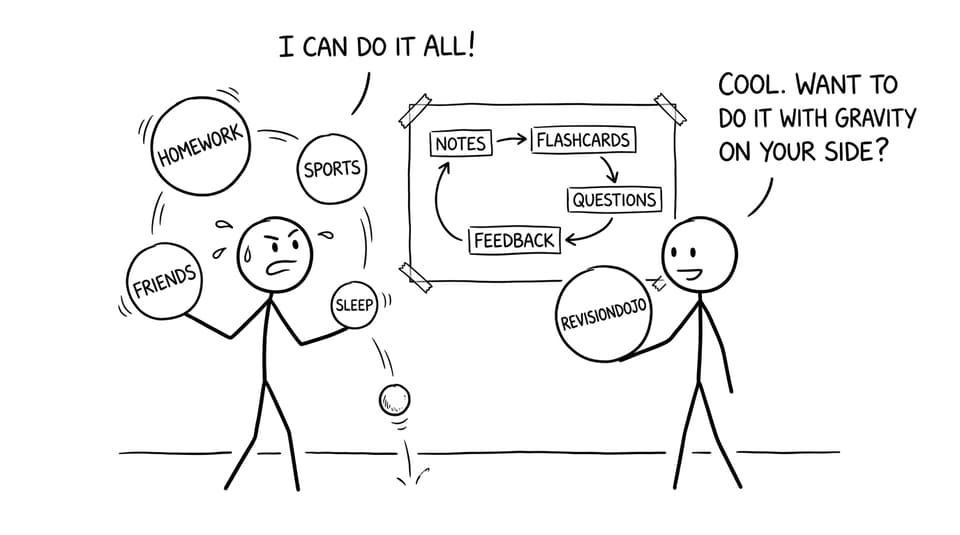
A clean approach looks like this:
-
Learn: Study Notes to understand the topic fast
-
Remember: Flashcards for daily recall
-
Apply: Questionbank sets by topic
-
Simulate: timed practice with Mock Exams and Predicted Papers
-
Improve: feedback loops using AI Chat and grading tools
For realistic full-paper practice later on, see: IB Predicted Papers by IB Examiners (Free) and the explanation guide IB Predicted vs Specimen Papers: What They Mean.
Conclusion: pre-IB is a tool, not a trophy
A pre-IB diploma can be worth it when it reduces surprise and builds skill. Getting in can be competitive, but it’s rarely about being perfect; it’s about proving you can handle IB expectations consistently.
If you’re serious about IB and want your effort to translate into marks, make your preparation boring in the best way: clear notes, daily recall, targeted practice, and frequent feedback. That’s the quiet advantage RevisionDojo gives you through Study Notes, Flashcards, AI Chat, Grading tools, Predicted Papers, Mock Exams, the Coursework Library, and Tutors.
When you’re ready to turn “I should start” into “I have a plan,” begin here: RevisionDojo | IB & MYP Resources.