


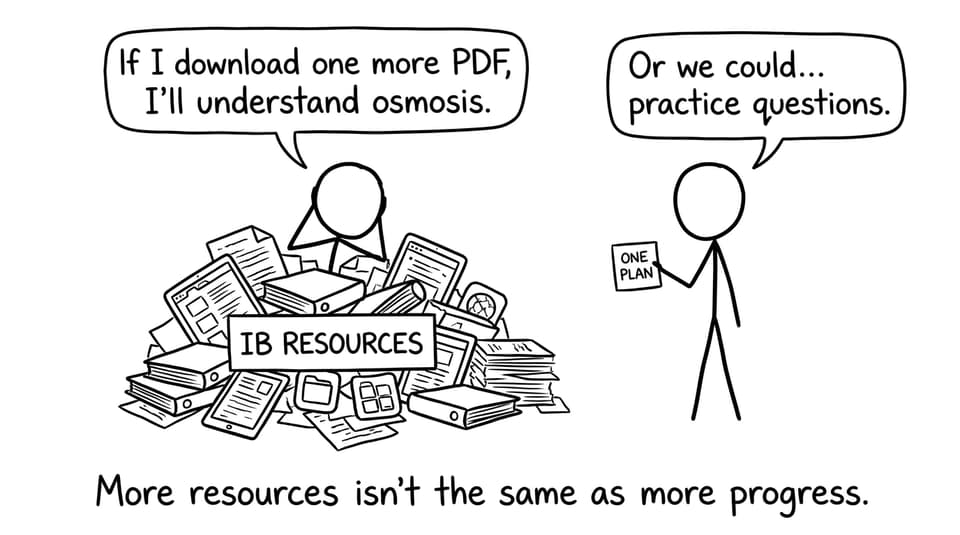
Somewhere in every IB season, there’s a moment that feels oddly familiar: you’re surrounded by tabs, PDFs, highlight colors, and good intentions… and you still can’t answer the question the way the markscheme wants.
That’s the hidden trap of the IB. It’s not just content. It’s performance. And the students who improve fastest aren’t the ones who collect the most IB resources. They’re the ones who turn a small set of IB resources into a repeatable system.
The IB “study smarter” checklist (save this)
Use this quick loop to make your IB resources actually work:
-
Syllabus first: know what can be tested and how it’s assessed.
-
Notes for clarity: fix confusion quickly, then move on.
-
Question practice for marks: train answer style, not just knowledge.
-
Flashcards for memory: spaced repetition beats rereading.
-
Feedback loop: track mistakes, rewrite rules, reattempt.
-
Timed practice: build calm under pressure.
If you want one place to run that loop, start with RevisionDojo for IB.
The IB resources that matter (and how to use them)
Most IB students already have “resources.” The difference is whether you use them passively (collecting) or actively (testing).
Syllabus + criteria: your IB roadmap
The syllabus tells you what the IB can ask. The assessment criteria tells you what the IB rewards. When students feel overwhelmed, it’s usually because they’re revising “everything” instead of revising what the syllabus actually permits.
Pair that with concise explanations so you can move from confusion to practice quickly. That’s exactly what Study Notes are for: fast clarity, syllabus alignment, and less rewriting.
Data booklets and reference sheets: learn them early
In IB sciences and IB math, the booklet isn’t a rescue helicopter. It’s a tool you’re meant to be fluent with before exam day. Practice pulling formulas, constants, and definitions quickly so your brain stays available for reasoning.
Then test it immediately with exam-style questions, because recognition is not recall.
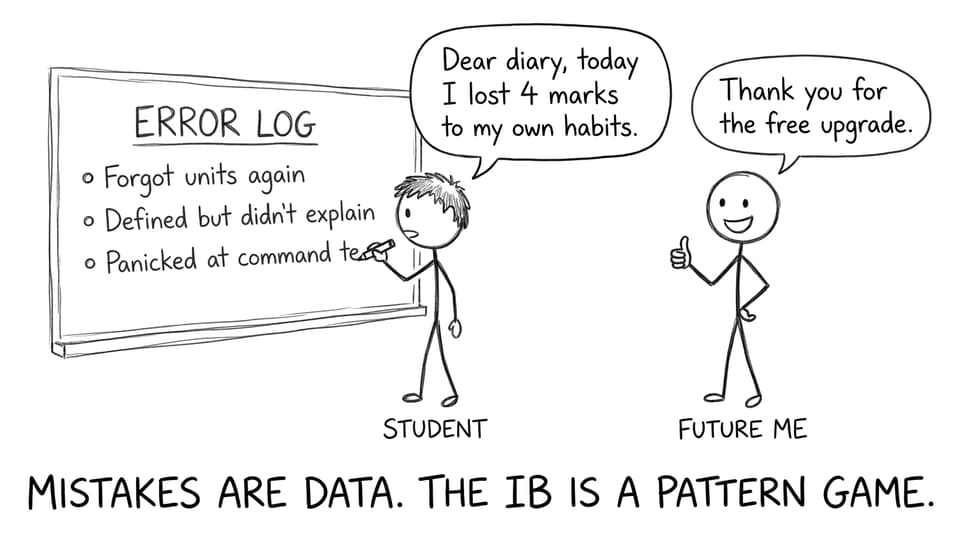
Question practice: the IB is a pattern game
The most useful IB resources are the ones that force you to perform. A good question bank turns revision into reps: same concept, different angles, clearer patterns.
Use RevisionDojo’s Questionbank to filter by topic and level, then run short sets until the question type feels familiar. If you’re curious what a strong question bank setup looks like, see Comprehensive IB Question Bank: Thousands of Practice Questions.
Flashcards: make your memory compound
Flashcards are the quiet superpower of IB students who look “naturally consistent.” Ten minutes daily beats two hours once a week.
Use RevisionDojo Flashcards (or the dedicated hub: IB Flashcards with Spaced Repetition) to keep definitions, processes, case studies, and formulas alive. For a strategy-based guide, read IB Flashcard System: Active Recall for Better Memory.
How to avoid “resource overload” in IB
Here’s a rule that helps: if a resource doesn’t lead to a test or a written output, it’s probably noise.
Try this structure:
-
Understand (10-15 min): patch one weak point using notes.
-
Apply (25-40 min): do a short Questionbank set.
-
Review (10 min): turn misses into an error rule + flashcard.
This approach mirrors what high-performing students do when they say they “study smarter.” It’s not magical. It’s just disciplined feedback.
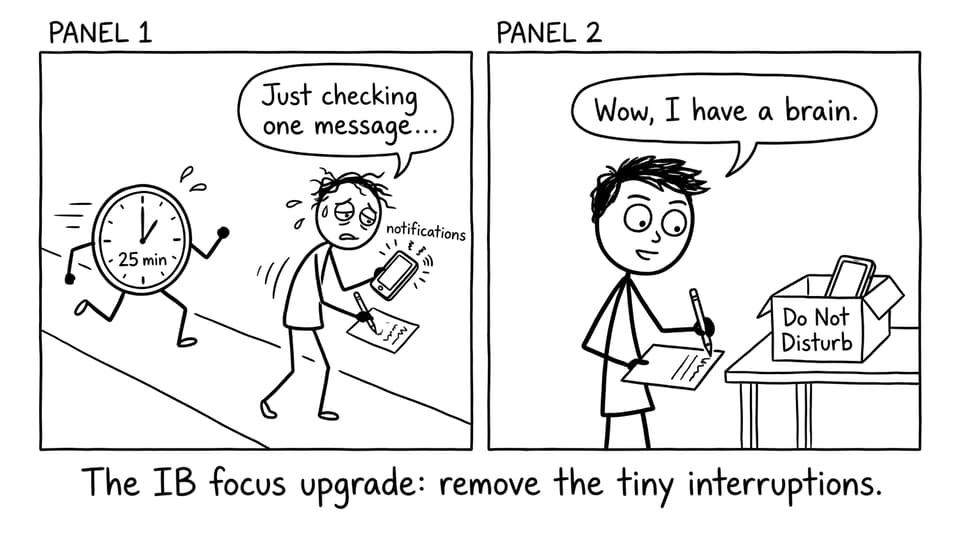
If distraction is your problem, keep a focus plan nearby. How Do You Study Efficiently for IB Without Getting Distracted? is a solid reset.
Make RevisionDojo your IB resource hub (not another tab)
RevisionDojo works best when it’s not “one more website,” but your workflow:
-
Learn with Study Notes
-
Drill with the Questionbank
-
Retain with Flashcards
-
Get unstuck fast using AI Chat
-
Improve written work with Grading tools
-
Build realism with Predicted Papers and Mock Exams
-
Reduce coursework stress using the Coursework Library
-
Get targeted help from Tutors
If your current routine feels like effort without traction, read You’re Not Lazy: Your IB Study Method Is Broken.
Conclusion: the smartest IB resource is a system
The IB can feel heavy because it asks for breadth, depth, and calm execution at the same time. The way out isn’t more IB resources. It’s fewer resources used with more intention.
Build the loop: notes for clarity, flashcards for memory, questions for marks, timed practice for composure, feedback for growth. Then run it consistently.
When you’re ready to put your IB resources into one place, use RevisionDojo to study smarter with the Questionbank, Study Notes, Flashcards, AI Chat, Grading tools, Predicted Papers, Mock Exams, Coursework Library, and Tutors.