
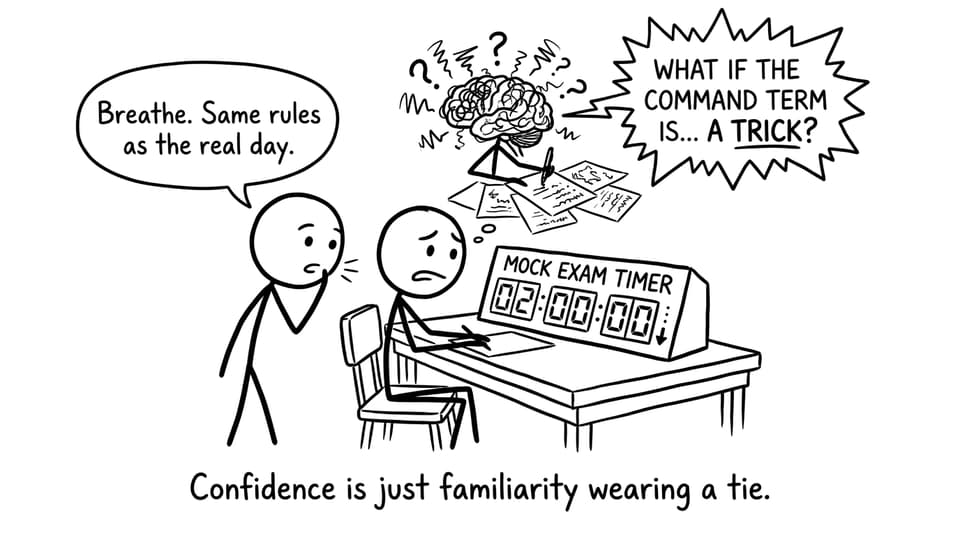
The first time you sit an IB Standard Level mock exam properly timed, something uncomfortable happens: it doesn’t feel like “revision” anymore. It feels like decision-making under pressure.
And that’s the point. Confidence in IB exams rarely comes from knowing more. It comes from knowing what the exam will ask you to do, how long it will take, and what you do when you get stuck.
The IB SL mock exam mindset (quick checklist)
Use this before every IB SL mock exam block. It keeps practice realistic and targeted.
-
Pick one IB subject and one paper skill (MCQ accuracy, data response, short answers, essays)
-
Set a timer and remove notes (no “quick checks” mid-question)
-
Finish the sitting even if it goes badly (stamina is a skill)
-
Mark and review the same day (while the thinking is fresh)
-
Build a short follow-up drill for the exact weakness you found
If you need a structured starting point across subjects, begin at RevisionDojo for IB.
Why IB Standard Level mock exams build real confidence
A good IB SL mock exam does three things at once.
First, it trains pacing. Most SL students don’t lose marks only from content gaps; they lose marks because the clock changes their choices. Second, it trains command-term discipline. “Explain” and “evaluate” don’t just want longer answers; they want different answers. Third, it normalises pressure. When pressure becomes familiar, it stops being the main event.
RevisionDojo leans into that loop by pairing mock-style practice with fast feedback and targeted next steps. If you want the bigger picture on why this matters, see Why IB Mock Exams Matter for Diploma Success.
Strategy: Use targeted IB mock exams (not random suffering)
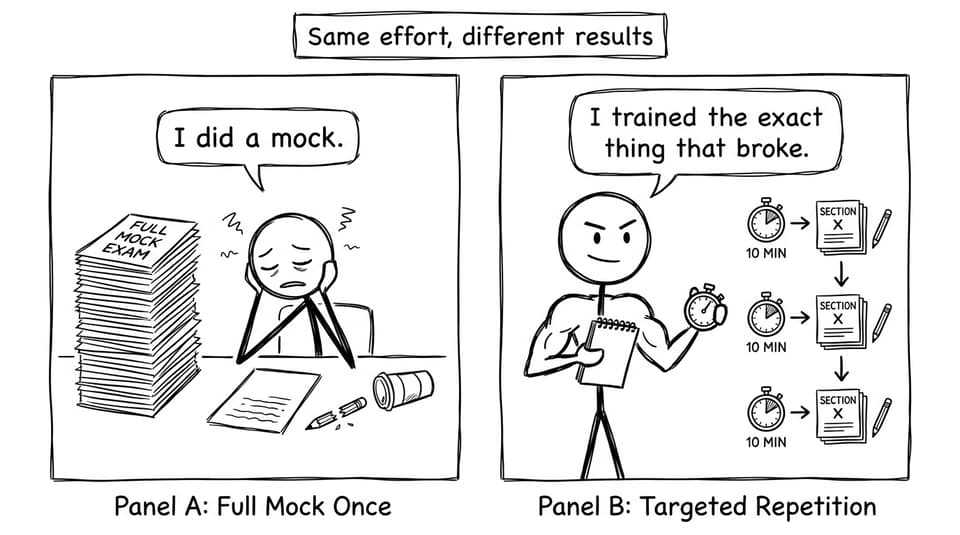
Doing one full IB mock exam can be useful. Doing the right mock exam repeatedly is what changes your score.
Here’s the targeted approach:
Start with a realistic mock format
Choose a paper structure that matches what you’ll face in your IB SL subject, then practice with the same constraints: time limit, question styles, and mark allocation logic. RevisionDojo breaks this down well in Best IB Mock Exam Platform: Why Students Pick RevisionDojo.
Build mini-mocks around weak topics
After a full mock, don’t just “revise the chapter.” Build a shorter sitting focused on the topics where you consistently drop marks. That’s where Custom IB Mock Exams: Build Practice Tests by Topic helps, and the Test Builder feature makes it practical.
Turn mistakes into a repeatable feedback loop
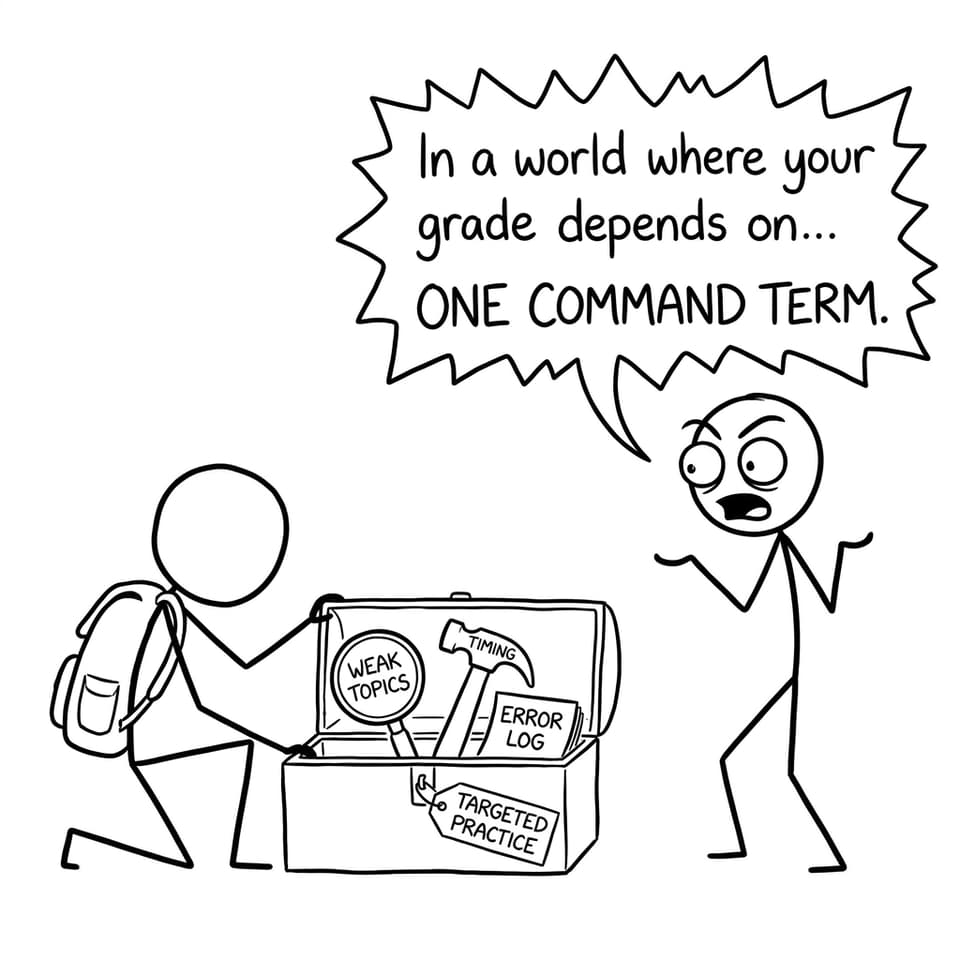
Your mock exam isn’t finished when you submit it. It’s finished when you can name the pattern:
-
“I rush definitions and lose easy marks.”
-
“I misread command terms.”
-
“I get stuck and keep digging.”
Then fix the pattern with the right tool: drill with the Questionbank, lock in memory with RevisionDojo Flashcards, and use Flashcards vs Practice Questions for IB Revision to choose what to do next.
A simple 2-week IB SL mock exam routine
This is intentionally boring. Boring is reliable in IB.
-
Week 1 (Baseline): 1 timed mini-mock per subject (25-40 minutes) + same-day review + 1 targeted drill
-
Week 2 (Pressure test): 1 longer mock per subject + rebuild weak sections using Test Builder + flashcards for recurring errors
If a mock goes poorly, don’t panic. Use the reset approach in Failed Mock Exams? You Can Still Pass IB.
Subject-specific pointers (SL)
-
IB Math SL: Timing is a topic. Train it deliberately. Use the pacing ideas in Effective Study Strategies for the IB Math SL Exam.
-
Humanities (e.g., History): Run mocks to practise writing under time and choosing evidence fast. Start with Preparing for IB History with Mock Exams and Practice Tests.
-
Any SL subject: If you want a fast way to start practising without planning from scratch, use IB Test Templates: Pre-Made Exams for Quick Practice.
FAQ
How many IB SL mock exams should I do per subject?
For IB SL, the right number depends on your review quality, not your toughness. If you do five mocks but never revisit the same weakness, you’re collecting stress, not progress. A useful baseline is one longer mock every 1-2 weeks, plus 2-3 mini-mocks focused on weak topics in between. Mini-mocks are where you fix pacing, command terms, and recurring mistakes without burning whole afternoons. When exams get closer, shift toward more timed work, but keep review time protected. Your confidence rises fastest when every IB mock exam creates a specific next drill.
What should I do immediately after an IB mock exam?
Start by marking while the logic is still in your head, even if it’s uncomfortable. Then write an “error log” that describes patterns, not feelings: misread the prompt, weak definition, lost time on one question, or unclear structure. Next, pick one pattern and build a short targeted set to fix it, using tools like RevisionDojo’s Questionbank and Test Builder. After that, convert the most common mistakes into flashcards so they stop returning a week later. Finally, ask yourself one calm question: “What would I do differently in the first 10 minutes next time?” That one change, repeated, is how IB mock exams turn into confidence.
How does RevisionDojo help IB students use mocks more effectively?
RevisionDojo is built to make the IB practice loop fast: attempt, feedback, targeted follow-up, repeat. You can run Mock Exams and build custom papers with Test Builder, then reinforce knowledge using Study Notes and Flashcards instead of scattered resources. The Questionbank helps you drill the exact topics your mocks reveal, and AI Chat helps when you’re stuck and need a second explanation quickly. If you want extra structure, tools like Predicted Papers, Grading tools, the Coursework Library, and Tutors turn practice into a complete system rather than a pile of documents. Most importantly, everything stays connected, so your next session is guided by evidence, not anxiety. That’s what makes IB preparation feel steadier week by week.
Build IB confidence the simple way: practise what actually breaks
The goal of an IB SL mock exam isn’t to prove you’re already ready. It’s to reveal what fails under time pressure, then give you a clean way to train that exact weakness.
If you want one place to run the whole loop (Mock Exams, targeted drills, feedback, and progress tracking), start with RevisionDojo and use its Questionbank, Study Notes, Flashcards, AI Chat, Grading tools, Predicted Papers, Coursework Library, and Tutors to make every IB practice session count.