

If your IB predicted grades came back lower than you expected, it can feel like someone quietly moved the finish line. One email, one number, and suddenly every plan becomes a question.
But predicted grades are not a verdict. In the IB, they’re closer to a weather forecast: evidence-based, sometimes cautious, and occasionally wrong. What matters next is how you respond--not emotionally, but strategically.
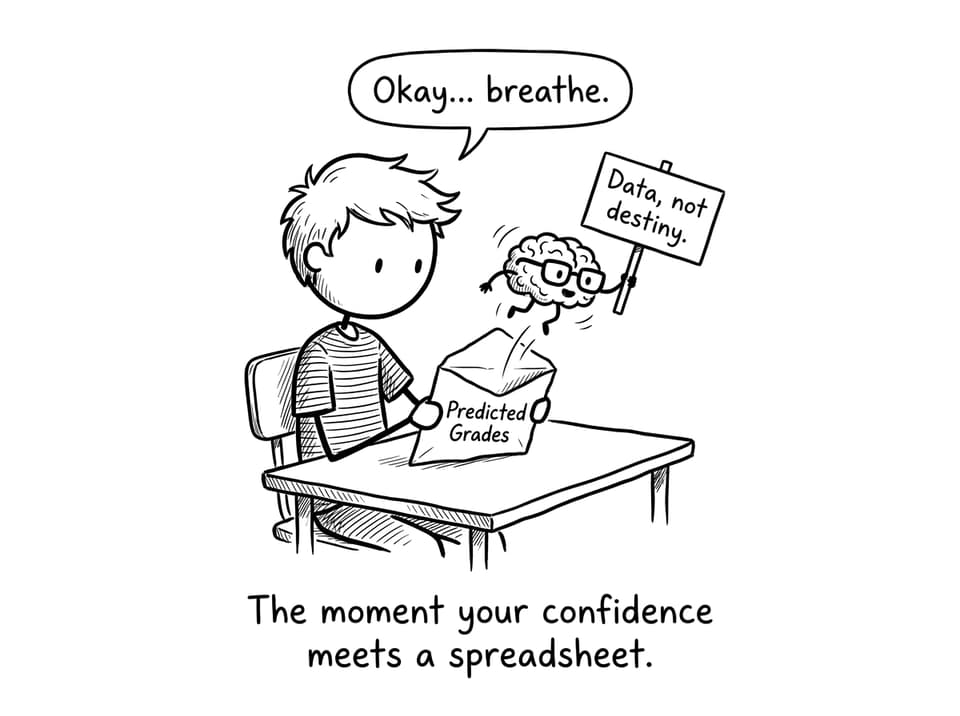
What lower IB predicted grades actually mean
Predicted grades are teacher estimates of the IB scores you’re likely to achieve based on the evidence they have right now: mock exams, timed tests, class performance, and often coursework progress (like your IA development). They’re used because universities usually need decisions before final IB results exist.
A lower prediction can mean a few different things:
-
Your most recent exam-like evidence was weaker than your day-to-day understanding.
-
Your performance is inconsistent (strong homework, weaker timed work).
-
Your coursework signals risk (unfinished IA, unclear criterion alignment).
-
Your school’s prediction policy is conservative.
If you want context on how schools form and submit predictions, read When and How Predicted Grades Work in IB.
Quick checklist: what to do in the next 48 hours
Before you rewrite your entire life plan, run this quick IB response checklist:
-
Write the gap: predicted vs your target (by subject, HL/SL).
-
Identify the cause: content gap, technique gap, timing gap, or consistency gap.
-
Ask what evidence was used (and what evidence could still change it).
-
Build a two-week “proof plan” using timed practice and feedback.
-
Keep your university list balanced while you improve.
For a fast reality check on where your marks place you right now, use the IB Grade Calculator.
How lower IB predicted grades affect university applications
How much this matters depends on where you’re applying.
In systems that use conditional offers (common in the UK and parts of Europe), predicted grades can shape whether you receive an offer and how ambitious that offer is. In more holistic systems (common in the US), predicted grades are usually one part of a broader picture that also includes essays, recommendations, extracurriculars, and course rigor.
Even in conditional systems, it’s rarely “game over.” Universities ultimately confirm places using final IB results. Predicted grades can influence the door opening--final grades decide whether you walk through it.
For a deeper breakdown, see How Much Do Predicted Grades Matter in IB?.
How to respond: turn disappointment into evidence
The strongest response to lower IB predicted grades is not a motivational speech. It’s an evidence loop.
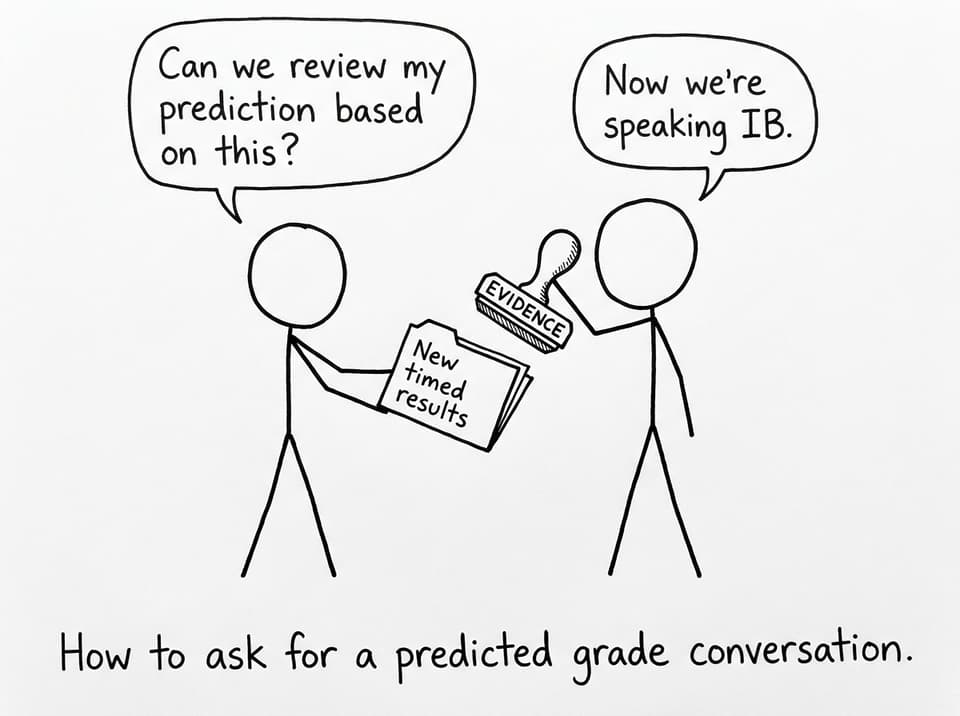
Ask for clarity (not a change)
Set up a short, respectful conversation with each teacher:
-
What specific evidence drove this prediction?
-
Which paper components were weakest (Paper 1 vs Paper 2, essay vs data response, etc.)?
-
What are the next assessments that could raise it (if your school allows updates)?
-
What would a “one-grade-higher” response look like in criteria terms?
Build a two-week IB improvement loop
This is where most students accidentally waste time: they revise more, but don’t change the type of practice. In the IB, grades move fastest when practice looks like the exam.
A simple loop many students can sustain:
-
Study Notes to patch understanding fast
-
Flashcards for daily recall (10 minutes counts)
-
Questionbank for targeted exam-style practice
-
AI Chat to debug specific mistakes quickly
-
Mock Exams and Predicted Papers for timed stamina
-
Grading tools for rubric-aware feedback
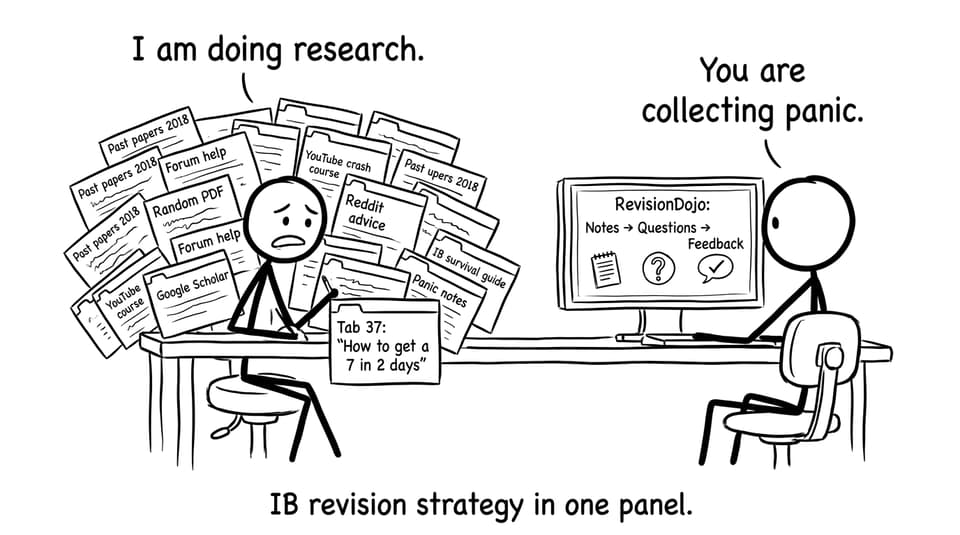
RevisionDojo is built around that loop: one place to learn, practice, get feedback, and repeat. If you want a structured platform overview, see RevisionDojo App: The Smarter Way to Prep for IB Exams.
Use RevisionDojo to rebuild confidence (without guessing)
Confidence returns when you can point to proof.
-
Use How to Study for IB Exams Without Burning Out to reset your weekly structure.
-
Use IB Flashcards with Spaced Repetition (SRS) for lightweight daily momentum.
-
Use How to Predict Your IB Scores in 2025 to translate practice into realistic targets.
-
If coursework stress is part of the prediction, use the IB Coursework Grader and the Coursework Library to tighten what teachers see as “risk.”
FAQ
Can I ask my teacher to change my IB predicted grades?
Yes, you can ask--but ask for a review process, not a “favor.” In the IB, predictions should be justified by evidence, so your best leverage is new, exam-like evidence (timed essays, mock sections, improved test performance). Start by requesting the rationale: which assessments counted most, and which weaknesses pulled the prediction down. Then offer a plan: what you will do over the next two weeks to generate better evidence. If your school has a formal predicted-grade policy, follow it precisely and keep the tone calm and professional. Even if the prediction doesn’t change, the conversation often clarifies exactly how to gain marks in the final IB exams.
Will universities reject me because my IB predicted grades are lower than expected?
Not automatically. In many places, predicted grades influence whether you receive an offer, but final IB results are what confirm it. Some universities focus on minimum thresholds rather than perfect alignment with a course’s typical profile. In holistic admissions systems, predicted grades are weighed alongside essays, recommendations, course rigor, and overall fit. Also, application strategy matters: a balanced list reduces the risk of one prediction defining your options. The healthiest mindset is to treat lower IB predicted grades as a signal to improve your evidence, not a statement about your capability.
Do IB predicted grades affect scholarships?
They can, especially for scholarships that make early decisions before final IB results are available. Predicted grades may be used as an initial filter or for provisional awards. However, many scholarship programs still confirm with final results or reassess once official scores arrive. If you’re worried, read each scholarship’s conditions carefully and speak to your school counselor about timing. The practical move is to strengthen both tracks: improve predicted-grade evidence if possible, and build final-exam performance so you don’t rely on predictions alone. Tools like RevisionDojo’s Questionbank, Mock Exams, and grading feedback can make that improvement measurable.
Conclusion: your IB predicted grades are a snapshot, not a ceiling
Lower IB predicted grades hurt because they feel personal. But they’re not your identity--they’re a snapshot of evidence under specific conditions.
Your job now is simple (not easy): create better evidence. Use RevisionDojo to run a tight loop of Study Notes, Flashcards, Questionbank practice, AI Chat support, Grading tools, and timed Mock Exams and Predicted Papers. Then walk back into the conversation with proof.
In the IB, calm beats panic. Evidence beats hope. And the story is still being written.